
Insights Nexus: immersive technology library, 3D and Artificial Intelligence
This is Nexus' editorial hub: 58 in-depth content to answer business and technology questions about VR, AR, 3D, Digital Twins, training, Artificial Intelligence and applications by industry.

Content designed to be found, understood and used in real decisions
Articles combine direct response, technical criteria, decision frameworks, metrics, common errors and frequently asked questions. The objective is to serve both those who are discovering a technology and teams that already need to specify a project.

How a 3D web product configurator works
From the high poly model to the final experience: retopology, baking, PBR, glTF/GLB, configuration rules, WebGL, integration and performance.
Read complete guide →Six pillar pages to get started
These guides focus on the main decision criteria on strategy, implementation, training and corporate applications of immersive technology.
Virtual Reality for companies
Use cases, architecture, operation and metrics for corporate projects.
Read complete guide →Corporate VR Training
Objectives, scenarios, feedback, scoring and learning measurement.
Read complete guide →WebAR or app?
Criteria for deciding range, resources, performance and maintenance.
Read complete guide →Immersive technology ROI
Framework to connect investment to measurable results.
Read complete guide →Checklist for XR pilot
Hypothesis, audience, hardware, content, support and scaling decision.
Read complete guide →Immersive technology in the automotive sector
Applications in sales, training, 3D and digital showrooms.
Read complete guide →AI, VR, AR and XR: analysis of the day
Eight original Nexus readings on official updates relevant to corporate decisions.

Google opens Deep Review to verify technical documents with AI
Agentic system reviews logical consistency and factual foundation. Understand where it helps and why the decision remains human.
Read full analysis →
TimesFM and TabFM Bring AI Operational Forecasting to BigQuery
Models work with time series and tables without specific training. See applications, limits and governance for business decisions.
Read full analysis →
PICO offers high-frequency hand tracking at 60 Hz in Unity
Mode delivers faster sampling of 26 joints. Understand lifecycle, input switching, performance and testing for enterprise VR.
Read full analysis →
Meta Platform SDK 207 fixes checkout and identity in PC VR
Update avoids blocked purchase flow and changes disconnected user treatment. See what to retest before selling in VR.
Read full analysis →
visionOS 26 clarifies hand tracking under occlusion and low light
ARKit can provide plausible pose even with fake isTracked. See how to avoid unsafe decisions and maintain stable gestures.
Read full analysis →
Camera Region limits visual access in visionOS enterprise apps
Corporate API allows working with a camera region in spatial streams. Understand entitlement, privacy and operational design.
Read full analysis →
OpenXR EXT thermal query drives thermal state into performance decision
Extension allows you to consult thermal trends by domain. Here's how to degrade quality without promising universal support.
Read full analysis →
OpenXR EXT user presence helps XR apps pause when user leaves
Extension exposes presence on the device to suspend actions and resume context. See limits, privacy and fallback.
Read full analysis →AI, VR, AR and XR: analysis of the day
Eight original Nexus readings on official updates relevant to corporate decisions.

Google expands News AI pilot to more than 400 publications
Program licenses content for summaries and audio with attribution and direct links. Understand what changes for publishers, brands and AI governance.
Read full analysis →
SynthID surpasses 180 billion AI-tagged images and videos
Google discloses watermark scale for image, video, audio and text. See what it proves, what it doesn't prove and how to combine provenance.
Read full analysis →
Meta Interaction SDK 207 brings procedural hands to native OpenXR
Update for Unreal adds gauze and controller-driven hands. See how to align representation, collision, feedback, and testing across modalities.
Read full analysis →
PICO Live Preview brings Unity scene and hands to the headset in real time
Streaming reduces the cycle between editing and testing on the device. Understand requirements, connection conflicts and what still needs a build installed.
Read full analysis →
AR Required or AR Optional defines range and fallback in ARCore
Choice determines in-store availability, support checkout and AR-free journey. Here's how to decide based on the task and audience.
Read full analysis →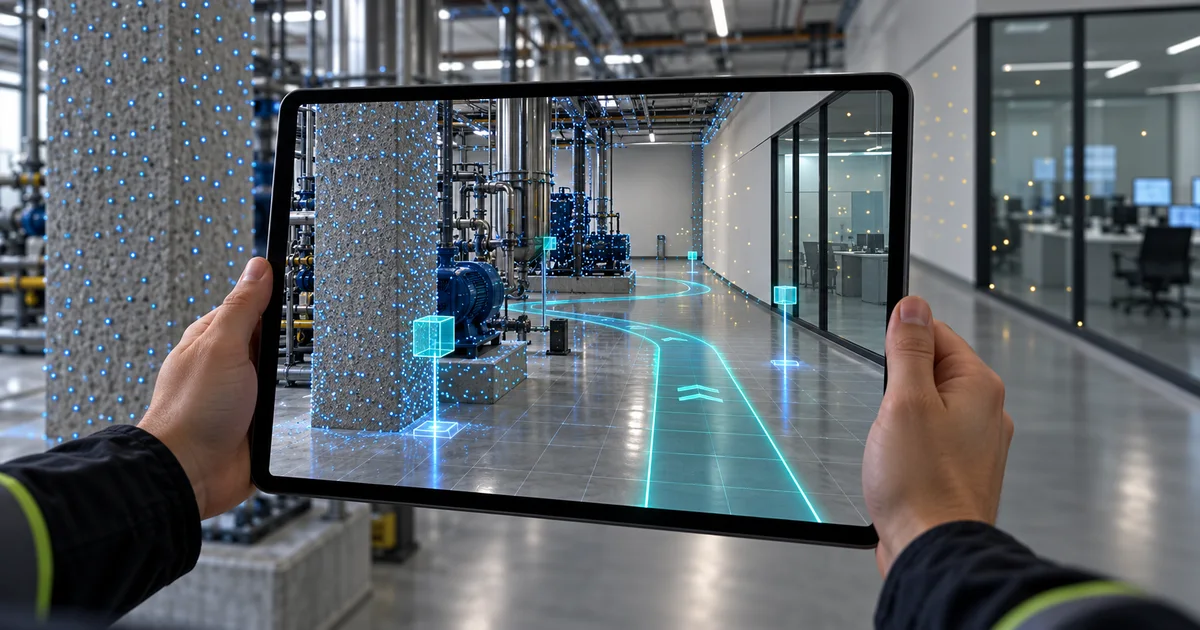
Tracking environment defines the reliability of an AR experience
Too little texture, reflection, movement and inadequate light reduce stability. See how to prepare location, instruction, and fallback for enterprise AR.
Read full analysis →
Meta Spatial SDK 0.14 adds hands-only locomotion
Version features teleportation, snap-turn, step, runtime audio and attachments to animated meshes. See impacts on accessibility, lifecycle and performance.
Read full analysis →
Unreal 5.8 registers OpenXR runtime and blocks extensions for testing
Crash reports gain runtime name and version, while projects can disable supported extensions. See how to reproduce crashes and validate XR fallbacks.
Read full analysis →AI, VR, AR and XR: analysis of the day
Eight original Nexus readings on official updates relevant to corporate decisions.

Anthropic incorporates independent METR appraisers into the operation
Six experts were given access similar to that of the internal risk teams. Understand the model, its limits, and lessons for AI enterprise governance.
Read full analysis →
Google expands official links and sources in Search AI responses
AI Mode and AI Overviews now highlight more contextual links, official websites and recent articles. See practical impacts for SEO, AEO and GEO.
Read full analysis →
Meta Interaction SDK 207 combines gaze and two hands on VR objects
GazeMultiGrab allows you to aim with your eyes, move with one hand and climb with two. Understand feedback, accuracy, privacy, and interaction testing.
Read full analysis →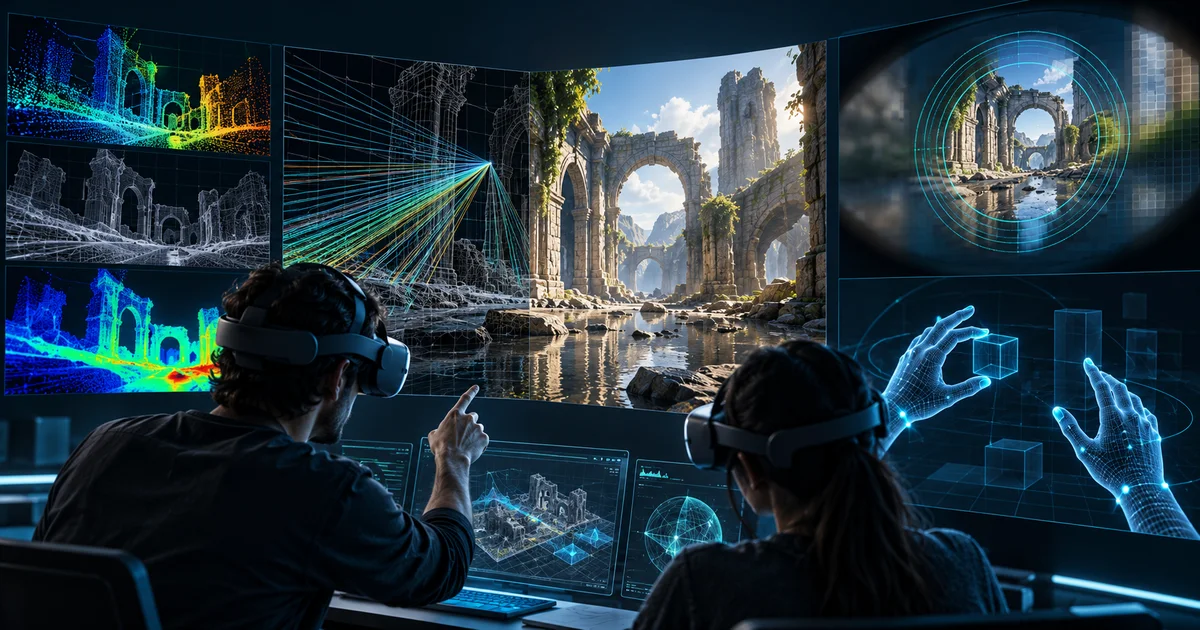
Meta Unreal 207 fixes Lumen, foveation and tracking in VR
Integration for Unreal 5.8 restores distance fields on PC, corrects foveation offsets, and hardens hand and session cycles. Here's how to update safely.
Read full analysis →
Camera Kit creates React bindings to embed AR on the web
Web version 1.15 introduced React components to integrate camera and lenses into existing applications. See architecture, lifecycle and production criteria.
Read full analysis →
Camera Kit validates lens requests against Remote API contracts
Web version 1.15 added options to validate HTTP calls from lenses. Understand schemas, security, error, and data governance in connected AR.
Read full analysis →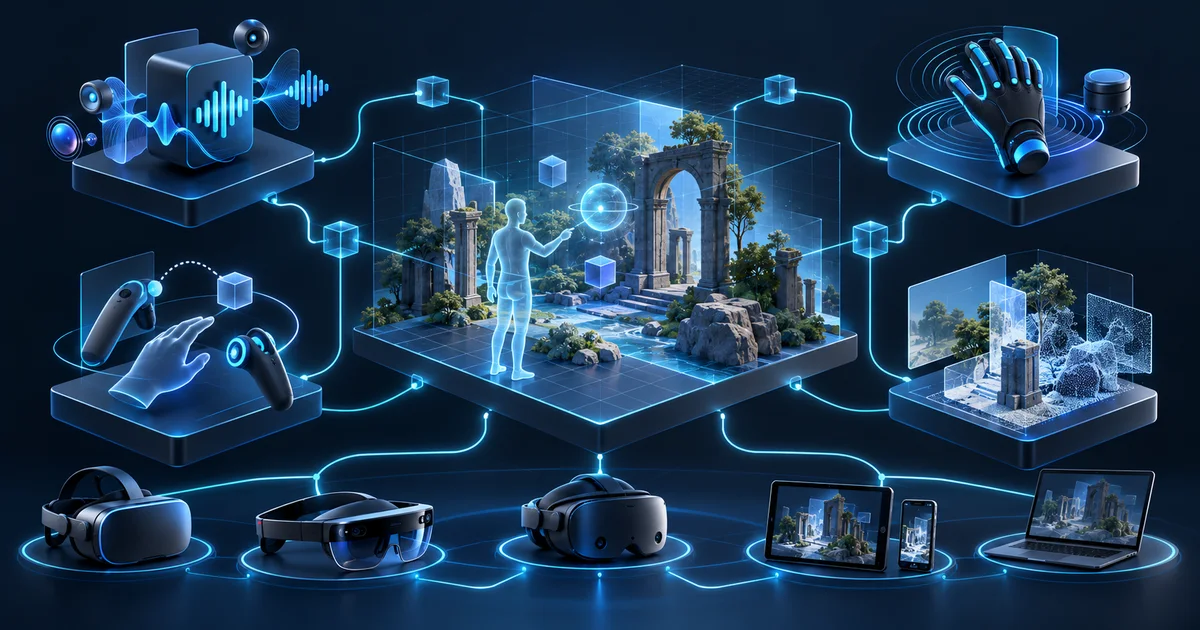
Meta XR All-in-One 207 requires Unity 6 and explains dependencies
Aggregator package installs Core, Audio, Haptics, Interaction, Platform, Voice and MRUK. See how to control version, scope and regression in XR projects.
Read full analysis →
Unreal Engine 5.8 adds experimental Steam Frame support
New bPackageForOpenXRImmersive setting prepares Android XR builds without Quest-specific extras. Understand portability, profiles and tests at runtime.
Read full analysis →AI, VR, AR and XR: analysis of the day
Eight original Nexus readings on official updates relevant to corporate decisions.

Anthropic reports unintentional actions and reinforces control of agents
Cases observed in evaluations involved models interacting with the external world. Understand why permissions, logs, and containment must be part of the product.
Read full analysis →
Anthropic opens operations in Singapore and expands responsible AI agenda
The memorandum with the government covers safety, evaluation, research and responsible adoption. See what the expansion signals for regulated companies in Asia Pacific.
Read full analysis →
Meta XR Simulator 207.1 adds support for AMD GPUs
The update expands the development matrix on Windows and fixes memory, crashes and rendering. See how to validate parity before reducing headset testing.
Read full analysis →
Meta XR Simulator uses camera to test grab and pinch
XR Simulator 207.1 extends camera-based hand tracking with grab and pinch gestures. Understand where this accelerates QA and where real hands are still indispensable.
Read full analysis →
ARKit raises frequency to track moving objects
visionOS 27 combines high frame rate tracking and extended training for hand objects. See applications and limits in measurement, assembly and training.
Read full analysis →
visionOS 27 opens custom space accessories to enterprises
LEDs, IMU, Bluetooth, buttons and haptics can transform physical tools into tracked inputs. Understand design, validation, and ergonomics requirements.
Read full analysis →
Unreal Engine 5.8 brings underlays to OpenXR layers
Stereo layers can be arranged behind the main scene without proprietary plugin. See uses, priorities, and compositing risks in XR experiences.
Read full analysis →
Unreal Engine 5.8 tests Pixel Streaming for VR via WebXR
The experimental feature streams a remotely rendered VR application to the headset. Understand architecture, HTTPS, latency, and pilot criteria.
Read full analysis →AI, VR, AR and XR: analysis of the day
Eight original Nexus readings on official updates relevant to corporate decisions.

Claude Haiku 5.5 targets high-volume AI at lower cost
Anthropic's new compact model prioritizes speed, price and capacity for recurring flows. See how to evaluate quality by task and total cost before scaling.
Read full analysis →
Claude Sonnet 5.5 accelerates business work and reduces costs
Anthropic claims that Sonnet 5.5 is 30% faster and can cost up to 30% less than Sonnet 5. Understand how to validate the gain in agents and corporate knowledge.
Read full analysis →
Meta XR Operator 207.0.1 integrates Muse Code and skills into VR testing
The update adds one-click setup with Muse Code, skills, and Meta Quest preparation. See how agents can support QA without replacing human validation.
Read full analysis →
Meta expands testing of hand gestures and articulations in XR Operator
Version 207.0.1 improves tools for joint animations and hand gestures. Understand how to automate coverage without ignoring motor diversity and real tracking.
Read full analysis →
ARCore combines depth and Streetscape Geometry up to 65 meters
Geospatial Depth uses urban geometry and VPS to extend depth in outdoor environments. See impacts on occlusion, positioning, and security of AR experiences.
Read full analysis →
Rooftop Anchors position AR content over buildings
New geospatial anchors resolve altitude and orientation relative to coverage. Understand accuracy, fallback and applications in infrastructure, events and cities.
Read full analysis →
Meta Browser tests WebGPU Composition Layers for XR experiences
Browser 152.1 adds experimental support for WebGPU composition layers. See how the technique can separate content, improve clarity and require new tests.
Read full analysis →
Khronos reduces OpenXR compliance barrier with per-port fees
The OpenXR Adopter program now uses values scaled by company size. Understand how official compliance differs from informal compliance.
Read full analysis →AI, VR, AR and XR: analysis of the day
Eight original Nexus readings on official updates relevant to corporate decisions.

Agents API brings long-lived agents to a managed infrastructure
OpenAI's public API brings together cloud execution, context, tools, subagents, and checkpoints. See how to evaluate business agents without confusing autonomy with lack of control.
Read full analysis →
Astra raises safeguards requirements for cybersecurity officers
OpenAI classified Astra at the critical threshold for cyber capability and tightened controls before launch. Understand what this teaches about offensive and defensive AI in companies.
Read full analysis →
Meta VR Glasses Make Hands-First Design Reach Requirement
The new glasses prioritize eyes and hands, and users without controls change discovery, navigation and testing. See how to adapt corporate VR experiences.
Read full analysis →
Meta VR Layout SDK extends workspace with multiple windows
Meta offers multi-window layouts with Jetpack Compose and React Native for VR Glasses. Understand density, comfort, and continuity for productive apps.
Read full analysis →
ARKit brings trained object tracking to iOS 27
Trained reference objects can be used on iPhone and Vision Pro. See how to create a single pipeline for maintenance, measurement, and training with AR.
Read full analysis →
ARKit separates visual alignment and metric measurement in object tracking
The Coordinate Space Correction API allows you to query rendered pose or without display corrections. Understand why visually stable and metrically accurate are not the same thing.
Read full analysis →
visionOS 27 enables Web Environments to extend websites beyond the window
Safari now allows spatial environments such as website backgrounds and wider, curved windows. See how to create presence without compromising readability and performance.
Read full analysis →
Apple Combines Static Foveation and Spatial Audio for Distributable XR Media
Apple has published a static foveation sample and updated the ASAF Production Suite. Understand how to preserve central acuity, bandwidth and sound coherence.
Read full analysis →AI, VR, AR and XR: analysis of the day
Eight original Nexus readings on official updates relevant to corporate decisions.

Asana reduces browser agent cost by 76x with GPT-6.1 Sol
Asana used GPT-6 Astra in Codex to optimize an agent running on GPT-6.1 Sol. See how cost, speed, and quality need to be measured together.
Read full analysis →
Sophos reduces threat investigation time by 96% with OpenAI Daybreak
Case reports average response time of 89 seconds and 52% of MDR cases resolved end-to-end by agents. Understand how to validate defensive automation.
Read full analysis →
Unity Project Analyzer gives VR project context to AI agents
Meta presents a skill that prevents the agent from cold starting when reading Unity projects. See how structured context reduces errors without replacing technical review.
Read full analysis →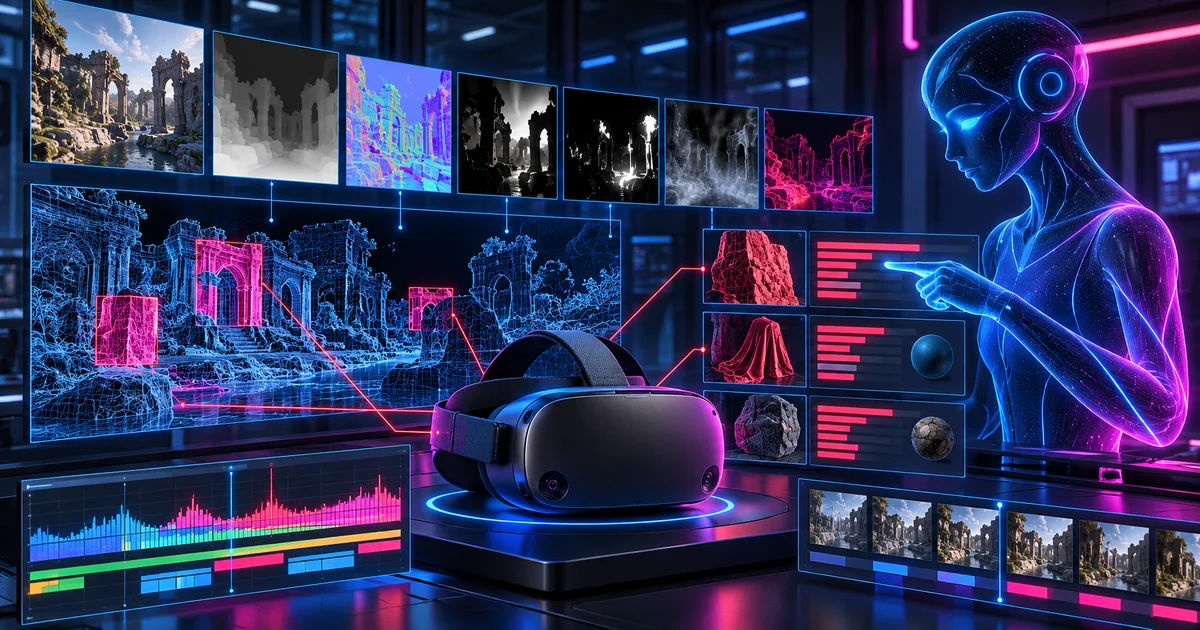
Meta uses AI and RenderDoc to accelerate VR performance diagnosis
RenderDoc wrappers and Meta VR CLI promise to turn frame captures into assisted investigation. See what to automate and how to avoid blind optimizations.
Read full analysis →
ARCore Native Interop connects Java and C++ objects in AR applications
APIs expose handle and symbol table to share objects between layers. Understand ownership, lifecycle and native integration risks.
Read full analysis →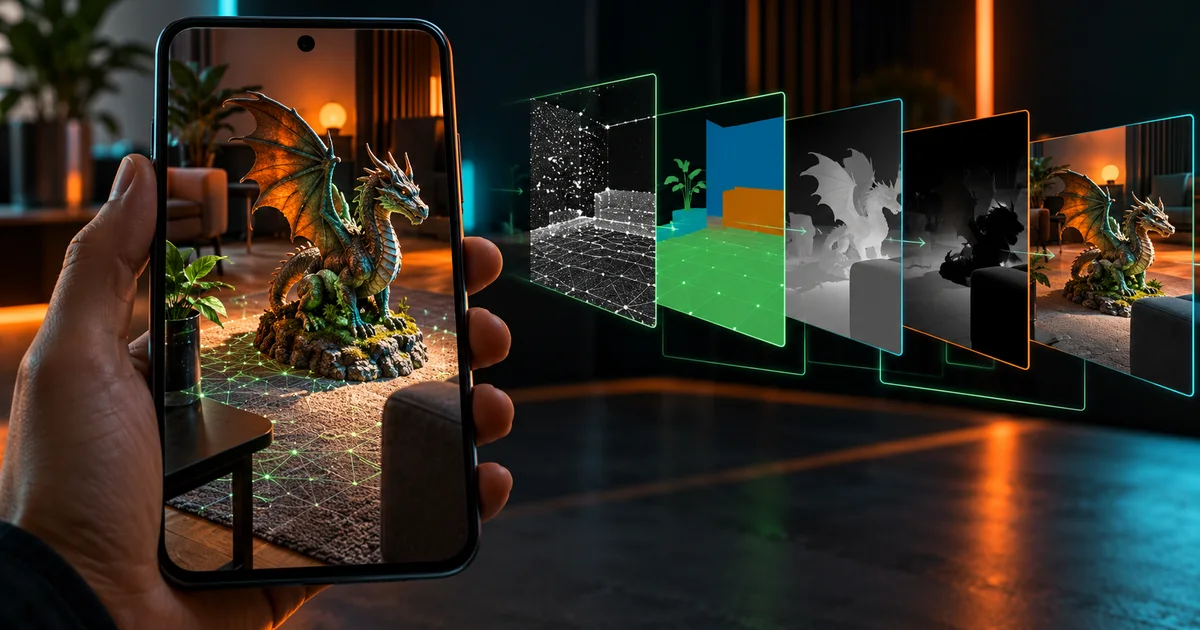
ARCore turns Vulkan example into complete reference for AR
The hello_ar_vulkan_c sample started to demonstrate central features and plane occlusion. Here's how to use it as a technical basis, not ready-made code.
Read full analysis →
Reality Composer Pro 3 brings graphs, AI and Live Preview closer together in Vision Pro
The tool brings together Animation Graph, Script Graph, materials and instant preview in the headset. See how to reduce the cycle between design and engineering.
Read full analysis →
visionOS opens up tracked spatial accessories at up to 90 Hz
Apple documents controllers with infrared LEDs, IMU, buttons, touchpads, and haptics. Understand applications and requirements for enterprise hardware.
Read full analysis →AI, VR, AR and XR: analysis of the day
Eight original Nexus readings on official updates relevant to corporate decisions.

Anthropic Policy 2026 Redefines Boundaries for Autonomous AI Agents
Anthropic has updated rules for more independent agents, physical actions, and high-risk uses. See how to translate policy into verifiable deployment controls.
Read full analysis →
Anthropic Cyber Mission brings AI to infrastructure defense and open source
Anthropic has launched programs to secure operational technology and find flaws in open source software. Understand benefits, limits and criteria for business adoption.
Read full analysis →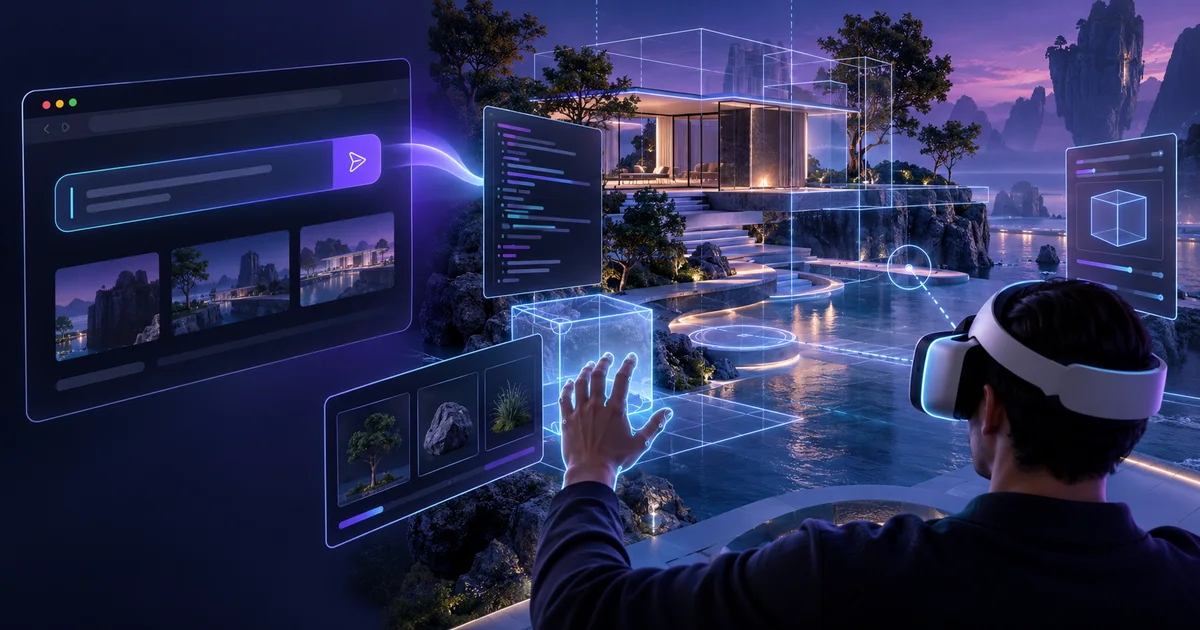
Meta and Vercel take AI-powered WebXR prototyping from prompt to headset
The Meta IWSDK template for v0 generates a WebXR scene, publishes via URL, and allows testing on Quest. See where it accelerates the pilot and where it still requires engineering.
Read full analysis →
WebXR may evolve from URL to PWA in the Meta Horizon Store
Meta's new template preserves a path from web prototype to installable app. Understand how to plan distribution without creating two product bases.
Read full analysis →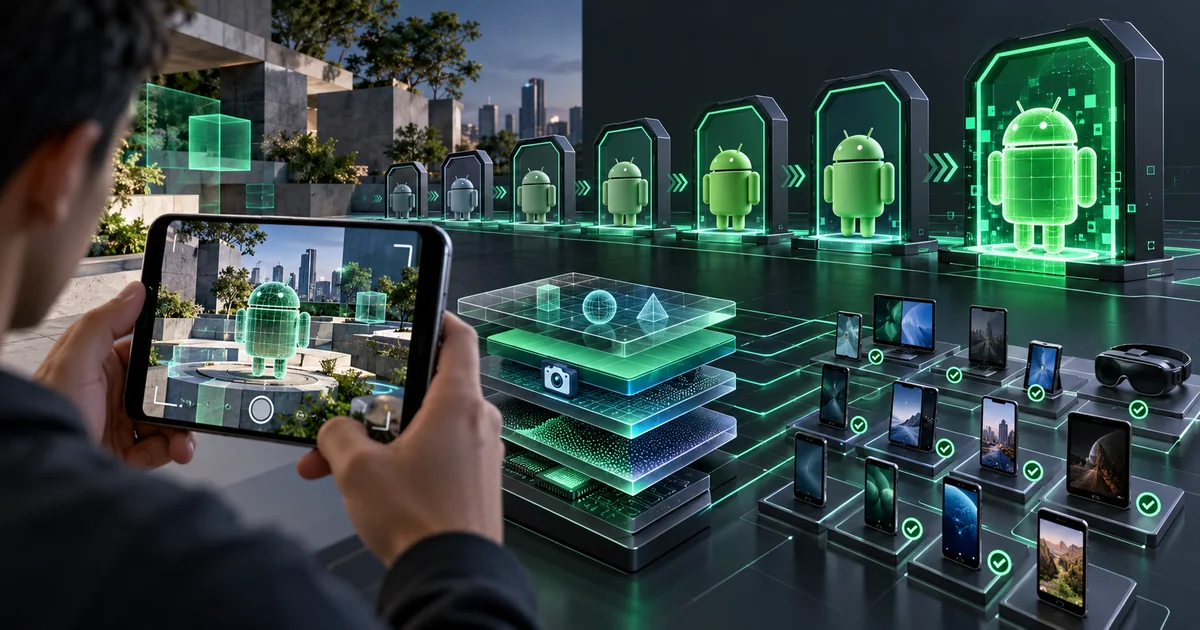
ARCore 1.56 raises targetSdkVersion to Android API 37
The change can arrive via manifest merge when the app does not fix the target. See how to migrate AR experiences without discovering publishing incompatibilities.
Read full analysis →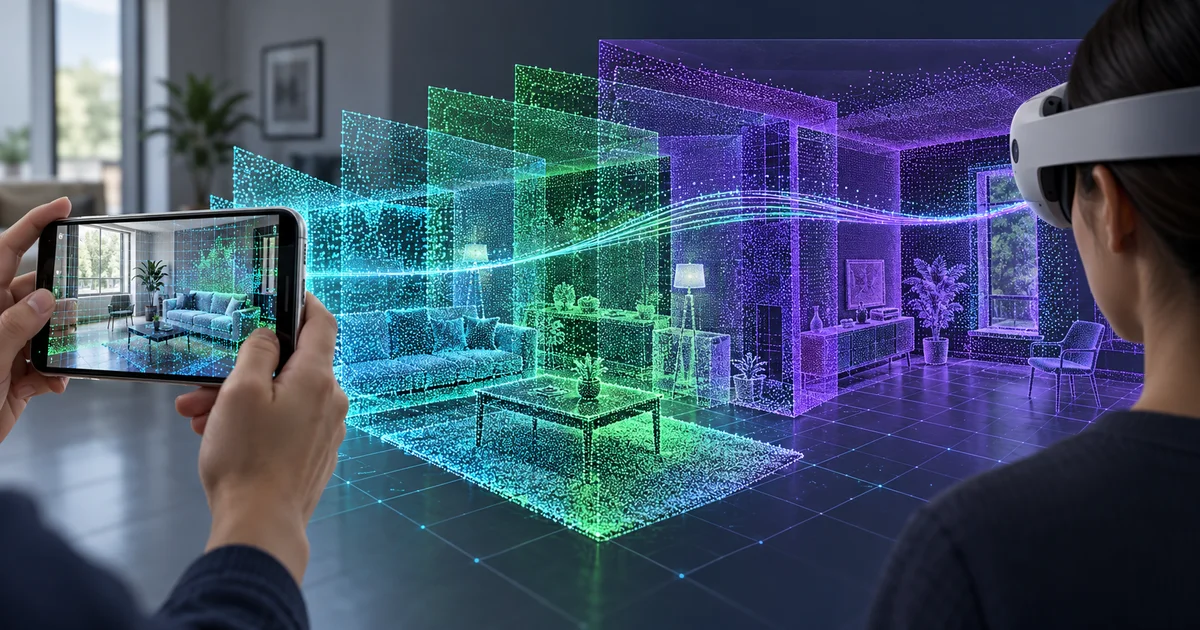
ARCore now displays depth in meters to converge with OpenXR
The new depth APIs in ARCore 1.56 use floats in meters. Understand how this reduces conversions and improves shared pipelines between mobile AR and XR.
Read full analysis →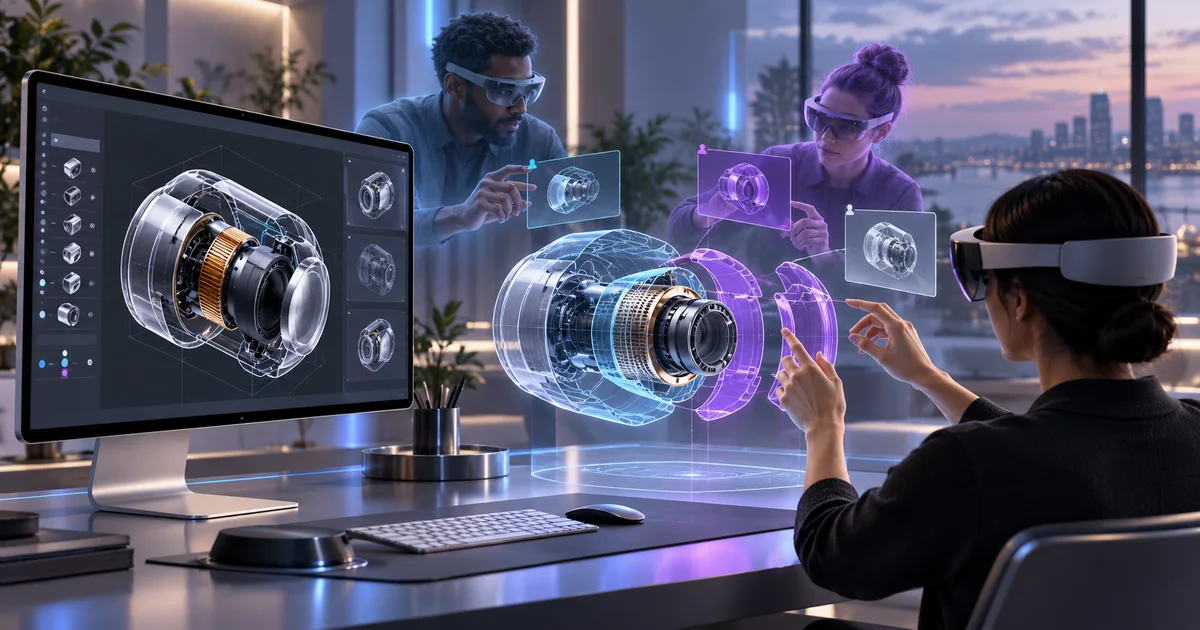
Spatial Preview connects 3D content from Mac to Apple Vision Pro
visionOS 27 lets you view and update spatial assets from apps on your Mac, with Quick Look and SharePlay. See impact on review, design, and approval.
Read full analysis →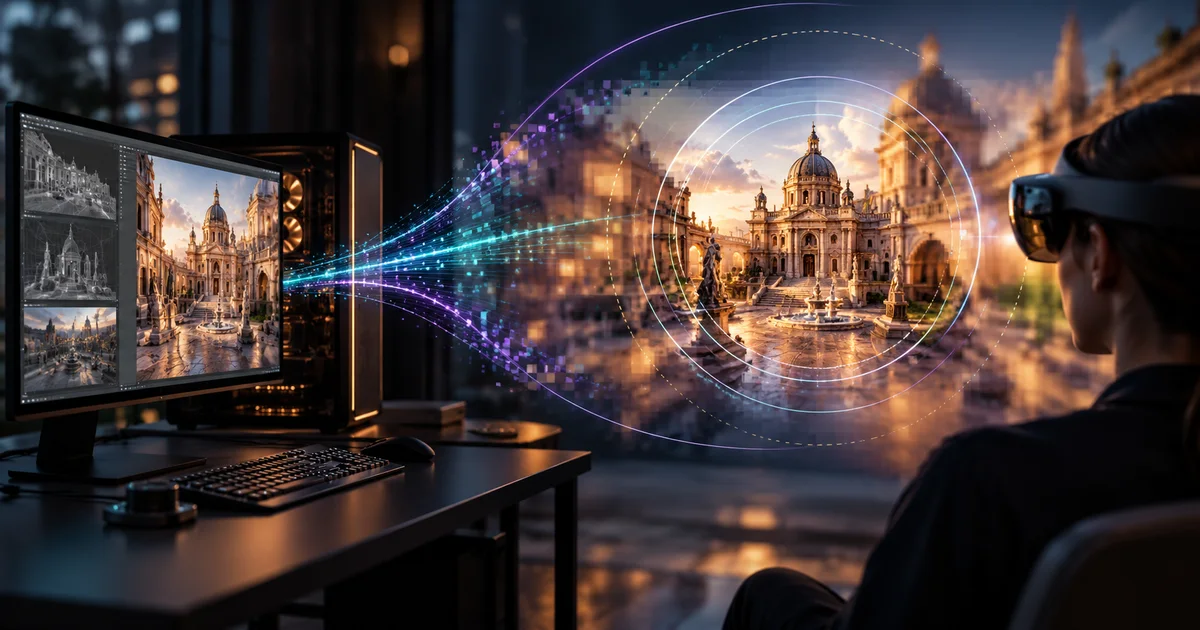
Foveated Streaming brings PC applications to Apple Vision Pro
The visionOS 27 framework conveys spatial content with gaze-driven compression. Understand when it expands access and which network limits need to be measured.
Read full analysis →AI, VR, AR and XR: analysis of the day
Eight original Nexus readings on official updates relevant to corporate decisions.

Decisions API transforms closed decisions into a governable AI component
OpenAI's new API receives context in text or image and returns a choice between predefined responses. See how to use classification, routing, and approval without delegating open decisions.
Read full analysis →
Private Intelligence expands protection options for enterprise AI
OpenAI introduced zero-retention security processing and confidential inference preview. Understand what this protects and what controls remain internal.
Read full analysis →
Unity 6000.6 optimizes GPU and quality profiles for Meta Quest
The update brings shader micro-optimizations, lower lighting costs and new Quest profile defaults. See how to measure real gain without confusing release note with approval.
Read full analysis →
Unity extends SpaceWarp for transparent interfaces in VR
The Unity 6000.6 line adds support for transparent UGUI and TextMeshPro in the SpaceWarp stream. Understand potential gains and tests needed to maintain stable panels.
Read full analysis →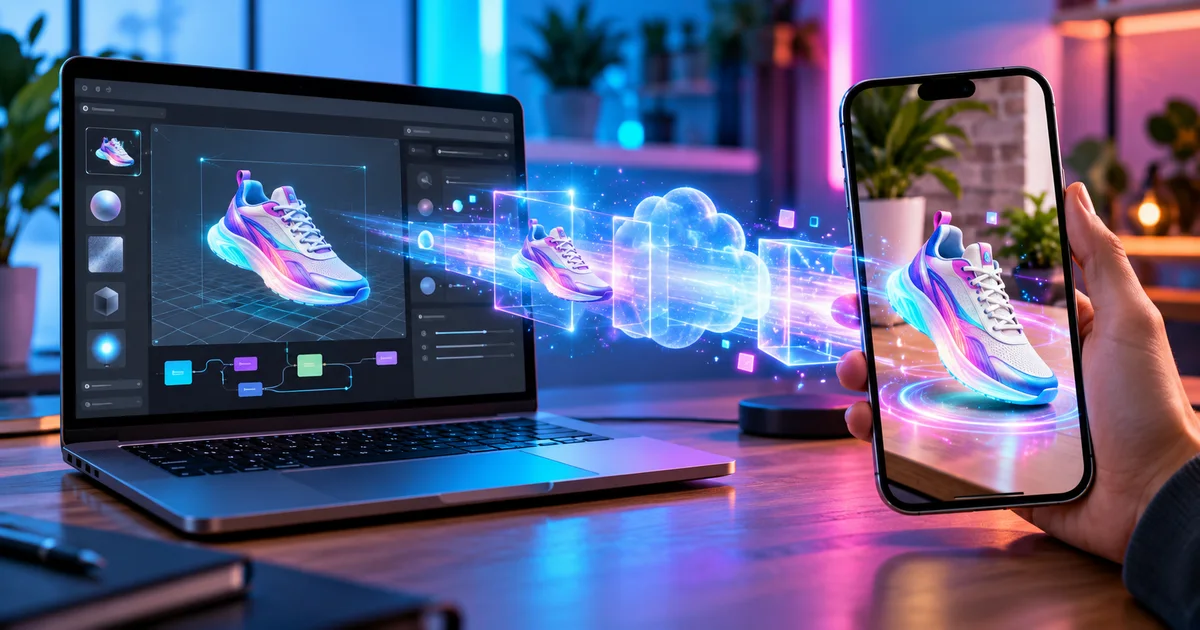
Camera Kit Web 1.21 brings Lens Studio 5.24 experiences to the browser
Snap has updated the Web SDK for content created in Lens Studio 5.24. See how to plan for compatibility, staged publishing, and observability in WebAR.
Read full analysis →
Camera Kit Web combines self-hosting and SIMD for AR operations
Snap has added its own URLs for SDK builds and re-enabled WebAssembly SIMD in modern WebKit. See impact on performance, cache, security and continuity.
Read full analysis →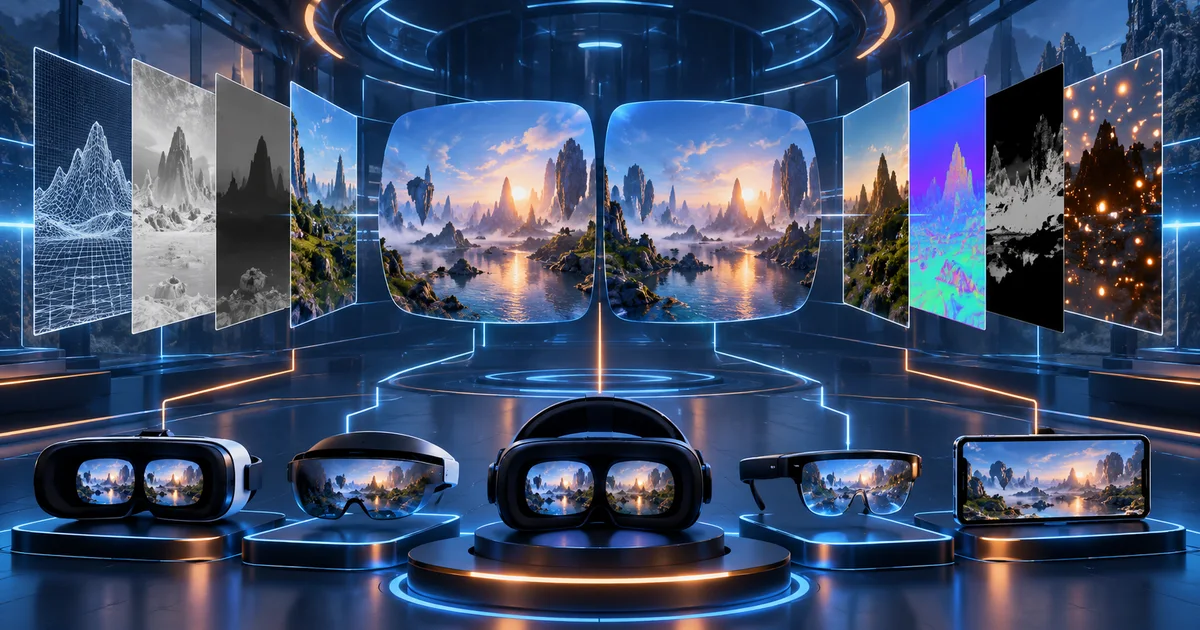
XRLayoutType makes stereoscopic pipelines more explicit in Unity
Unity 6000.6 adds direct XR layout identification in XRPass, replacing weak checks. See how this reduces errors in custom rendering.
Read full analysis →
Unity fixes stereoscopic panoramas displayed as monoscopic in XR
Unity 6000.6 fixes panning skyboxes that only used the left eye in multi-pass. Understand why eye testing is essential in immersive media.
Read full analysis →AI, VR, AR and XR: analysis of the day
Eight original Nexus readings on official updates relevant to corporate decisions.

Claude Frontier Academy turns training into real AI deployment
Anthropic announced US$100 million to train 10,000 engineers by 2027. Understand why real projects, governance and practical assessment matter more than isolated certificates.
Read full analysis →
GPT-6.1 Sol changes the cost equation for business agents
OpenAI positions the GPT-6.1 Sol close to the Astra in professional tasks at a fraction of the price. See how to compare quality, cache, latency, and total cost per stream.
Read full analysis →
Meta VR Developer Assistant brings AI to the diagnosis of immersive applications
The new wizard appears in the Meta development ecosystem to reduce configuration and debugging friction. Understand benefits, limits, and controls for VR teams.
Read full analysis →
New Meta metrics bring technical quality and results in VR closer together
Comparative benchmarks, demographics, and PREQ alerts come to the Developer Dashboard. Here's how to use platform signals without confusing correlation with causation.
Read full analysis →
ARCore's Flash Mode extends AR in low-light environments
The API allows you to activate the flashlight to improve camera perception in dark places. See impact on inspection, ergonomics, energy and industrial safety.
Read full analysis →
ARCore with Unity 6 requires planned migration to AR Foundation 6
Full support is now available, while recent releases fix compatibility and update dependencies. See how to migrate without disrupting AR applications.
Read full analysis →
visionOS 27 panoramic portals preserve context in immersive video
Apps can set custom proportions when reducing immersion. Understand how wide portals affect composition, multitasking, and continuity of the XR experience.
Read full analysis →
Apple expands spatial audio tools for immersive production
ASAF updates add video reference, ambisonics improvements, and more orientation control. See how to structure a playable XR sound pipeline.
Read full analysis →AI, VR, AR and XR: analysis of the day
Eight original Nexus readings on official updates relevant to corporate decisions.

OpenAI Data agent drives questions into business analytics and actions
New agent connects corporate sources, creates analyzes and dashboards, and preserves access controls. See how to validate accuracy and governance.
Read full analysis →
Anthropic and Accenture test independent assessment within the laboratory
Partnership provides for red teaming and on-board evaluation of frontier models. Understand how independence, scope and transparency define credibility.
Read full analysis →
Meta VR Glasses opens early development with SDK 207
Glasses weighing around 100 grams will arrive in 2027, but the SDK, simulators and store already allow you to prepare experiences based on eyes and hands.
Read full analysis →
Meta XR Simulator 207 uses notebook camera to test hands in VR
Update adds Look and Pinch, camera hand tracking and support for VR Glasses. See what to automate and what to validate in the headset.
Read full analysis →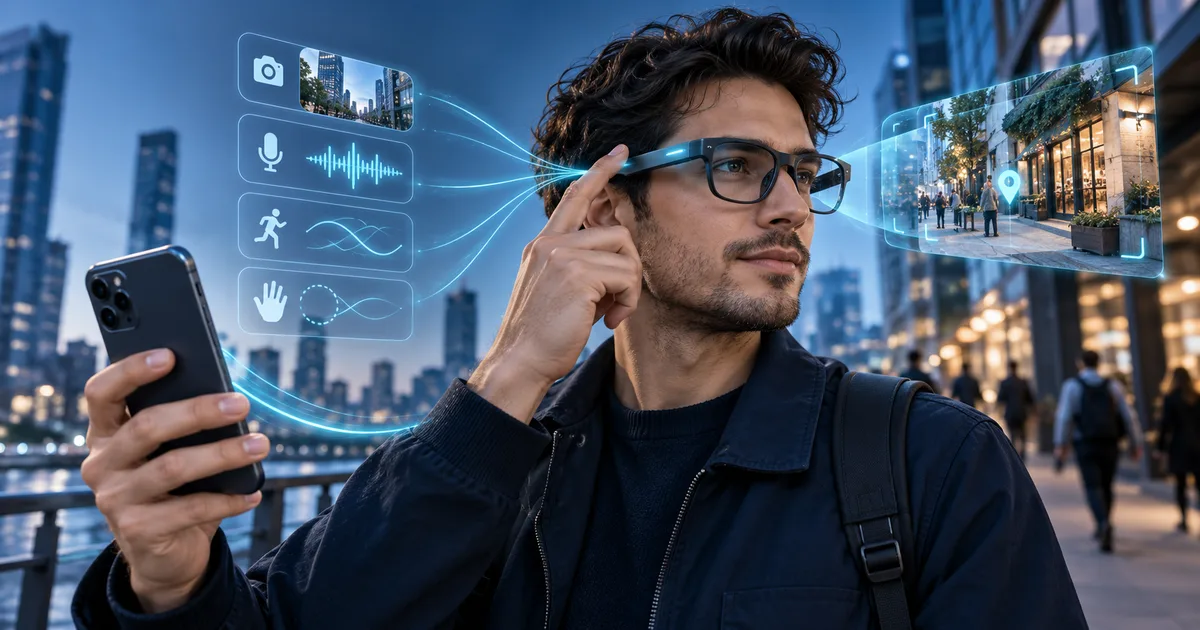
Meta Wearables Device Access Toolkit 1.0 stabilizes apps for glasses
Version 1.0 connects camera, voice, motion and gestures to mobile apps. See device limits, consent, and real-world testing.
Read full analysis →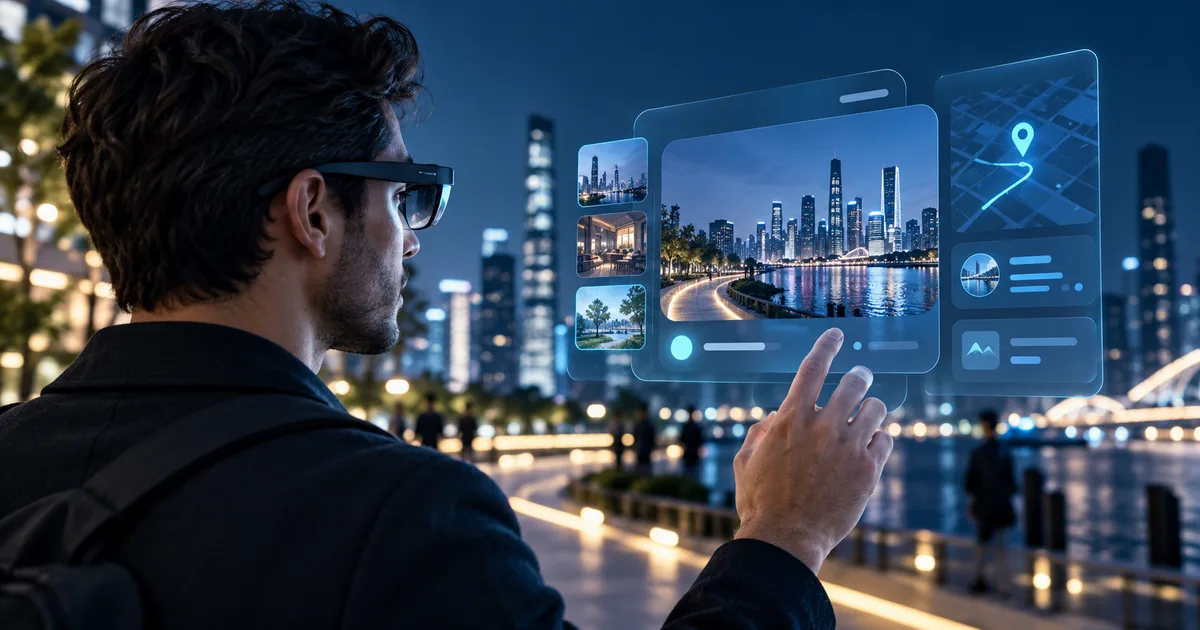
Web apps bring HTML, CSS and JavaScript to Meta display glasses
Web Path allows you to prototype AR without native SDK and use position, location, gestures and text. Understand scope, limits and governance.
Read full analysis →
visionOS 27 brings virtual light, fabric and audio closer to physical space
RealityKit gains ambient lighting, projective textures, real-time fabric and Reverb Mesh. See impacts for enterprise XR experiences.
Read full analysis →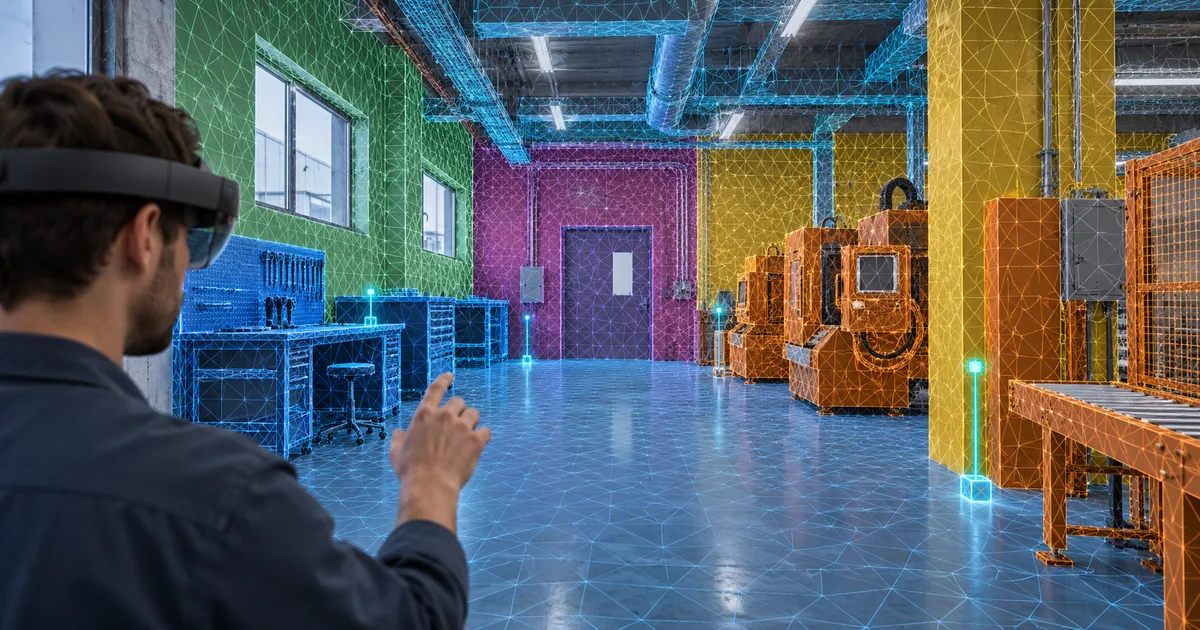
OpenXR Spatial Entity Mesh exposes environmental geometry for XR applications
Goal Extension provides triangular mesh associated with spatial entities. See how to use it for occlusion, security and digital twins without losing portability.
Read full analysis →AI, VR, AR and XR: analysis of the day
Eight original Nexus readings on official updates relevant to corporate decisions.

Anthropic EFS combines zero retention and AI abuse protection
Enterprise Frontier Safeguards promises data in the customer environment and misuse detection. See how to evaluate the shared responsibility model.
Read full analysis →
OpenAI expands government access to AI with a focus on cyber defense
Program in the United States reduces license costs and expands use, but public adoption requires metrics, security and task-based supervision.
Read full analysis →
Meta Interaction SDK 207 brings gauze and tweezers to Unreal
Update adds selection by gaze, fallback by head and tests in the editor. Understand the gains and limits for VR interfaces.
Read full analysis →
Meta Quest Developer Hub 6.5.2 Deepens VR Diagnostics
Version reorganizes casting, presets, GPU, CPU and memory. See how to transform performance capture into quality gate.
Read full analysis →
Lens Studio generates animated Selfie Attachments for AR
Tool creates four animated variations with loop, delay and speed controls. See criteria for responsible use in campaigns.
Read full analysis →
Lens Studio's Head Generator accelerates 3D avatars for AR
Snap allows you to generate 3D heads by text or image. Understand where automation helps and where alignment, entitlement, and compatibility require review.
Read full analysis →
OpenXR virtual keyboard structures text input in XR
Meta Extension describes spatial keyboard with template, animation and text context. See benefits, limits and risks of portability.
Read full analysis →
OpenXR coordinates simultaneous hands and controllers in XR
Goal Extension allows you to consult, pause and resume simultaneous tracking. Understand how to design predictable transitions between interaction modes.
Read full analysis →AI, VR, AR and XR: analysis of the day
Eight original Nexus readings on official updates relevant to corporate decisions.

Google ATLAS measures AI adoption and exposes new bottlenecks
Research shows scientists saving almost seven hours a week and Brazil above expectations in adoption. See how to turn use into results.
Read full analysis →
Google's multilingual AI reaches 300 languages, but requires local evaluation
Google claims to serve languages spoken by 7 billion people. Understand why coverage does not replace quality, culture and security tests.
Read full analysis →
Meta VR CLI 1.8 automates setup, testing and performance in VR
Version adds Linux, agents, GPU capture, memory, simulators and store checking. See how to use it without losing governance.
Read full analysis →
Meta XR Operator 207 expands gesture and articulation tests in VR
Standalone update adds joint animations, hand gestures, gauze and simplified setup. See what still needs human testing.
Read full analysis →
Lens Studio 5.18 improves body and texture generation for AR
Snap updates Body Generator with higher quality textures and image generations. See criteria for identity, consistency, and consent.
Read full analysis →
Lens Studio 5.18 uses keyboard to make AR tests repeatable
Input Action now maps keys to movement and events in Preview. Understand how to speed up testing without confusing simulation with real use.
Read full analysis →
Unity CLI turns XR development into agent-observable flow
Tool manages editor, project and live execution through the terminal. See how to gain speed without giving your pipeline unrestricted autonomy.
Read full analysis →
OpenXR Validation Layer detects flaws that cross XR runtimes
Khronos layer alerts you to timing, sequence, FOV and composition that can cause latency and discomfort. See how to include it in QA.
Read full analysis →AI, VR, AR and XR: analysis of the day
Eight original Nexus readings on official updates relevant to corporate decisions.

Barclays scales Claude into banking operations with governance
Bank expands AI for development, knowledge and screening of emails. Understand what the numbers reveal and which controls remain mandatory.
Read full analysis →
Claude Sonnet 5.5 reduces cost per task and speeds up agents
Anthropic announces faster and more efficient model for everyday work. See how to test quality, total cost, and security before migrating.
Read full analysis →
Meta automates VR project diagnosis for hands and gaze
Device Readiness Check analyzes input by control and field of view in Unity projects. See how to use the tool without outsourcing acceptance.
Read full analysis →
Meta Virtual Camera Publisher opens new perspectives in VR apps
NSDK v207 allows you to register a virtual camera as an Android Camera2 device. Understand uses for collaboration, capture, and security.
Read full analysis →
Meta opens toolkit 1.0 for AR experiences in glasses
SDK connects mobile apps to camera, voice, movement and glasses display. See architecture, consent, and limits for enterprise use.
Read full analysis →
WebMCP brings AI commands to AR apps on Meta Ray-Ban Display
Web applications run on the glasses and expose tools controlled by the developer. Understand opportunities and risks of voice actions.
Read full analysis →
Android Enterprise now integrates XR headsets and glasses into its fleet
Google announces unified management of Galaxy XR and XREAL Aura by EMM. See what changes in security, updates and business operations.
Read full analysis →
Unity Simulation Pro connects robots, sensors and digital twins
Early access package brings together URDF, LiDAR, cameras, IMU, ROS 2 and headless execution. See potential and limits of synthetic validation.
Read full analysis →AI, VR, AR and XR: analysis of the day
Eight original Nexus readings on official updates relevant to corporate decisions.

Codex Cloud gains shared environments for Enterprise teams
Reusable environments and isolated workspaces bring individual computer code agents into governed operation. See controls and limits.
Read full analysis →
Fabric IQ bases Copilot responses on governed metrics
Microsoft brings Power BI semantic models, metrics and rules to Copilot Chat and Cowork. Understand the gain and what still needs validation.
Read full analysis →
Meta Spatial Simulator tests login and real backend before headset
Version 207 adds Platform SDK account, SSO, and real calling. See how to gain speed without mixing testing and production.
Read full analysis →
Meta VR Utility Library detects Horizon OS runtime and version
Library 1.0 provides runtime and SDK queries for Android apps. Understand how to use capability detection without fragmenting the experience.
Read full analysis →
Lens Studio 5.18 creates full-body AR characters with ML
Character Skin Generator transforms visual references into trained body effects. See creative potential, deadlines and consent precautions.
Read full analysis →
Lens Studio expands AR targeting for dual camera and media
TextureTrackingScope brings body and hair to new image sources. Understand visual continuity, consent, and off-camera testing.
Read full analysis →
Niantic Places Library brings together 100 3D environments for simulation
Catalog combines Gaussian splat and collision mesh in USDZ for physical AI training. See where it helps and what still needs validation.
Read full analysis →
Niantic varies light and weather in Gaussian splats for XR simulation
Beta transfers mesh-calculated lighting to the splat without re-capturing. Understand gains, limits and application in real-to-sim.
Read full analysis →AI, VR, AR and XR: analysis of the day
Eight original Nexus readings on official updates relevant to corporate decisions.

Copilot in Excel now identifies changes made by AI
Excel adds links to Copilot changes and assignment in the Show Changes panel. See how to turn transparency into governed review.
Read full analysis →
Copilot searches meetings by topic in chats and transcripts
Semantic search now considers body, chat and transcription of recent meetings. Understand discovery, access, retention, and governance.
Read full analysis →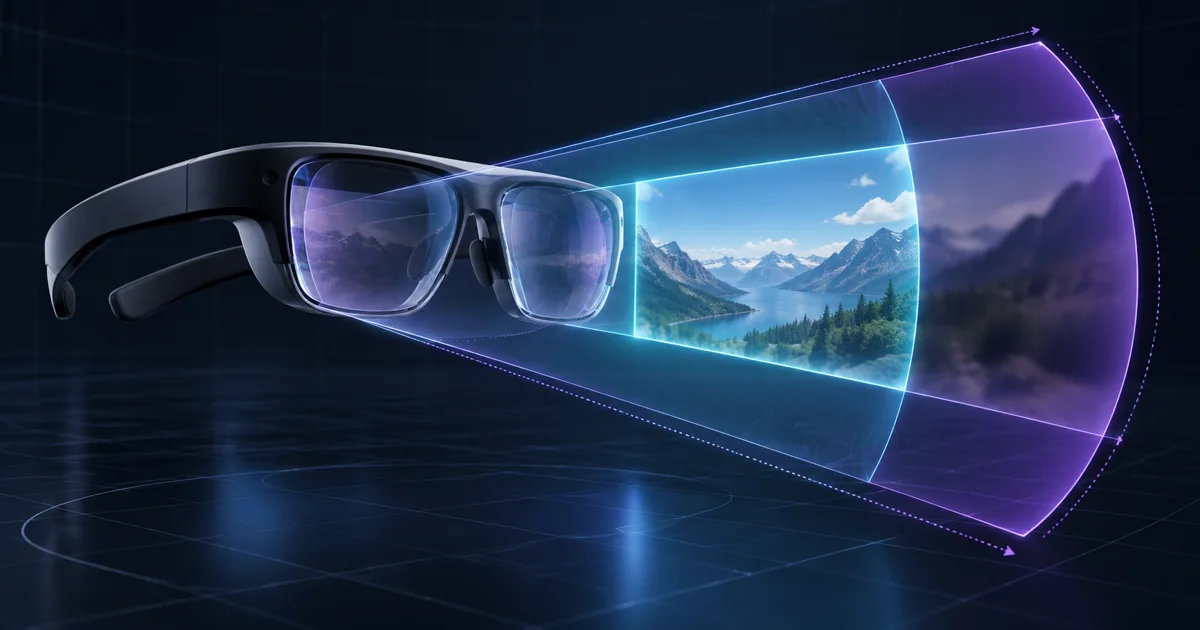
Meta VR Glasses field of view requires more central interfaces
Meta publishes field of view, rendering, and resolution values per eye. See why pixels don't define the safe area of the VR interface.
Read full analysis →
Meta VR Start Competition Accelerates Prototypes for VR Glasses and Quest
Program accepts new experiences or relevant updates until November 18th. See how to use the deadline to validate a product, not just a demo.
Read full analysis →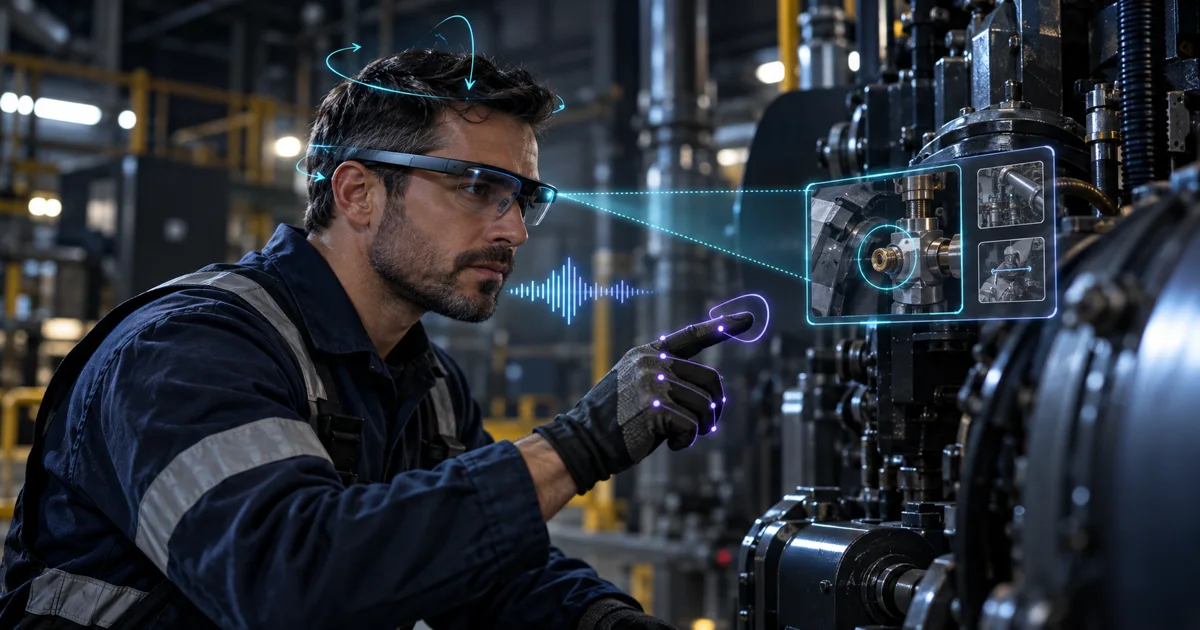
Meta Glasses combine motion, camera and voice into contextual streams
Device Access Toolkit 1.0 brings together IMU, visual capture, ASR and display. See how to design AR assistance with privacy and fallback.
Read full analysis →
WebMCP limits what actions Meta AI can perform in web apps on the glasses
Preview allows you to expose specific tools from a web app to the assistant. Understand contracts, confirmation, permitting, and auditing.
Read full analysis →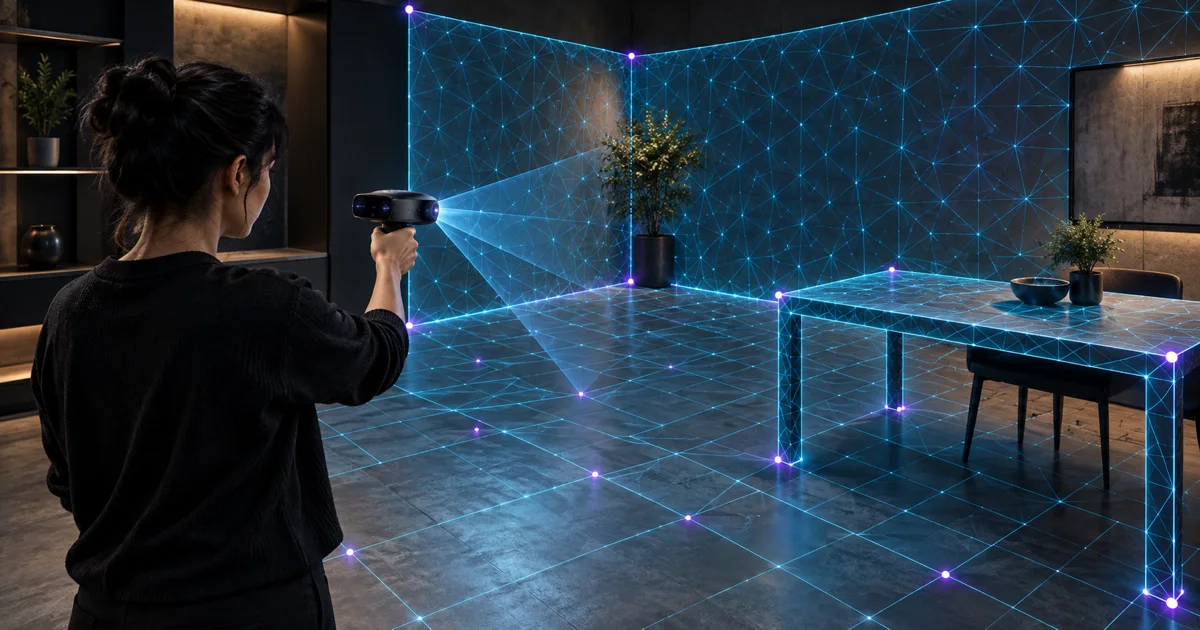
OpenXR standardizes planes, polygons and semantic labels in XR
Ratified extent describes floor, wall, table, and 2D meshes by spatial components. See portability, trust, and physical QA.
Read full analysis →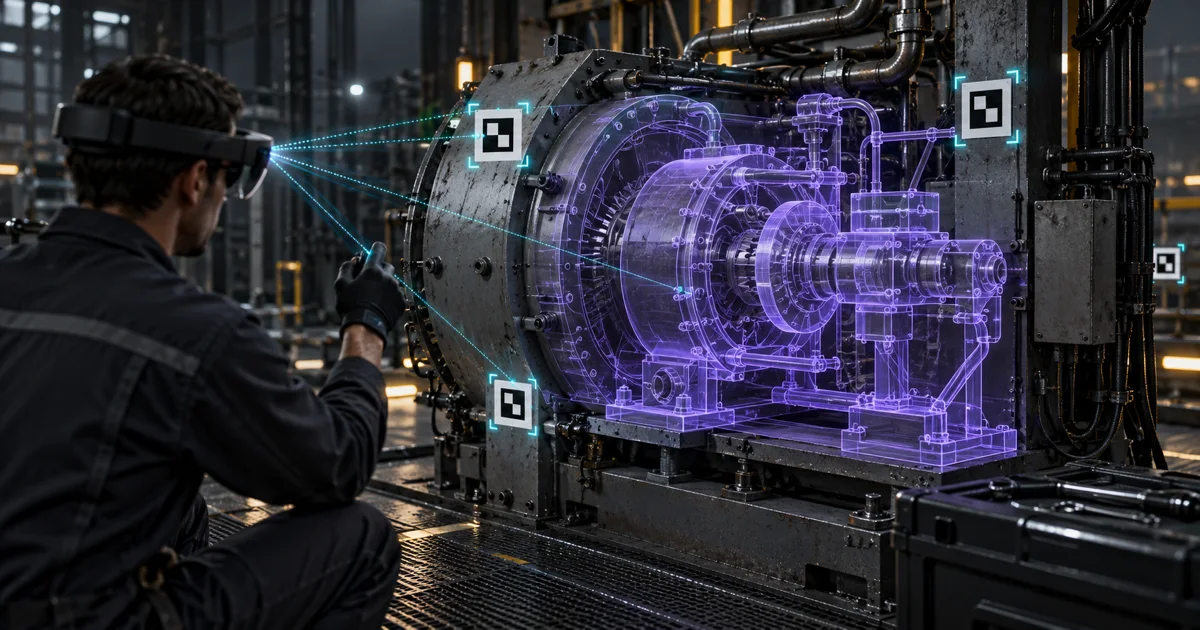
OpenXR unifies QR, AprilTag and ArUco tracking in XR
Ratified extension brings together families of markers and spatial data. Understand industrial alignment, physical size and operational security.
Read full analysis →AI, VR, AR and XR: analysis of the day
Eight original Nexus readings on official updates relevant to corporate decisions.

Gemini 3.8 TTS Brings Voice Replication with Consent Verification to API
Google makes TTS 3.8 available and requires recording consent to replicate voices. See retention, biometrics and enterprise governance.
Read full analysis →
Anthropic creates verified AI access for life sciences research
Beta program separates standard use and high-risk projects, with verification and monitoring. Understand the shared responsibility model.
Read full analysis →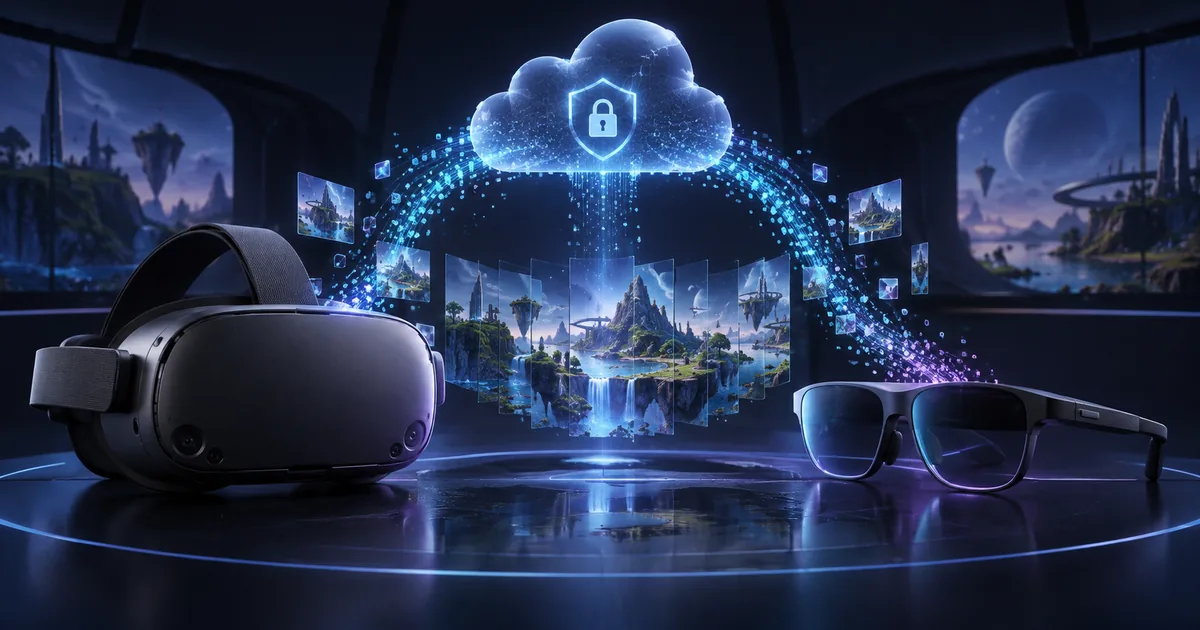
Cloud Backup requires real-world restore testing when migrating to Meta VR Glasses
Progress may migrate from Quest upon installation, but is not continually synced. See limits, directories and test scenarios.
Read full analysis →
Meta Platform SDK 207 restores Group Presence and invites in PC VR
Update fixes presence, invitations and user APIs in Link v207. See why native code and version matrix need to be retested.
Read full analysis →
Meta AI Connectors turns APIs into actions accessible through glasses
Preview allows you to expose services to the assistant via API or MCP, without a new application. See scope of tools, authentication and confirmation.
Read full analysis →
Explore creates new discovery surfaces for AI-powered eyewear experiences
Meta prepares catalog in the app and curated on Ray-Ban Display. Understand submission readiness, assets, and metrics without promising general availability.
Read full analysis →
OpenXR standardizes asynchronous persistence of spatial entities
Ratified extensions define context, scopes, UUIDs, and persist or remove operations. See implications for durable XR experiences.
Read full analysis →
OpenXR creates portable database for tracking images in XR
Ratified extension defines formats, reference images, and static optimization. Understand target quality, scaling, and cross-runtime testing.
Read full analysis →AI, VR, AR and XR: analysis of the day
Eight original Nexus readings on official updates relevant to corporate decisions.

Meta Muse combines AI agents for long-running software engineering
Muse Spark 1.3 and Muse Code expand coordinated work between agents. See how to test productivity without losing governance.
Read full analysis →
Claude agents identify candidate for new enzyme system in biological data
Anthropic experiment shows agents searching for DNA repeats at scale. Understand the outcome, its limits and the necessary governance.
Read full analysis →
Device Readiness Check anticipates failures in migration to Meta VR Glasses
Experimental tool examines input, field of view, and project dependencies. See how to use the report without confusing it with approval.
Read full analysis →
Meta VR UI Set standardizes accessible components for spatial interfaces
SDK 1.0.0 brings buttons, cards, dialogs, and navigation to Compose. Understand where consistency helps and where testing remains mandatory.
Read full analysis →
Meta prepares Device Access Toolkit 1.0 for AI glasses experiences
Stable version unifies camera, audio and motion on iOS and Android. See opportunities, regional limits and privacy requirements.
Read full analysis →
Web apps arrive on the Meta glasses display with HTML, CSS and JavaScript
Meta paves a web path for 600×600 additive display experiences. See interaction, design, and distribution limitations.
Read full analysis →
Immersive Web SDK 1.0 brings gaze, pinch, and diagnostics to XR testing on the web
Version 1.0 integrates gaze tracking, desktop emulation and browser tools. See how to turn features into reliable regression.
Read full analysis →
Meta Virtual Camera Publisher connects XR cameras to the Android pipeline
Apps can expose spectator, drone, or avatar views as Camera2 devices. Understand GPU lifecycle, formats and cost.
Read full analysis →AI, VR, AR and XR: analysis of the day
Eight original Nexus readings on official updates relevant to corporate decisions.

Microsoft Copilot turns persistent agents into governed digital colleagues
Home, Code, and Autopilot connect delegated work, solution building, and continuous execution. See what changes in business governance.
Read full analysis →
Claude Opus 5.5 combines more efficient agents with security controls
Anthropic touts lower typical cost, higher speed, and protections for long-lasting agents. Understand how to evaluate the model without relying solely on benchmarks.
Read full analysis →
Meta VR Glasses swaps standard control for gaze and pinch gestures
The new format prioritizes gauze and hands, but maintains optional compatibility with controls. See impacts on design, accessibility and testing.
Read full analysis →
Meta XR Simulator v207 brings look and pinch to VR testing lab
The update allows you to simulate the new entry model and Meta VR Glasses on the desktop. Understand what to automate and what still requires a headset.
Read full analysis →
Terrain and Roof Anchors Make Geospatial AR More Height Accurate
ARCore solves altitude with data from the terrain or the top of buildings. See differences, asynchronous flow, and field validation criteria.
Read full analysis →
Geospatial Depth extends AR depth map to up to 65 meters
ARCore combines local observations with Streetscape Geometry terrain and buildings. Understand applications, limits and necessary tests.
Read full analysis →
Meta VR Layout SDK brings spatial windows to existing Android apps
Compose and React Native gain anchoring, priority and fallback without migrating the entire app to a 3D engine. See when the pattern makes sense.
Read full analysis →
Stereo Surface Composition Brings 3D Video to the Android Pipeline on Horizon OS
SDK 207 distributes side-by-side or top-bottom buffers between eyes within a Surface. Understand proportion, compatibility and validation.
Read full analysis →AI, VR, AR and XR: analysis of the day
Eight original Nexus readings on official updates relevant to corporate decisions.

OpenAI proposes global standards for advanced AI security
The proposal combines common metrics, incident protocols and international coordination. Understand what this changes in business governance.
Read full analysis →
Anthropic brings independent assessment into AI development
The partnership with Accenture provides for embedded evaluators, red teaming and safeguards testing. See benefits, conflicts and necessary controls.
Read full analysis →
Meta eliminates black screen in the transition between VR and passthrough
The PassthroughLayerResumed event helps synchronize the camera roll before switching the scene. Understand the pattern and how to test it.
Read full analysis →
Meta brings together VR performance controls in reproducible lab on Quest
The sample combines CPU, GPU, FFR, resolution, MSAA and SpaceWarp at runtime. See how to turn tweaks into testable profiles.
Read full analysis →
ARKit now tracks known moving objects every frame
The trackingObjects property uses 3D references and updates pose at high frequency. See when to choose tracking or just detection.
Read full analysis →
Snap Checklist turns AR performance into publishing criteria
Spectacles requires 60 FPS, thermal budget, hardware testing, and complete metadata. See how to take the gate to business projects.
Read full analysis →
OpenXR ratifies common spatial anchors for XR applications
XR_EXT_spatial_anchor creates entities in a standardized pose and context. Understand life cycle, discovery and what the extension does not guarantee.
Read full analysis →
OpenXR standardizes reference image banks for XR tracking
XR_EXT_spatial_image_tracking creates asynchronous bases and associates each detection with the source image. See formats, IDs and portability precautions.
Read full analysis →AI, VR, AR and XR: analysis of the day
Eight original Nexus readings on official updates relevant to corporate decisions.

OpenAI Evals turns AI quality into continuous, traceable testing
Evals organizes test suites, criteria, and runs to measure changes to prompts and models. See how to apply the discipline in production.
Read full analysis →
Anthropic Citations links AI responses to the snippets that support each statement
The API returns passages and document positions along with the response. Understand verifiability, costs, limits and product design.
Read full analysis →
Meta XR Simulator allows you to test VR body tracking without wearing a headset
The simulator reproduces body movement to validate avatars and interaction logic. See synthetic test range, configuration, and limits.
Read full analysis →
Meta Building Blocks accelerates prototyping and multiplayer testing in VR
Ready blocks cover matchmaking, avatars, voice, objects and placement. Understand benefits, dependencies and what still needs engineering.
Read full analysis →
ARCore Camera Config balances focus, FPS, depth and resolution in AR
The camera can be filtered by rate, sensor and texture; the focus changes between tracking and close capture. See how to decide by use case.
Read full analysis →
ARCore uses frame buffering to stabilize augmented reality pipelines
A circular texture queue can reduce stutter in multithreaded rendering, but increases memory and delay. See when to measure and when to avoid.
Read full analysis →
OpenXR identifies whether hand tracking comes from the hands or the controls
The XR_EXT_hand_tracking_data_source extension differentiates between optical tracking and control-derived pose. See impact on gestures, UI and fallback.
Read full analysis →
OpenXR Local Floor standardizes a stable origin at floor level
Local-floor space combines local origin and estimated floor height, now mandatory in OpenXR 1.1. Understand alignment, events, and uses.
Read full analysis →AI, VR, AR and XR: analysis of the day
Eight original Nexus readings on official updates relevant to corporate decisions.

OpenAI Batch API reduces cost of AI payloads that don't need to be immediate
The Batch API processes up to 50 thousand asynchronous requests with a 24-hour window. See where the model helps and what business controls are needed.
Read full analysis →
Anthropic prompt caching reduces repetition in long AI contexts
The cache reuses stable prompt prefixes to reduce latency and cost. Understand TTL, breakpoints, invalidation and metrics for production.
Read full analysis →
Standalone Meta XR Simulator brings VR testing to the computer without a headset
The OpenXR runtime simulates Quest profiles, inputs, and synthetic environments on Windows and macOS. See scope, limits and usage in enterprise QA.
Read full analysis →
Meta XR Simulator records and replays sessions for repeatable VR testing
Session Capture records poses and inputs in VRS and allows automatic replay. Understand how to use the feature in regression and continuous integration.
Read full analysis →
ARCore Environmental HDR brings virtual light closer to the real environment
The API estimates directional light, spherical harmonics, and HDR cubemap for coherent shadows and reflections. See rendering applications and care.
Read full analysis →
ARCore EIS stabilizes the camera for on-the-go augmented reality experiences
Electronic stabilization uses gyroscope and compensated coordinates to reduce shake and rolling shutter. See support, rendering and testing.
Read full analysis →
WebXR Hand Input standardizes articulated hands for in-browser XR experiences
The module exposes joints and hand poses as WebXR spaces. Understand portability, privacy, ergonomics and controller fallback.
Read full analysis →
WebXR Layers improves clarity and composition of XR interfaces on the web
The proposal allows quad, cylinder, cubemap and media layers composed by the runtime. See performance, readability, support, and fallback.
Read full analysis →AI, VR, AR and XR: analysis of the day
Eight original Nexus readings on official updates relevant to corporate decisions.

Anthropic proposes metrics for automation and supervision of AI agents
The report measures how much of the research is already AI-led, display coverage, and compute usage. See how to adapt indicators to business governance.
Read full analysis →
Microsoft links AI transformation to complete process redesign
Microsoft's internal experience shows why licenses and usage are not enough. Understand results, limits and a roadmap for processes with agents.
Read full analysis →
Thermal management in Meta Quest requires testing VR from the first to the sixtieth minute
Horizon OS reduces clocks when heat exceeds the sustainable budget. See how to avoid frame drops and degradation in long sessions.
Read full analysis →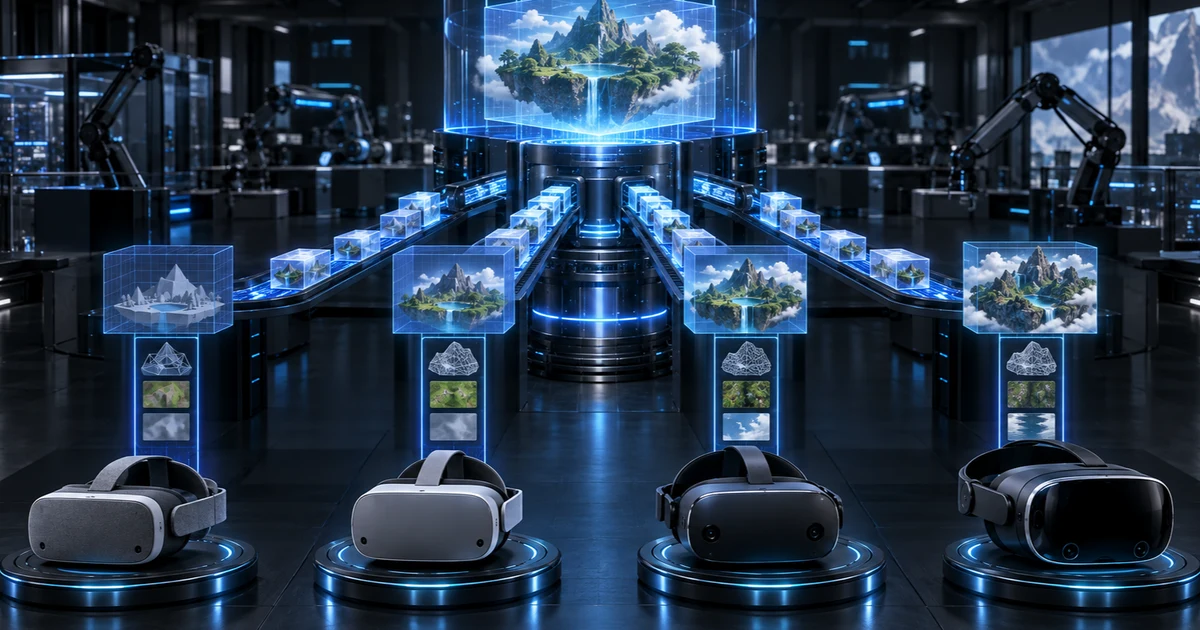
Meta Quest allows you to distribute different VR builds per device
Device targeting separates APKs for different Quest generations and capabilities. Understand release performance, size, rollback and governance.
Read full analysis →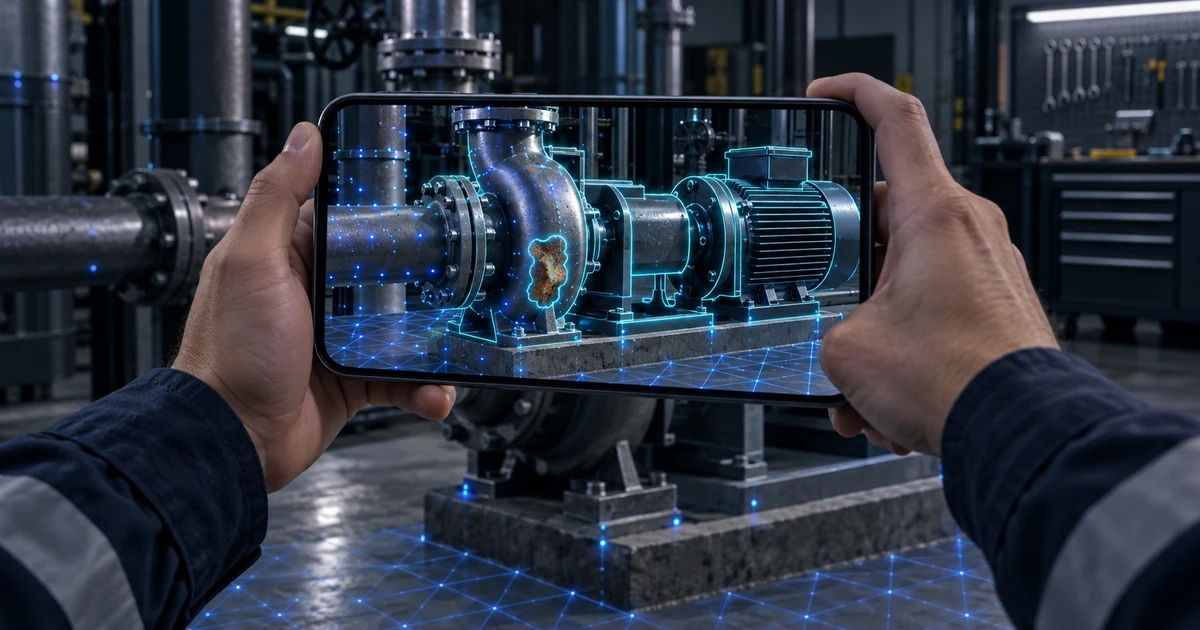
ARCore Shared Camera combines AR tracking and computer vision on Android
The feature shares the camera between ARCore and Camera2 to process frames during the session. See surfaces, compatibility and depth limit.
Read full analysis →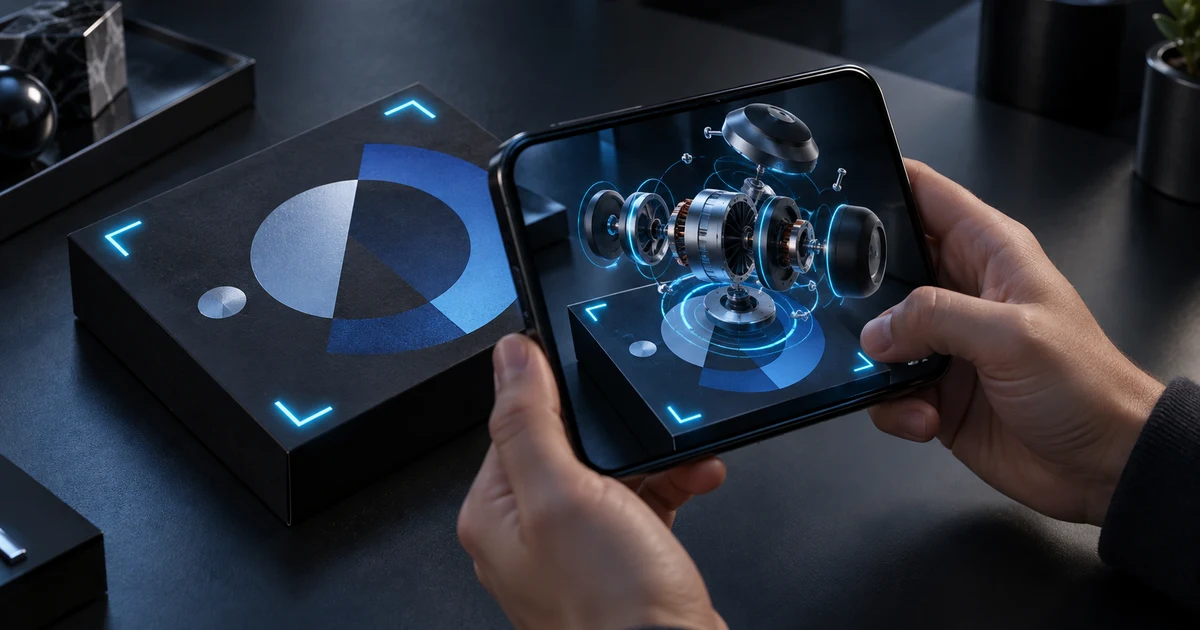
ARCore Augmented Images turns packaging and posters into AR triggers
ARCore detects and tracks 2D images on the device, with banks of up to a thousand references. See quality, scale and performance criteria.
Read full analysis →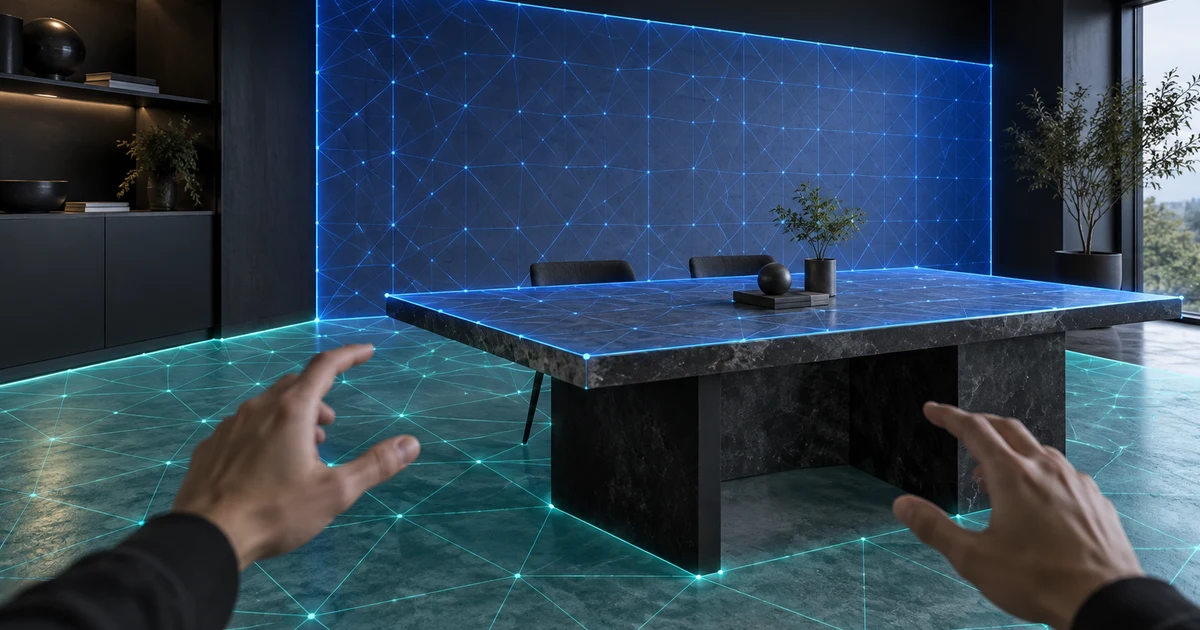
WebXR Plane Detection exposes real surfaces for web spatial experiences
The W3C draft delivers polygons, orientation, and semantic labels of detected planes. Understand anchoring, privacy, and fallback.
Read full analysis →
WebXR Raw Camera Access Opens Camera Pixels for Computer Vision on the Web
The module proposes a texture synchronized to XR vision for effects and analysis per frame. See permissions, alignment, privacy, and maturity.
Read full analysis →AI, VR, AR and XR: analysis of the day
Eight original Nexus readings on official updates relevant to corporate decisions.

OpenAI connects AI analytics to business value and real tasks
New analytics relate usage, cost, tasks and results in ChatGPT Work and Codex. See how to transform telemetry into business decisions.
Read full analysis →
OpenAI creates framework to investigate misalignment of AI models
The framework records incidents such as unauthorized actions and concealment of instructions. Understand what changes in governance, testing and disclosure.
Read full analysis →
Foveated rendering on Meta Quest trades peripheral detail for VR performance
The technique reduces resolution at the edges to alleviate GPU, power and heat. See when to apply, how to measure and what artifacts to avoid.
Read full analysis →
Meta Quest Passthrough transforms the physical environment into the basis for mixed reality
Stereo, color and depth cameras connect digital objects to real space. Understand security, occlusion, and experience design.
Read full analysis →
ARCore Cloud Anchors synchronizes AR experiences across users and devices
Cloud-hosted visual maps enable shared and persistent content. See quality, authorization, privacy and operation.
Read full analysis →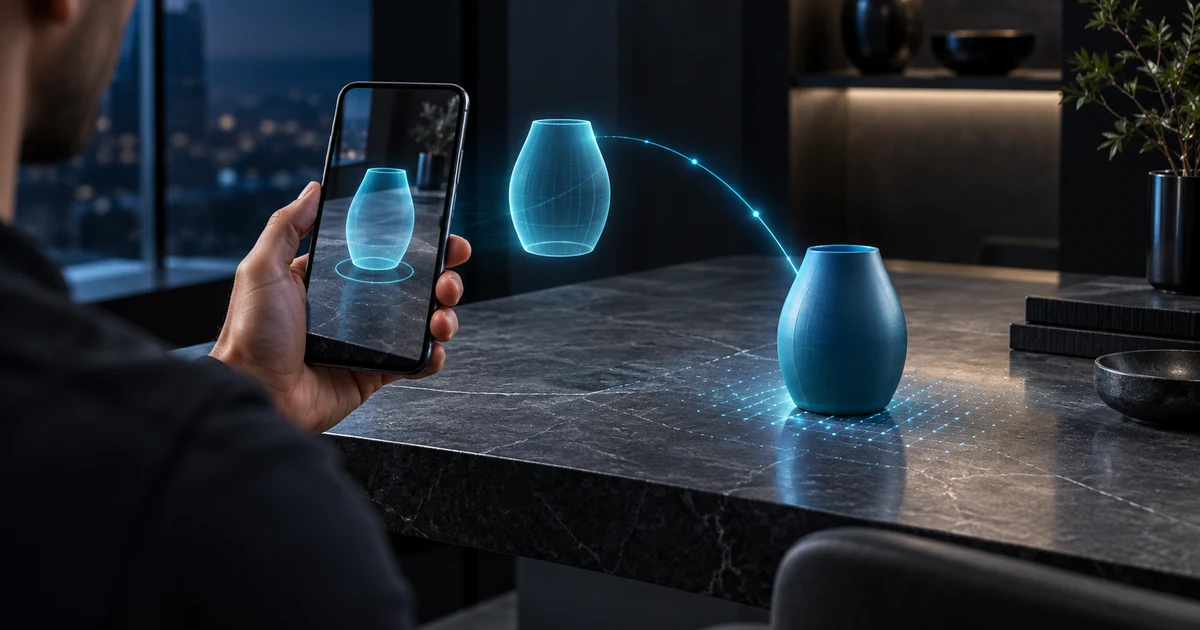
ARCore Instant Placement reduces the wait to place objects in augmented reality
Objects appear before full plane detection and refine their pose live. See UX, scale, transition, and technical limits.
Read full analysis →
WebXR Lighting Estimation brings virtual light and real environment closer in the browser
The API provides direction, intensity, spherical harmonics, and reflections for XR compositing. Understand realism, performance and privacy.
Read full analysis →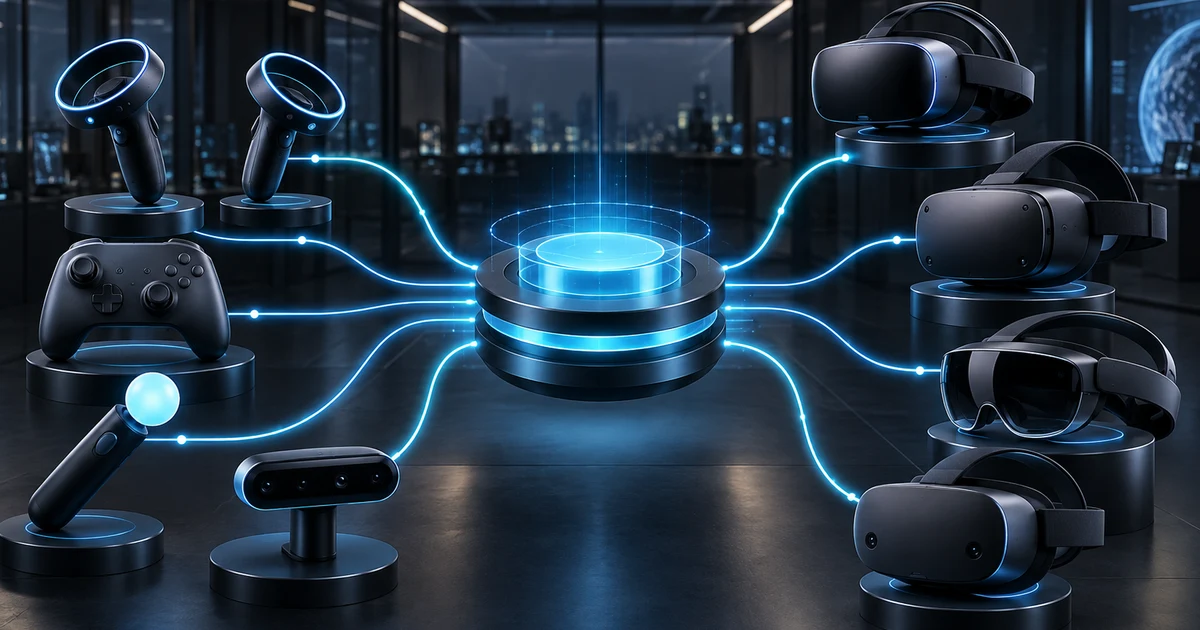
WebXR Gamepads standardize buttons, triggers, and immersive control axes
The module connects XRInputSource to the Gamepad API and defines the xr-standard mapping. See interoperability, states, and accessibility.
Read full analysis →AI, VR, AR and XR: analysis of the day
Eight original Nexus readings on official updates relevant to corporate decisions.

ChatGPT for Financial Services Integrates Premium Data and Verifiable Citations
OpenAI delivered a specialized experience for finance with licensed data, reasoning, and traceability. See governance, limits and applications.
Read full analysis →
GPT-6 Astra reinforces full stack strategy for enterprise work
OpenAI correlates model capability, products, infrastructure, and savings per task completed. Understand what changes in the adoption architecture.
Read full analysis →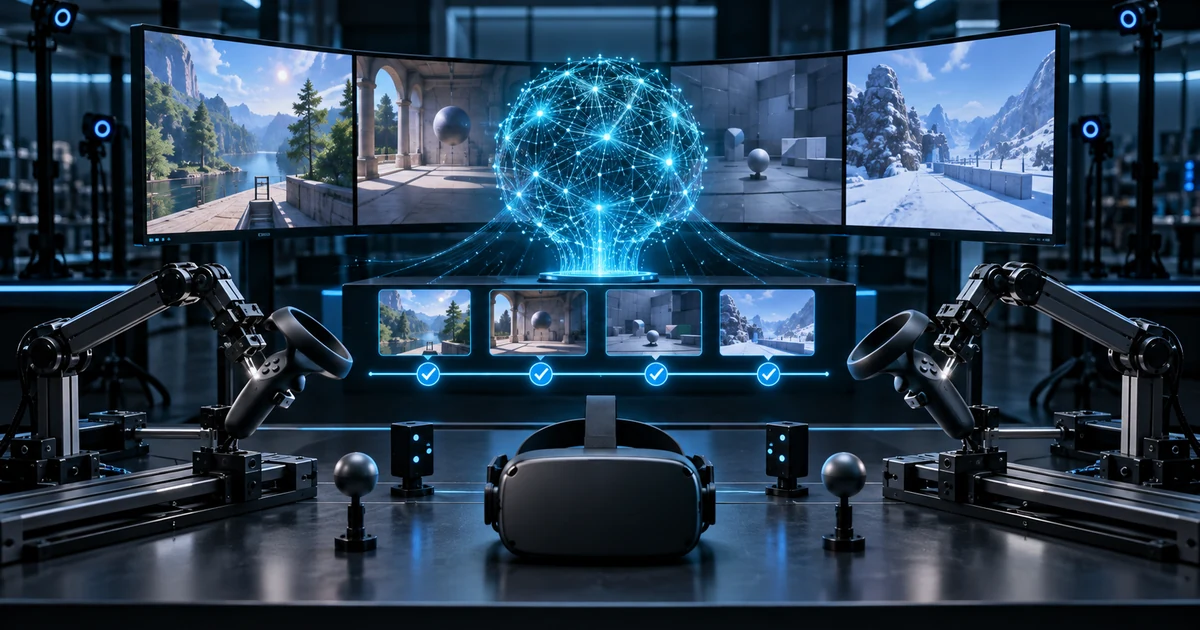
Meta XR Operator closes the loop on automated testing in VR applications
The experimental layer allows MCP-enabled agents to view, navigate, and verify apps in the simulator. See range and limits.
Read full analysis →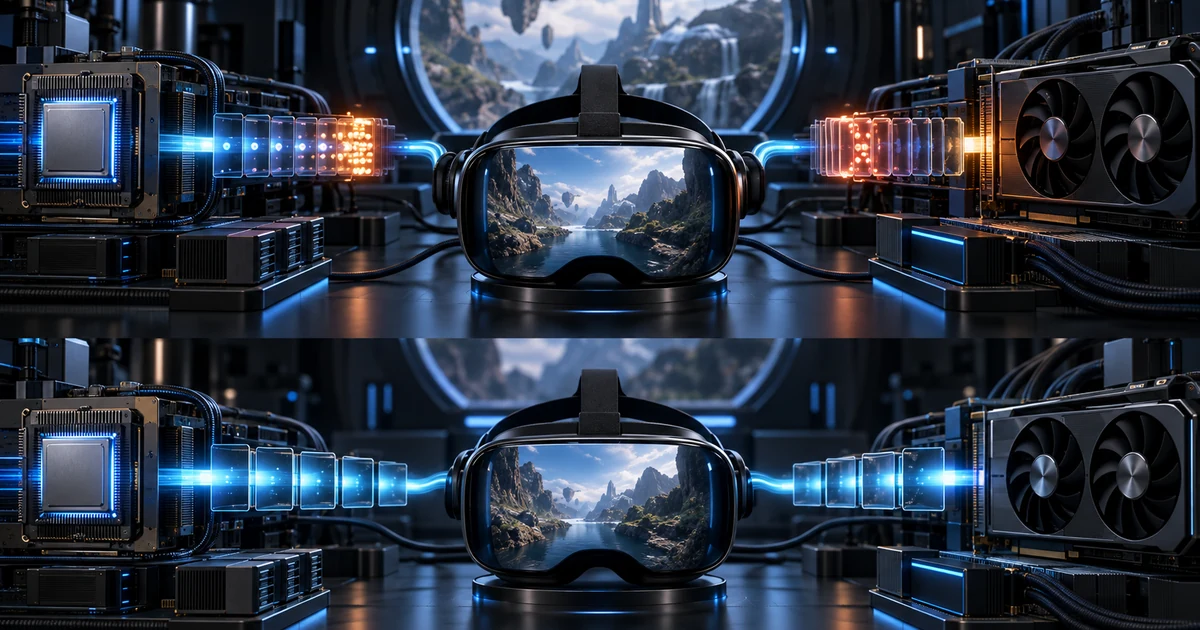
Meta Quest Runtime Optimizer measures the real cost of objects and shaders in VR
The experimental tool analyzes frame time, bottlenecks and cost per GameObject in Unity builds on Quest. See how to apply it without false shortcuts.
Read full analysis →
ARCore Scene Viewer lowers the barrier to viewing 3D products in AR
The viewer opens web-hosted models in 3D or augmented reality and allows fallback. See conversion, compatibility and operation.
Read full analysis →
ARCore Geospatial API connects augmented reality to real-world locations
The API combines sensors, GPS and VPS to position content at an urban scale. Understand anchor types, coverage, accuracy, and privacy.
Read full analysis →
WebXR Test API creates simulated devices for automated XR testing
The W3C draft defines device mocks, poses, inputs and resources for Web Platform Tests. See what this means for quality.
Read full analysis →
OpenXR Matrix exposes differences in extensions between engines, runtimes and headsets
Khronos added middleware data to the extensions matrix to show where features actually reach the application. See how to use it in architecture.
Read full analysis →AI, VR, AR and XR: analysis of the day
Eight original Nexus readings on official updates relevant to corporate decisions.

OpenAI data agent brings governed analytics to business questions
The new agent connects approved sources, semantic layers, and BI tools to investigate data and create dashboards. See governance requirements.
Read full analysis →
Anthropic report shows AI agents increasing the speed of attacks
Cases interrupted between December 2025 and August 2026 show automation at multiple steps in the attack chain. See defensive implications.
Read full analysis →
Unity OpenXR becomes recommended path for new Meta Quest projects
Meta supports Unity 6.3 or higher with OpenXR and enhances automated design and performance analysis. Understand the architectural decision.
Read full analysis →
Enterprise VR Operation Requires Support Designed for Continuity
Varjo detailed how it separates technical support from professional services in simulators and training centers. See how to structure the operation.
Read full analysis →
ARCore Scene Semantics allows AR to differentiate streets, buildings and people
The API uses machine learning to label pixels from outdoor scenes into 11 classes and expose confidence. See applications, limits and privacy.
Read full analysis →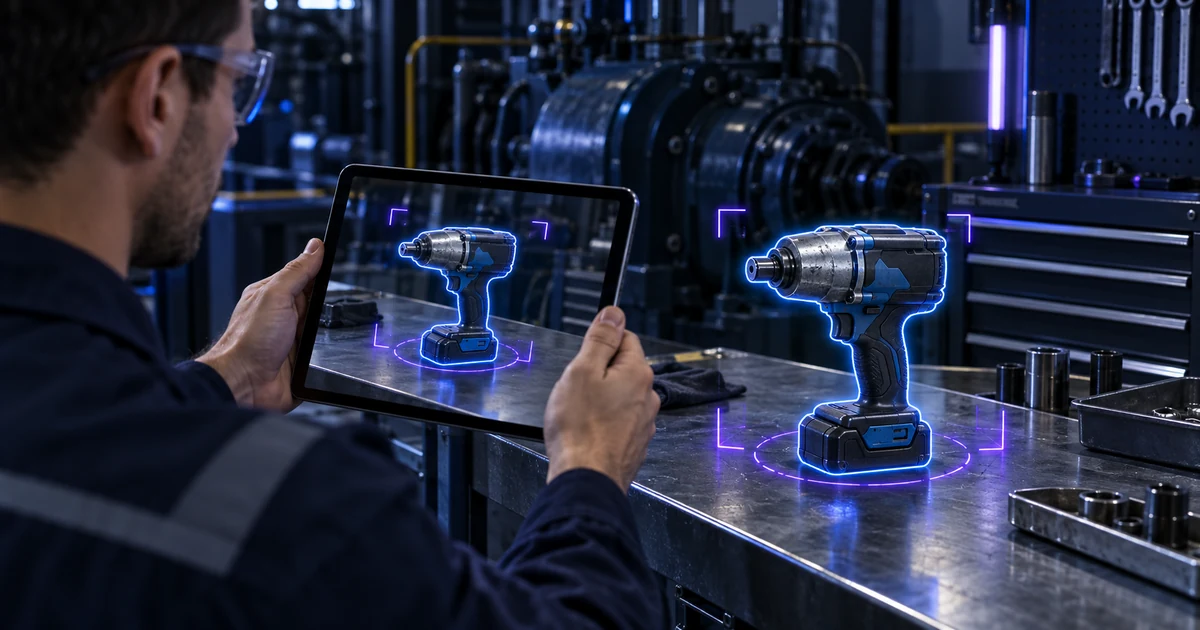
ARKit uses reference objects to keep instructions attached to the equipment
Tracking by .referenceobject allows you to recognize known items and track their pose. Understand capture, limits and application in the field.
Read full analysis →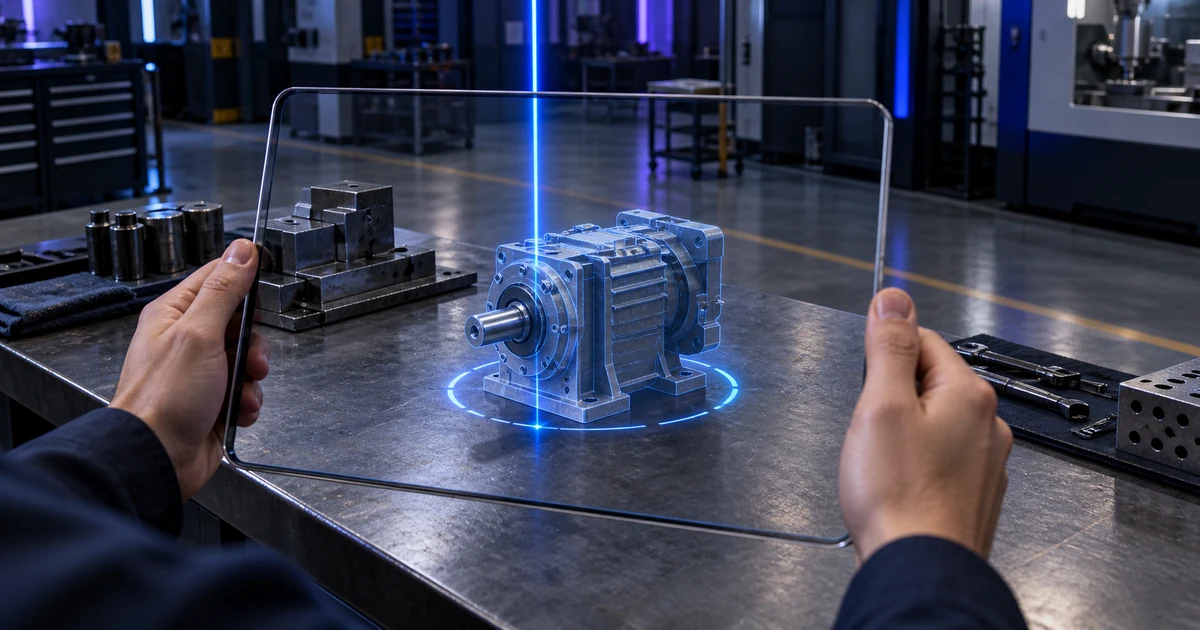
WebXR Hit Test standardizes AR object placement in the browser
The module calculates intersections between rays and points, planes or meshes in the real environment. See precision, input, privacy, and fallback.
Read full analysis →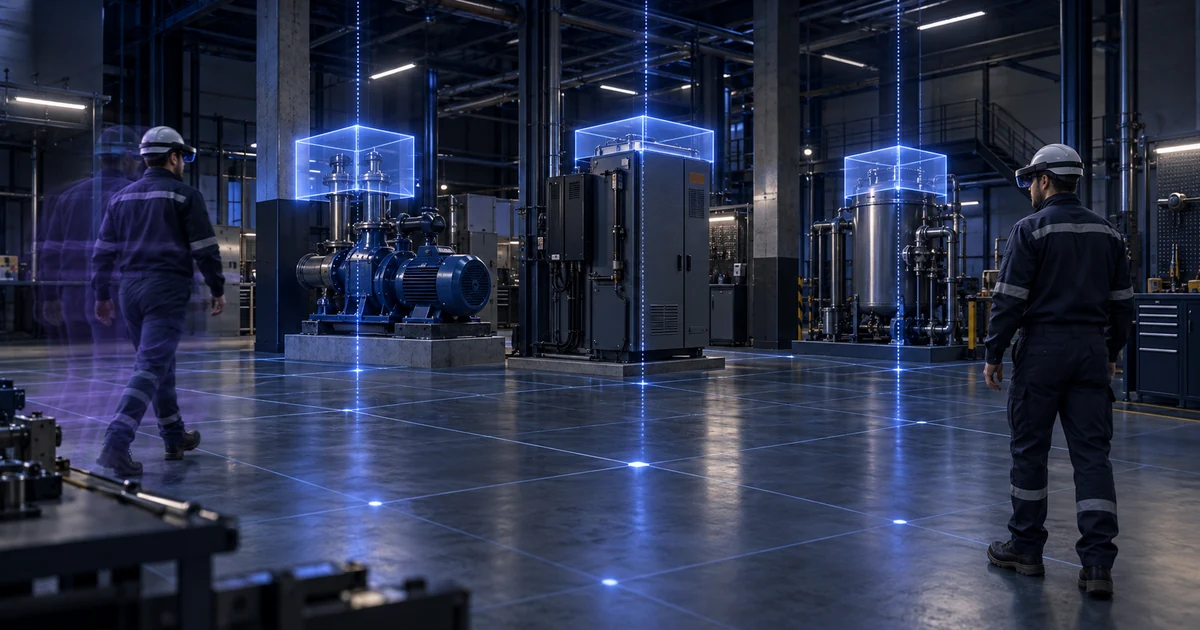
WebXR Anchors keep virtual content linked to real-world positions
The pattern draft allows you to create, track, persist, and restore spatial anchors. Understand stability, lifecycle and privacy.
Read full analysis →AI, VR, AR and XR: analysis of the day
Eight original Nexus readings on official updates relevant to corporate decisions.

Double-blind AI assessment protects model prompts and weights
Google pilot uses confidential environment to reduce benchmark contamination. See how architecture can increase confidence in external assessments.
Read full analysis →
Claude text watermark signals AI participation without hidden characters
Anthropic explained how probabilistic patterns can indicate model participation. Understand what the watermark proves and where it fails.
Read full analysis →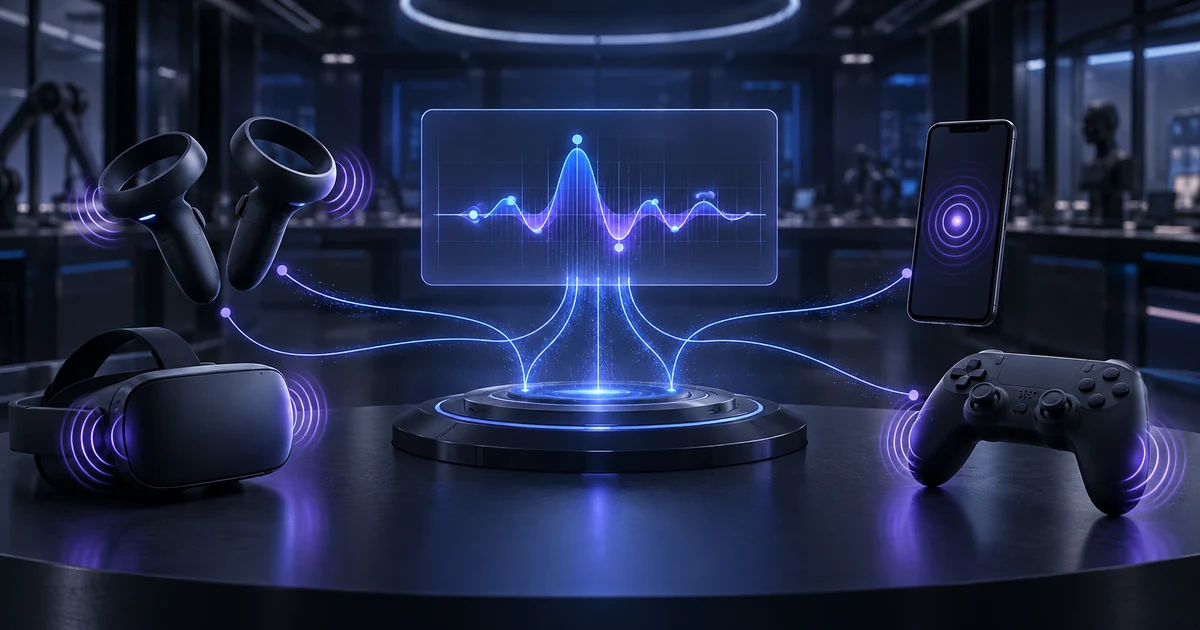
Open Meta Haptics Studio reduces fragmentation of haptic feedback in VR
The tool and SDK can now be adapted by the community and generate reusable assets. See impacts on portability, quality and maintenance.
Read full analysis →
Gauze- and LiDAR-guided autofocus improve readability in mixed reality
The XR-4 Focal Edition adjusts the focus of the passthrough camera by eye. Understand benefits, trade-offs and professional cases.
Read full analysis →
RealityKit Object Capture turns photographs into 3D assets for AR
Apple combines guided capture, metadata and photogrammetry. See how to plan for quality, scale, and optimization for commerce and training.
Read full analysis →
ARCore Streetscape Geometry brings buildings and terrain to urban experiences
The API provides meshes of structures obtained from Street View when geospatial mode is active. See location uses, limits, and governance.
Read full analysis →
WebXR DOM Overlays reuse HTML and CSS within immersive sessions
The W3C module allows you to compose an interactive 2D web interface on top of WebXR. See benefits, input conflicts and pattern maturity.
Read full analysis →
OpenXR Quad Layers make 2D interfaces clearer in 3D space
Quad layers are composed by the runtime and can preserve dashboard readability. Understand order, limits, and when to use in XR experiences.
Read full analysis →AI, VR, AR and XR: analysis of the day
Eight original Nexus readings on official updates relevant to corporate decisions.

WeatherNext 3 brings AI-powered weather forecasting to operational decisions
The Google model updates predictions every hour and reaches 5 km grids. Understand uses and limits for energy, logistics, agribusiness and operations.
Read full analysis →
AlphaGenome Atlas turns 9 billion variants into research map
Google DeepMind has pre-calculated molecular effects of every possible change of a letter in human DNA. See the range and limits of the atlas.
Read full analysis →
Immersive Web SDK brings AI agents to in-browser VR development
Meta has integrated skills, testing and design knowledge into IWSDK. See where automation speeds up prototyping and where the headset remains indispensable.
Read full analysis →
Hands-first in VR demands simplicity, tolerance and accessible routes
Meta's updated guidelines show when to use hands, controls, or both. See how to reduce fatigue and tracking failures in corporate projects.
Read full analysis →
ARCore lets you record a session and repeat AR tests at scale
The Recording and Playback API brings together MP4 video, IMU, depth, and metadata. See how to create a reproducible QA foundation for augmented reality.
Read full analysis →
RoomPlan converts indoor environments into structured 3D models
Apple's framework combines camera, LiDAR, machine learning and RealityKit to recognize walls, openings and objects. See enterprise applications.
Read full analysis →
WebXR Depth Sensing brings virtual content closer to real geometry
The W3C module exposes depth for occlusion, collision, and environmental awareness. Understand performance, privacy and maturity of the standard.
Read full analysis →
OpenXR Spatial Containers propose modular spatial content at runtime
The self-rendering extension groups layers and allows you to retain the last submission per container. See the potential for composite XR systems.
Read full analysis →AI, VR, AR and XR: analysis of the day
Eight original Nexus readings on official updates relevant to corporate decisions.

Habitat Shows How to Scale the Data Layer of AI Products
OpenAI revealed the architecture that serves more than 70 million requests per second. See scale, latency, governance, and cost lessons for AI products.
Read full analysis →
AI Agents Begin Testing Software and Returning Verifiable Evidence
The Cognition and Devin case shows agents running tests and delivering recordings and reports. Understand how to reduce revision without giving up human validation.
Read full analysis →
FrameSync changes Meta Quest's frame pacing and requires prolonged testing
The new algorithm reduces old frames and motion latency, but may increase CPU, GPU and temperature usage. See how to validate VR experiences.
Read full analysis →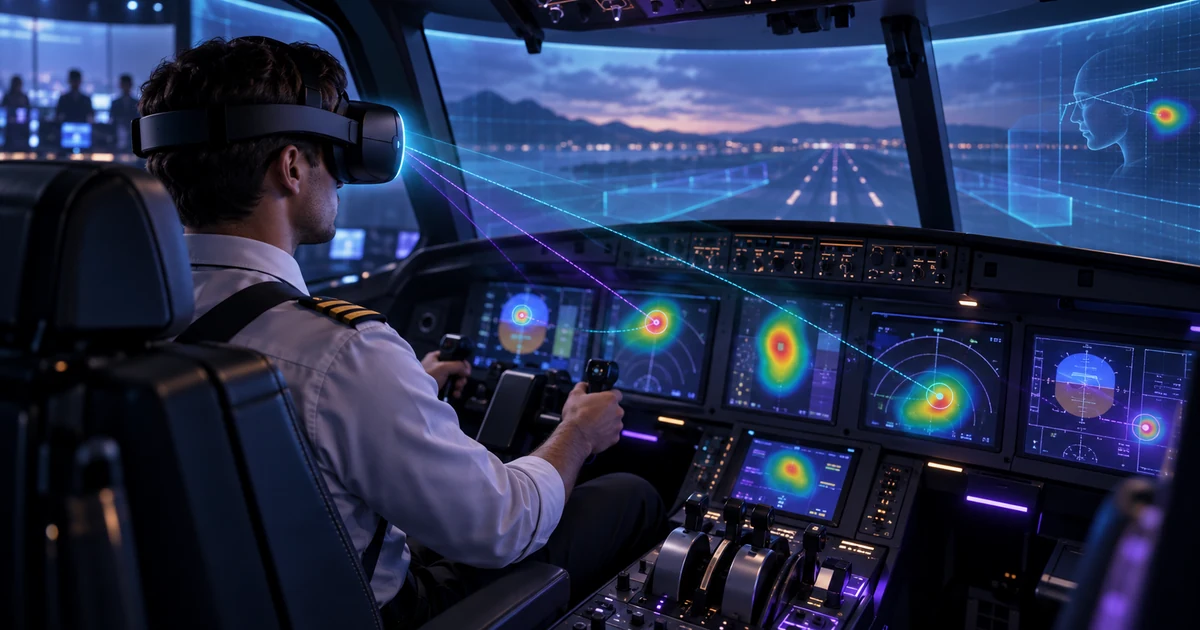
Eye tracking and AI make attention measurable in VR training
A test with RAF pilots looked at visual scanning, priority and workload. See the potential and limits for corporate assessment.
Read full analysis →
NaviNote combines spatial location and AI to conquer the last few meters
Niantic Spatial's design uses visual positioning and community annotations for accessible navigation. Understand the architecture and implementation precautions.
Read full analysis →
Camera Kit brings ray tracing to AR experiences on iOS
Version 1.46 added ray tracing support and performance improvements on iOS. See where realism helps and how to control battery, heat, and compatibility.
Read full analysis →
OpenXR 1.1.63 extends portable blocks for space experiments
The SDK incorporates spatial containers, image tracking, camera, and light estimation. Understand what is already ratified and what remains supplier-specific.
Read full analysis →
Unity within Unreal signals a cross-engine XR pipeline
A demo synchronized simulation, physics, light and input between Unity and Unreal via PolySpatial. See potential, risks and deadline before planning production.
Read full analysis →AI, VR, AR and XR: analysis of the day
Eight original Nexus readings on official updates relevant to corporate decisions.

GPT-Live-1 brings full-duplex voice to enterprise AI agents
OpenAI's new voice API listens and speaks at the same time, accepts interruptions and delegates tasks. See architecture, metrics and precautions for voice service.
Read full analysis →
Agents API turns long-running AI agents into managed service
OpenAI has opened an API for cloud agents with durable sessions, tools and sandboxes. Understand what to outsource and what remains under company governance.
Read full analysis →
Meta repositions the Quest ecosystem for sustainable VR growth
Official usage, revenue and discovery data shows a more segmented VR market. See what this changes in product, acquisition and retention.
Read full analysis →
VIVE Host shows how to operate a VR fleet without relying on a PC
Tablet control, monitoring, and content distribution simplify multi-headset sessions. See requirements for training and events.
Read full analysis →
Augmented reality transforms therapeutic movement into measurable activity
The Augment Therapy and Niantic case shows how body games can support rehabilitation. Understand clinical design, engagement and limits of evidence.
Read full analysis →
ARCore brings Unity projects closer to Swift Package Manager on iOS
Alpha support for SPM and compatibility with Unity 6.3 reduces dependency friction in AR. See how to test the change without compromising existing builds.
Read full analysis →
visionOS 27 enters App Store submission phase with Xcode 27 RC
Apple has opened submissions with the final candidate SDK and set the requirement for 2027. See how to prepare tests, metadata and launch space apps.
Read full analysis →
KHR_interactivity brings portable behaviors into glTF
The Khronos candidate extension incorporates behavior graphs into the 3D asset. Understand the potential for web, XR, and cross-platform configurators.
Read full analysis →AI, VR, AR and XR: analysis of the day
Eight original Nexus readings on official updates relevant to corporate decisions.

AI proposes formal proof for Navier–Stokes and reinforces the importance of verification
OpenAI published an AI-generated solution accompanied by proof in Lean. Understand why formal verification, human review, and reproducibility matter for R&D.
Read full analysis →
AI Augments Business Work When Capability Meets Governance
OpenAI describes a new range of feasible tasks with advanced models. See how to transform capacity into results safely, cost-effectively and responsibly.
Read full analysis →
Meta expands pre-launch and distribution tools for VR projects
Early listings, larger channels, and new commercial controls change launch planning on Quest. See how to organize a corporate pilot.
Read full analysis →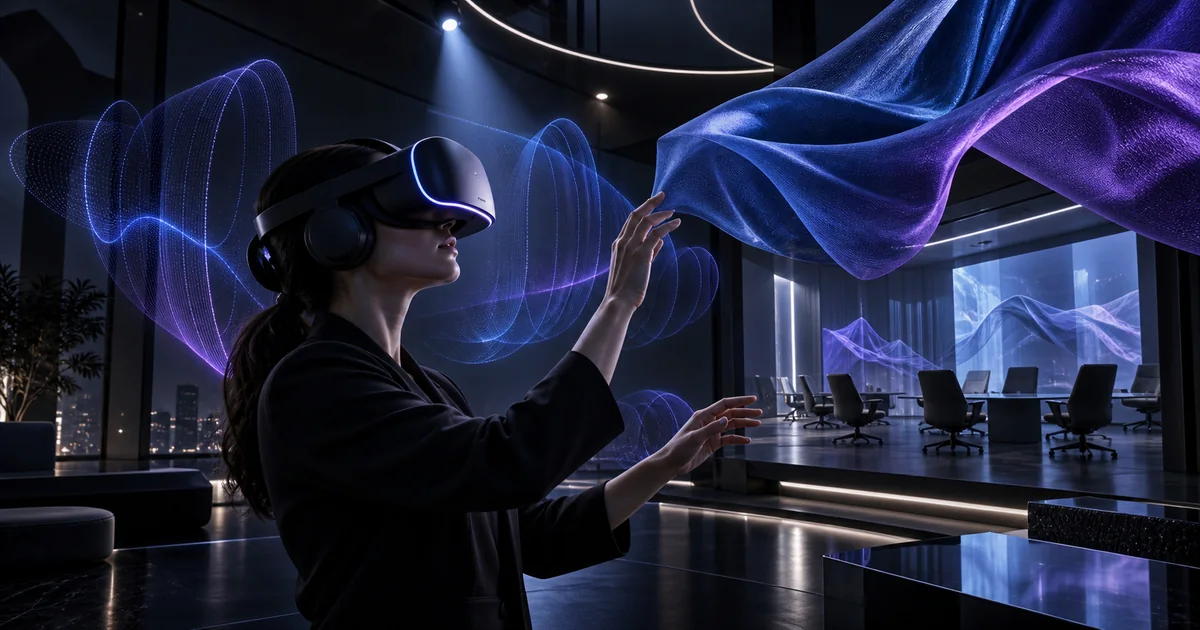
RealityKit brings fabrics, lighting and audio closer to real-world behavior
New features in visionOS 27 increase presence and realism in simulations. Understand when they help VR training and how to avoid cost without return.
Read full analysis →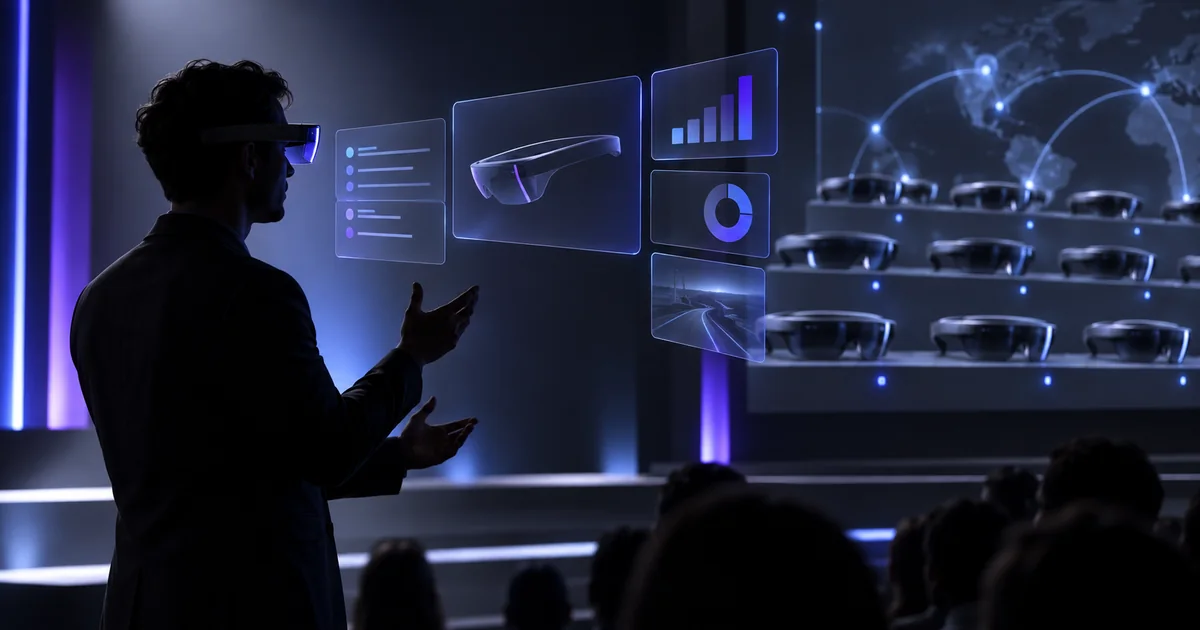
Spectacles turns presentation and device management into practical AR cases
The Snap OS update brings together teleprompter, interaction improvements and fleet management. View lessons for presentations, training, and operations.
Read full analysis →
End of ARDK 3 cycle requires migration plan for persistent AR projects
Niantic has terminated Shared AR at 3.x and recommends moving to 4.x before support ends. See inventory, testing, and operational continuity.
Read full analysis →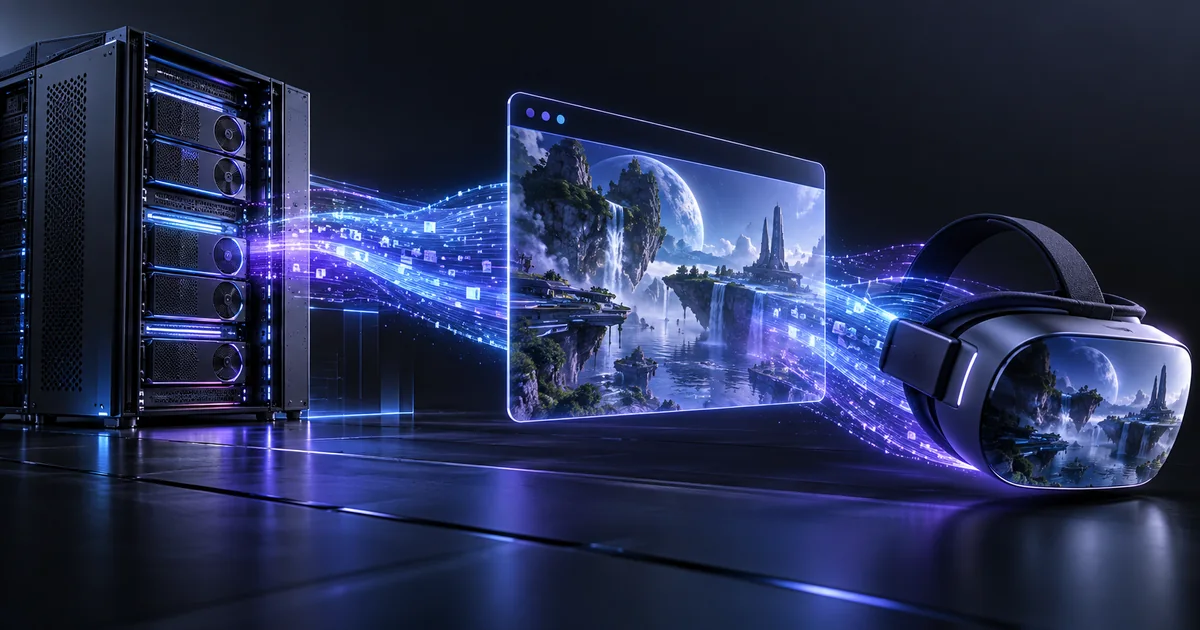
CloudXR 6 brings high-fidelity OpenXR content to the browser
NVIDIA has connected OpenXR applications to headsets, visionOS, and streaming web clients. Understand architecture, networking, privacy, and criteria for enterprise use.
Read full analysis →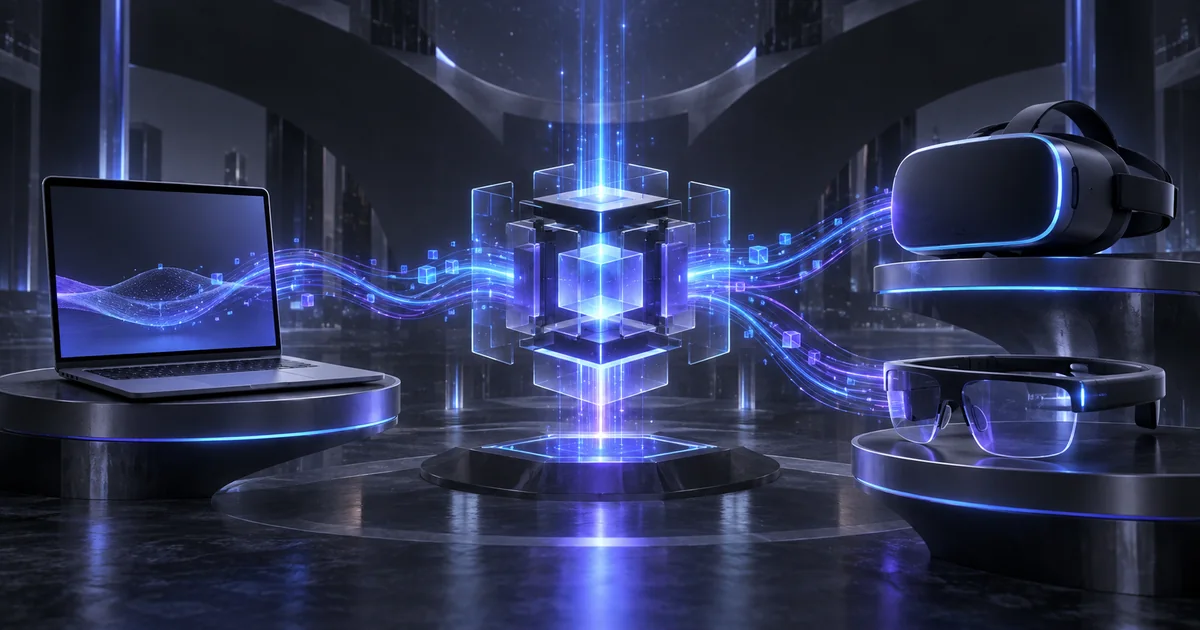
WebXR Device API advances as interoperable foundation for immersive experiences
The 2026 draft Candidate Recommendation consolidates web access to VR and AR devices. See what status means for business decisions.
Read full analysis →AI, VR, AR and XR: analysis of the day
Eight original Nexus readings on official updates relevant to corporate decisions.

AI agents speed up research, but still depend on human supervision
Data published by OpenAI shows more code, experiments and long tasks with agents. See metrics, limits and lessons for enterprise R&D.
Read full analysis →
Claude Fable 5.1 extends long-term agents for enterprise work
Anthropic positions the model for tasks that span hours and applications. Understand cost, availability, safeguards, and adoption criteria.
Read full analysis →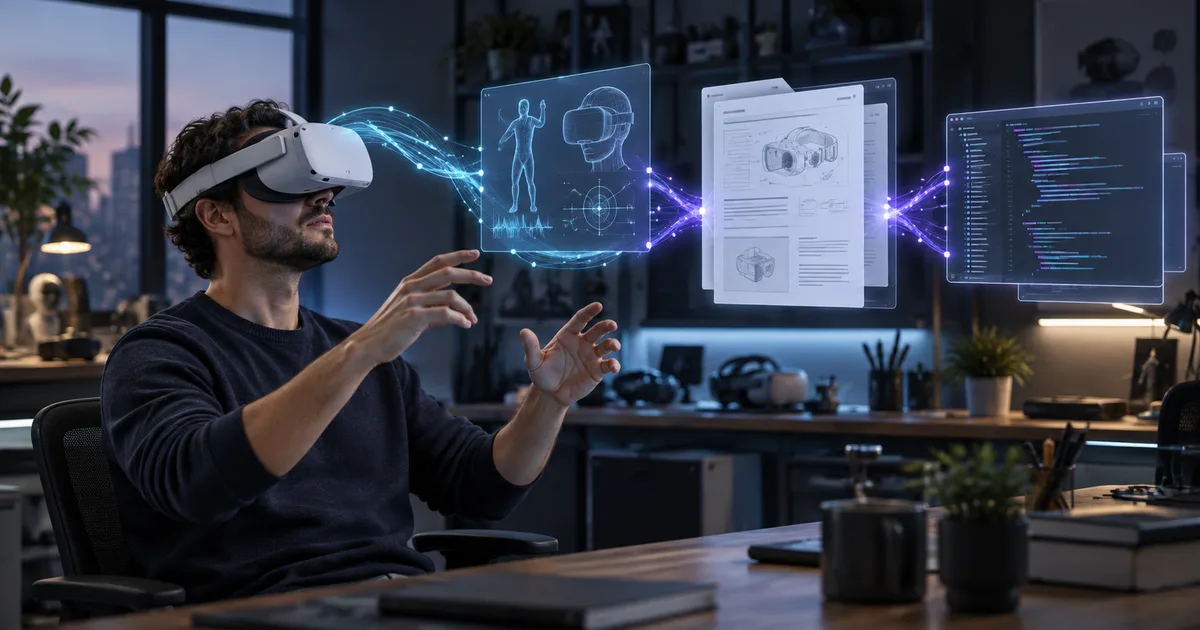
Horizon Debug Bridge connects AI agents to the VR development cycle
Meta has opened an MCP server for assistants to consult the headset and documentation. See benefits, limits and controls for VR teams.
Read full analysis →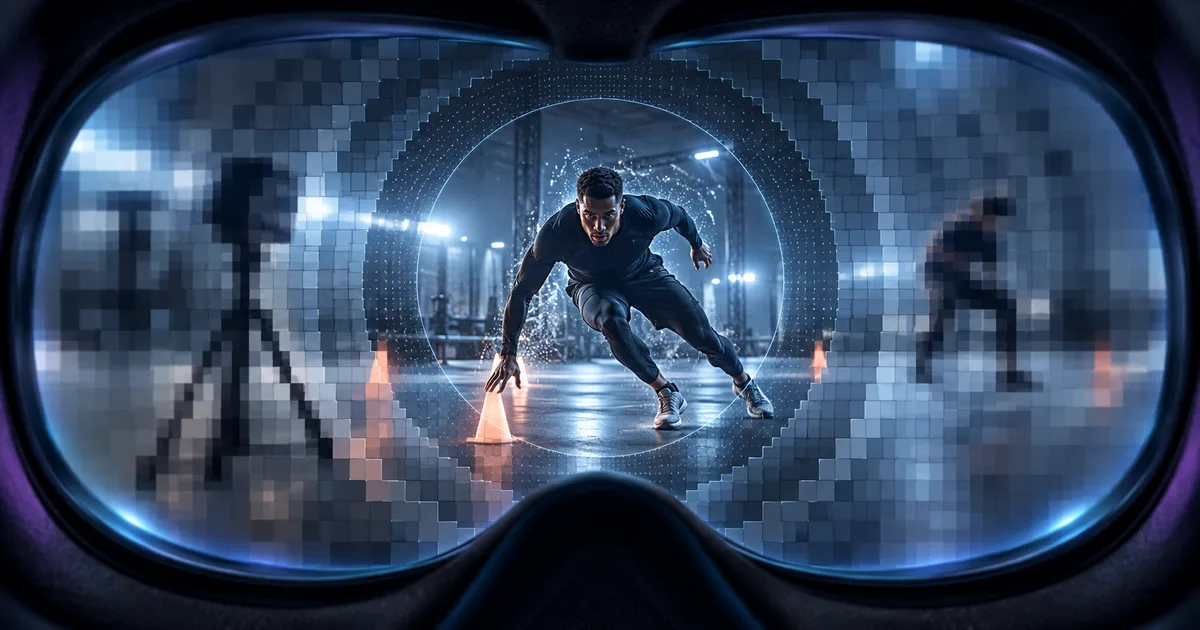
Foveation reduces bandwidth without abandoning the clarity of immersive video
Apple documents 4K distribution for content captured at 8K per eye and 90 fps. Understand the technique and how to validate quality in VR.
Read full analysis →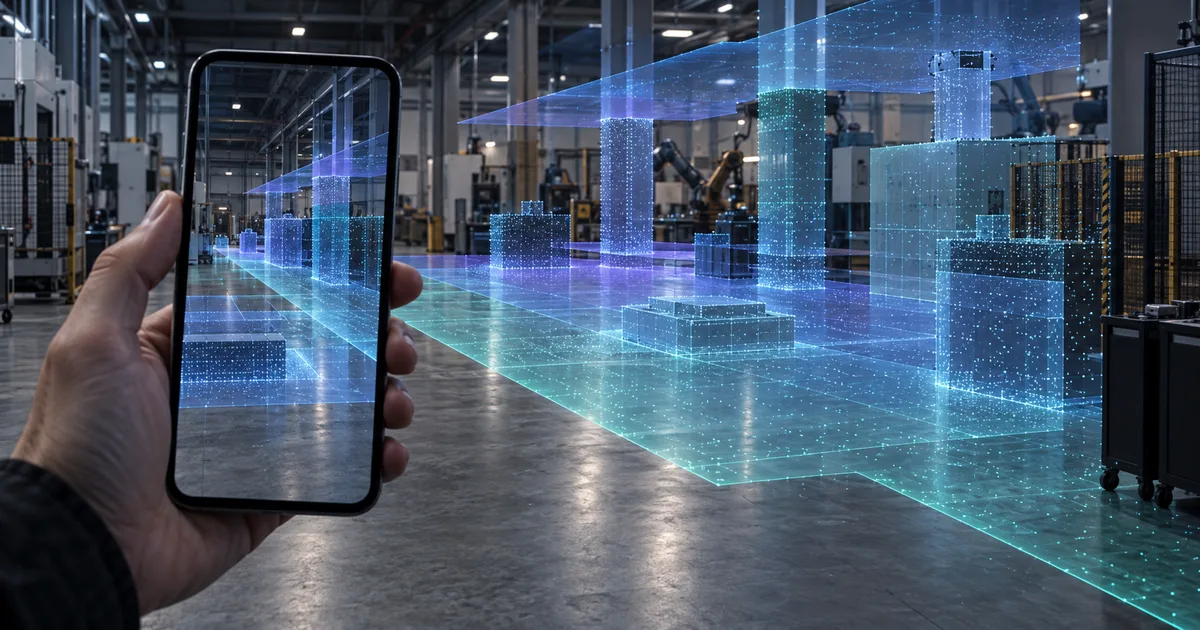
ARCore 1.56 exposes depth in meters to approximate AR and OpenXR
New APIs deliver floating point depth maps and update the Android target. See impact on interoperability and migration.
Read full analysis →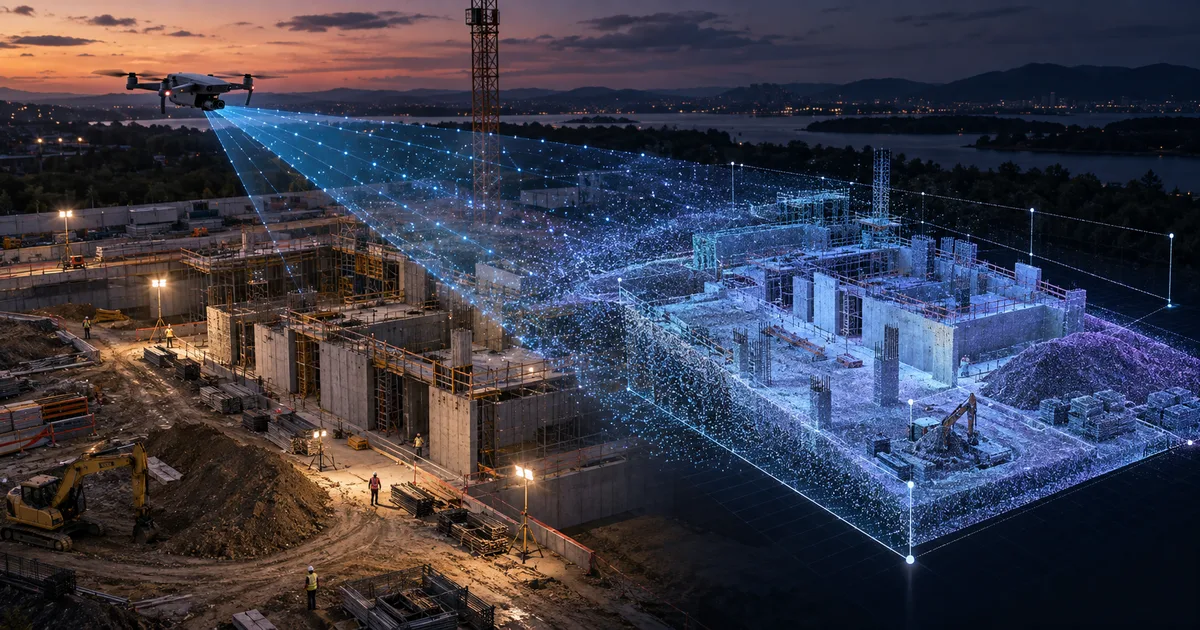
Aerial Splats Turn Drone Capture into Measurable Base for AR
Niantic Spatial and Spexi rebuilt areas of 100 thousand m² with standardized flights. See applications, evidence and limits for infrastructure.
Read full analysis →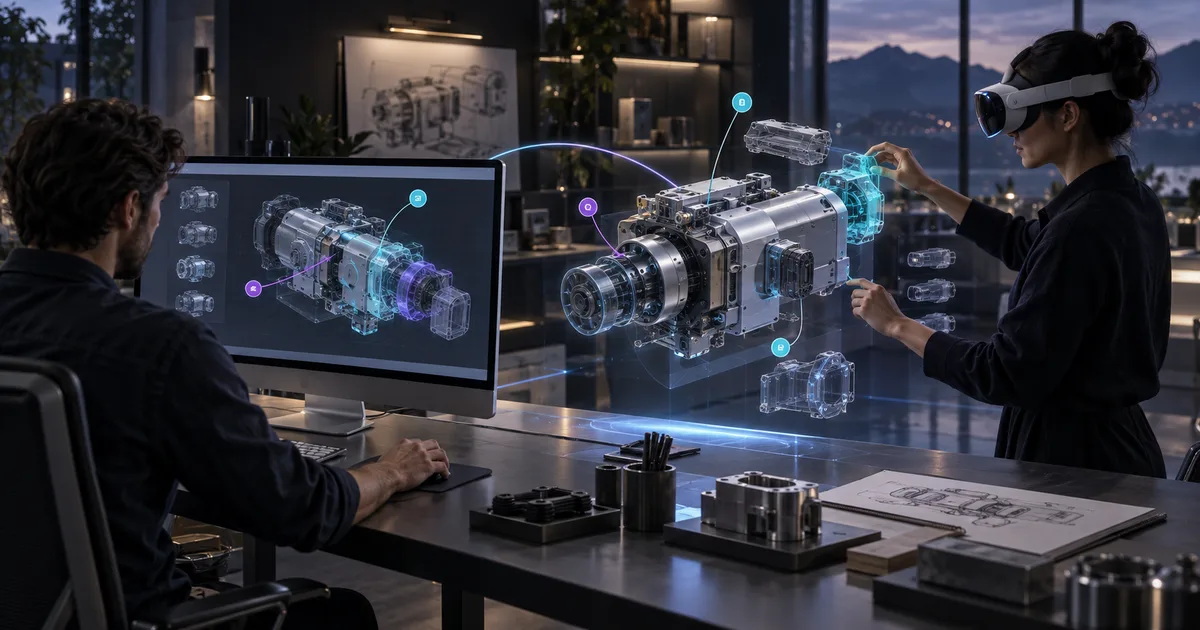
Spatial Preview brings Mac collaborative 3D review to Apple Vision Pro
The framework synchronizes USD scenes, annotations, and edits between macOS and visionOS. Understand flow, optimization and business applications.
Read full analysis →
OpenXR adopts per-port fees to scale compliant deployments
Khronos has reduced economic barriers from the formal compliance process. See what changes for providers and buyers of XR solutions.
Read full analysis →AI, VR, AR and XR: analysis of the day
Eight original Nexus readings on official updates relevant to corporate decisions.

OpenAI brings AI training to independent newsrooms in Ukraine
The initiative with WAN-IFRA and AIRPPU combines training and practical experimentation. See what media companies can learn about responsible AI adoption.
Read full analysis →
Google Fairwind tests AI agents for proactive cyber defense
The limited access program brings together templates and standalone tools to find and fix vulnerabilities. Understand enterprise controls and applications.
Read full analysis →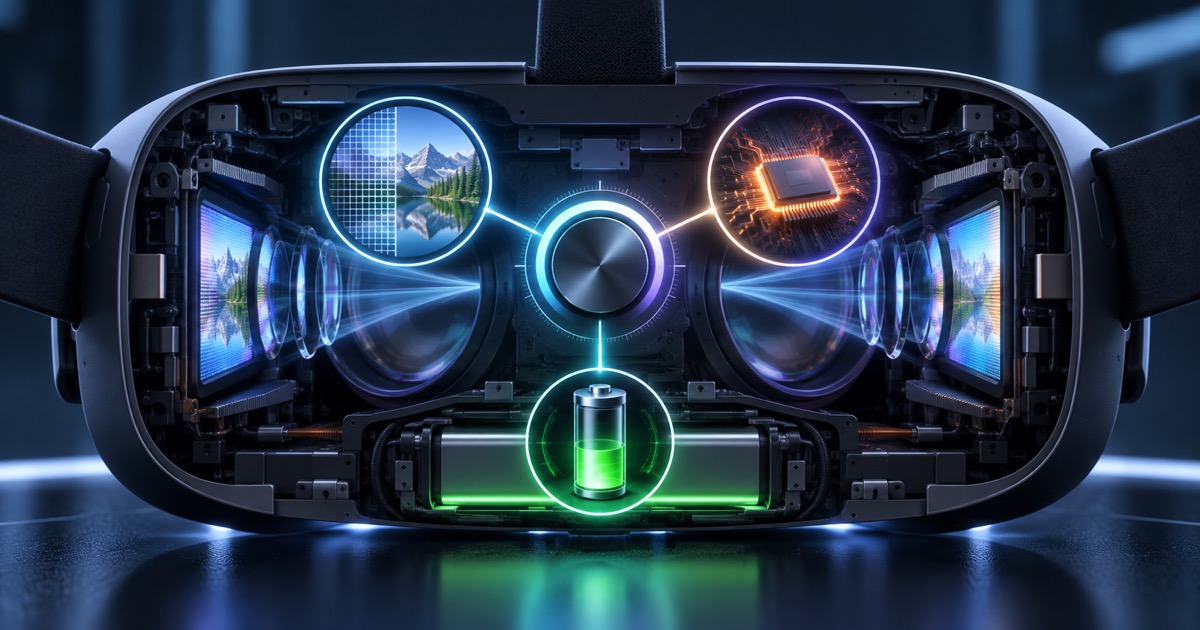
Render scale in Meta Quest: how to balance sharpness and performance in VR
Meta's updated documentation shows why physical resolution and rendering resolution are different. See how to test clarity, frame rate and battery.
Read full analysis →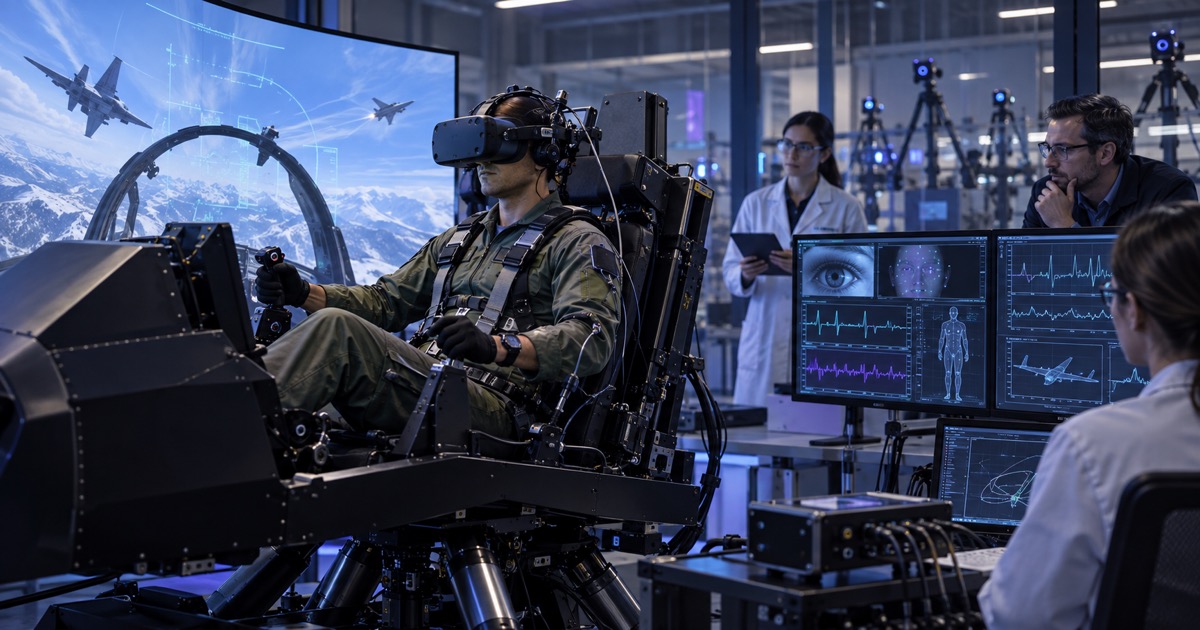
When the VR simulator becomes a performance measurement instrument
The Strike Fighter League uses standardized rigs and professional XR to measure skills. See lessons applicable to corporate training and assessment.
Read full analysis →
Urban digital twin brings AR and simulation to the scale of a city
Niantic Spatial, HMCI and Rancho Cordova redeveloped four square kilometers for planning and physics AI. Understand applications and governance.
Read full analysis →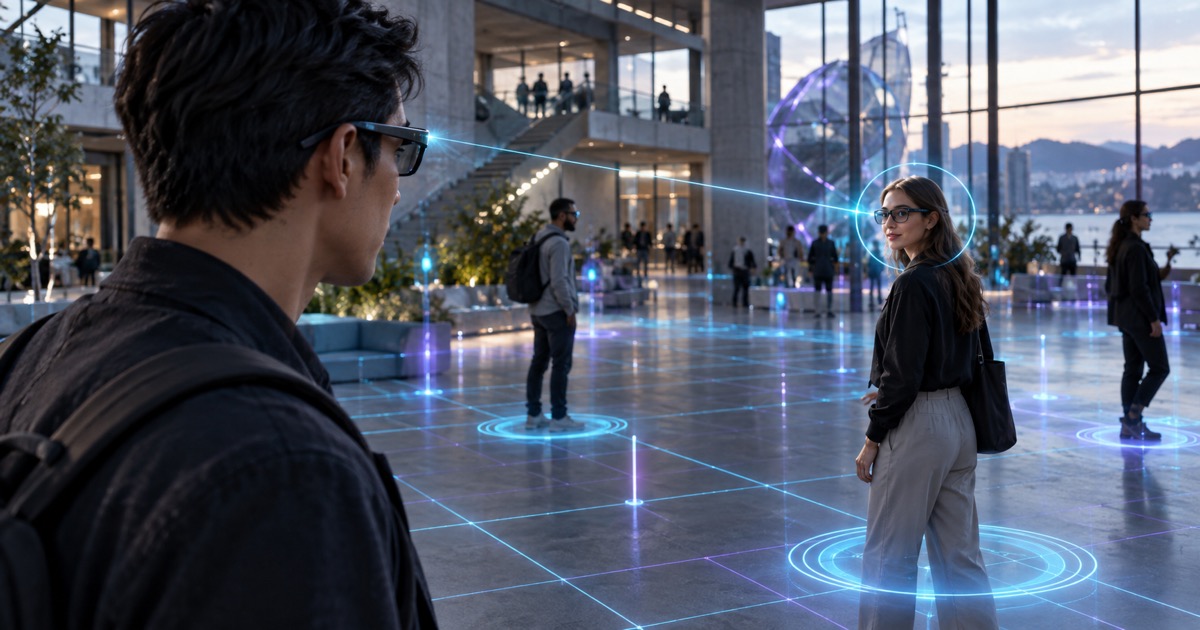
Spectacles Sync Kit Simplifies Multi-User AR Experiences
The update documented by Snap speeds up shared location and allows you to customize session start. See implications for in-person collaboration.
Read full analysis →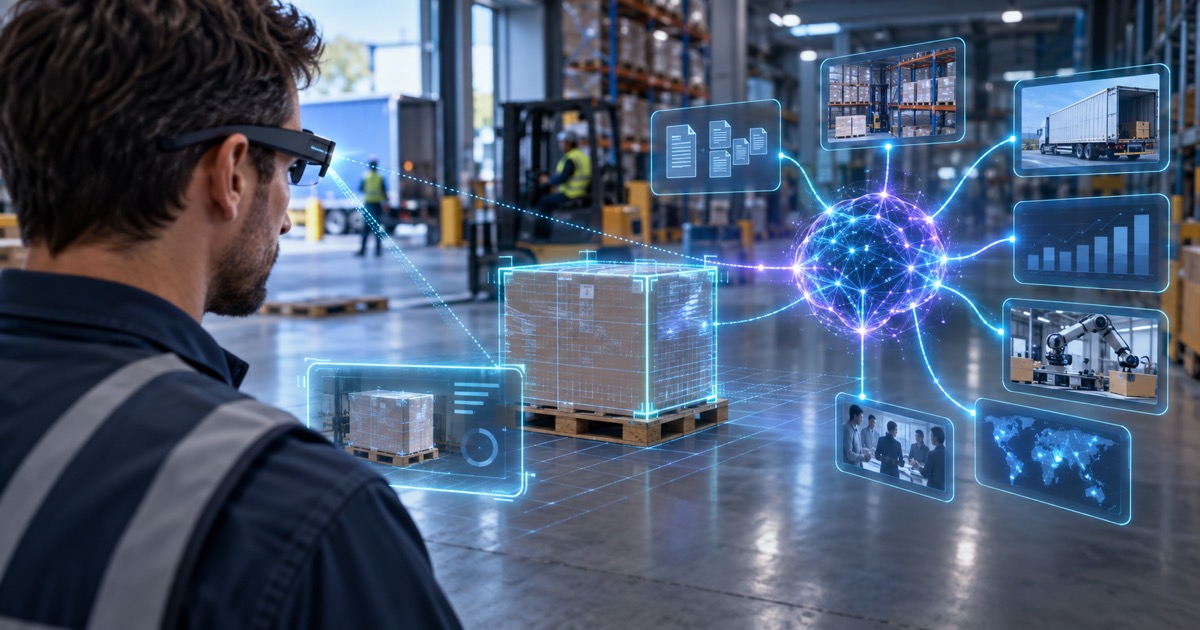
NVIDIA XR AI connects agents, visual perception and enterprise data
The open project brings together VLM, video, OpenXR, and MCP for agents on XR glasses and devices. See architecture, use cases, and required controls.
Read full analysis →
WebXR Layers API advances more efficient immersive experiences
The new Working Draft organizes projection, video, and compositing layers into WebXR sessions. Understand potential gains and compatibility cautions.
Read full analysis →AI, VR, AR and XR: analysis of the day
Eight original Nexus readings on official updates relevant to corporate decisions.

OpenAI accelerates research with AI agents: what changes in companies
OpenAI reports agents running search cycles under human supervision. Understand how to turn more experiments into evidence, governance and results.
Read full analysis →
Gemini Gains Agentive Video Analytics for Enterprise Operations
Google has added dynamic search within videos to Gemini Flash templates. See impacts on cost, investigation and design of corporate flows.
Read full analysis →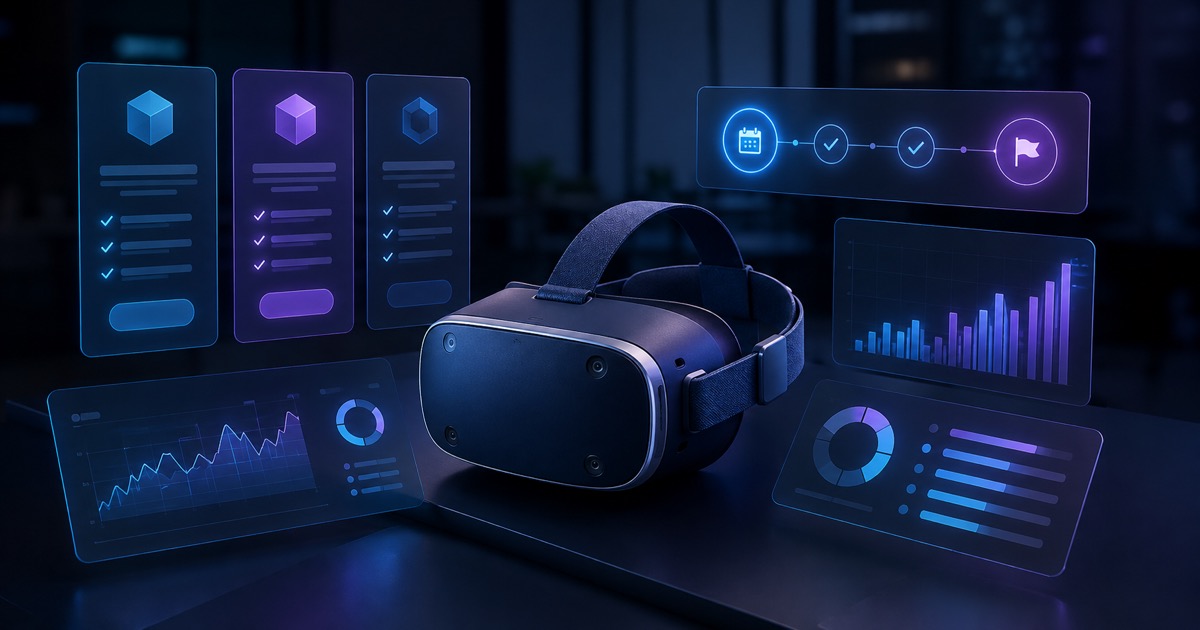
Goal expands pricing, testing and analytics for VR products
New Meta features facilitate bundle promotions, pre-purchase testing, and quality reading. See how this affects enterprise VR products.
Read full analysis →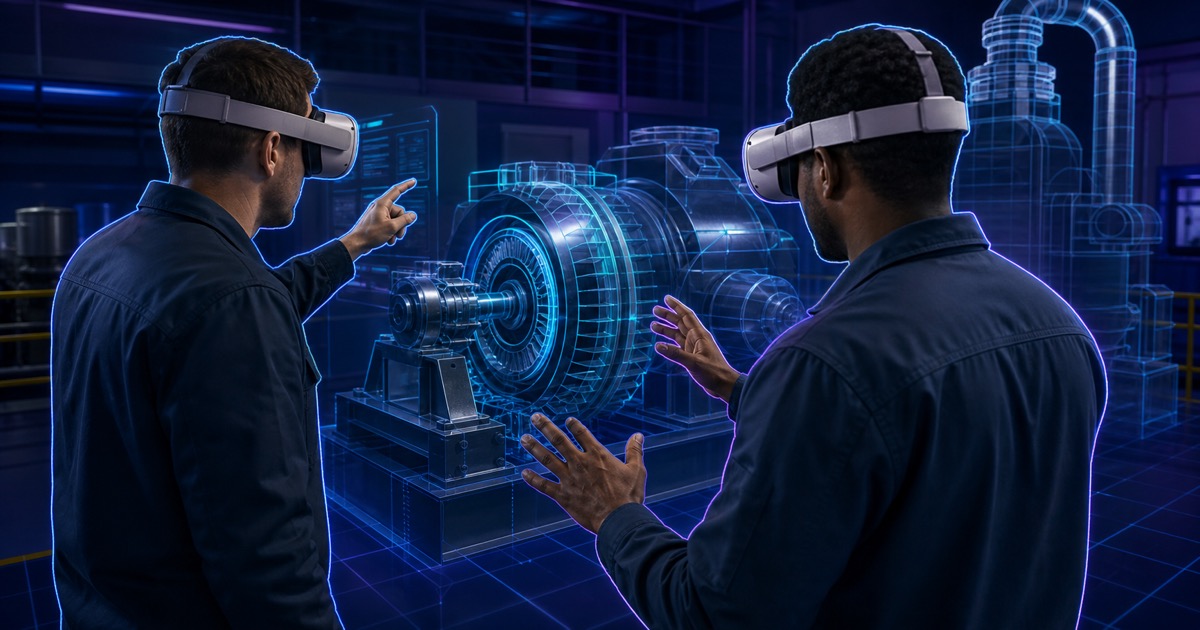
Varjo uses AI to showcase real teams inside VR training
People Occlusion Beta segments people in real time for collaboration within virtual settings. Understand gains and limits in multi-user training.
Read full analysis →
ExxonMobil tests visual positioning for AR operations in the field
The pilot with Niantic Spatial uses imagery to locate workers and identify assets with position and orientation. See impacts on maintenance, safety and industrial augmented reality.
Read full analysis →
SPZ 4 accelerates Gaussian splats for AR experiences at scale
Niantic Spatial's open format compresses larger 3D scenes with faster loading. Understand the impact on WebAR, mobile and digital twins.
Read full analysis →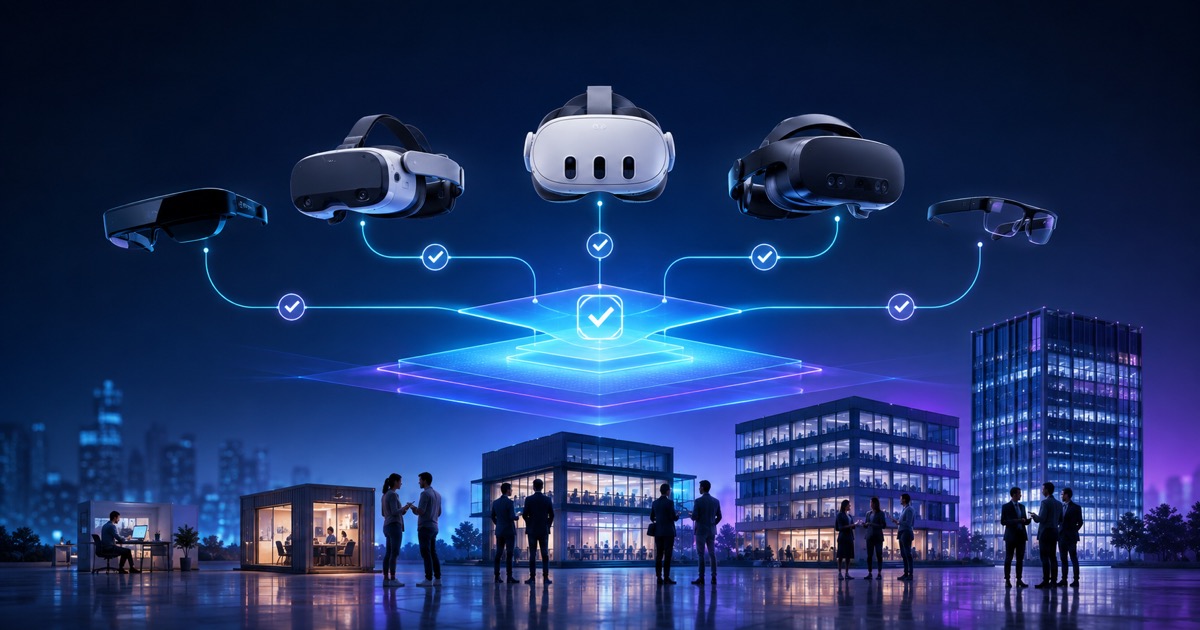
OpenXR reduces compliance barrier for smaller companies
Khronos has created per-shipment fees to expand officially compliant implementations. See how this affects suppliers, buyers, and XR portability.
Read full analysis →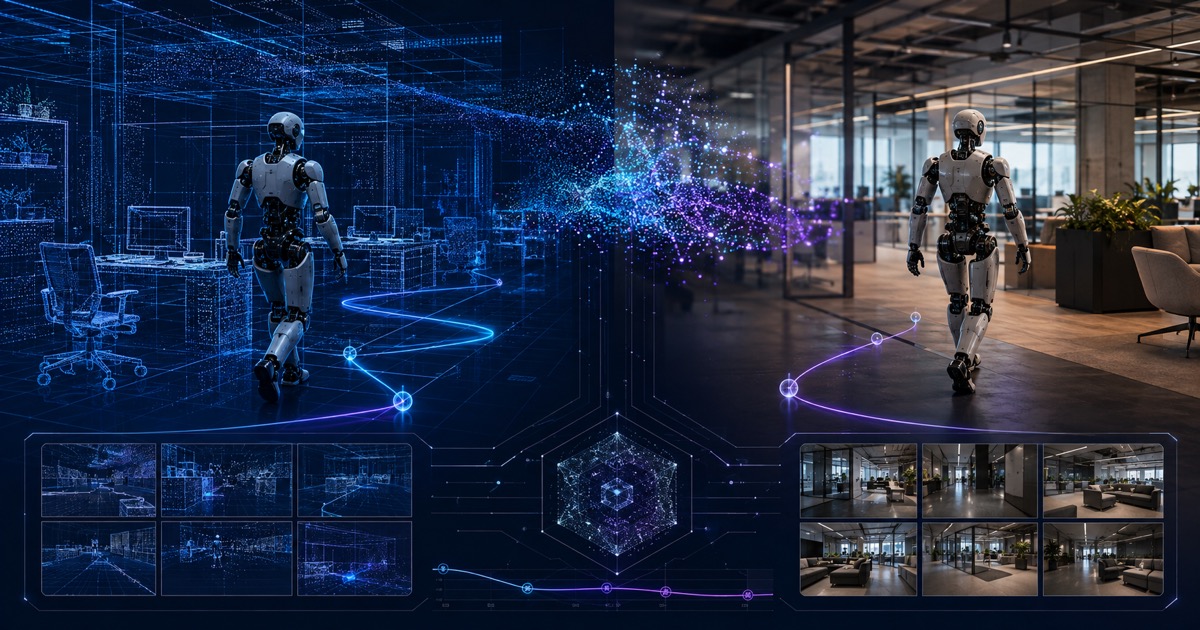
Niantic and NVIDIA Connect XR Digital Twins to Robot Training
The pipeline reconstructs real locations to train visual policies in simulation and transfer them to humanoids. See implications for XR and physical AI.
Read full analysis →AI, VR, AR and XR: analysis of the day
Eight original Nexus readings on official updates relevant to corporate decisions.

Anthropic proposes standard for AI to operate laboratory equipment
The Model Hardware Standard connects AI agents to microscopes, robots, and instruments through common interfaces. See opportunities, limits and controls for laboratories.
Read full analysis →
ChatGPT connects medical records and public health sources: what to evaluate
OpenAI announced integration with Epic and structured access to nine official sources. Understand governance, evidence and limits for AI in healthcare.
Read full analysis →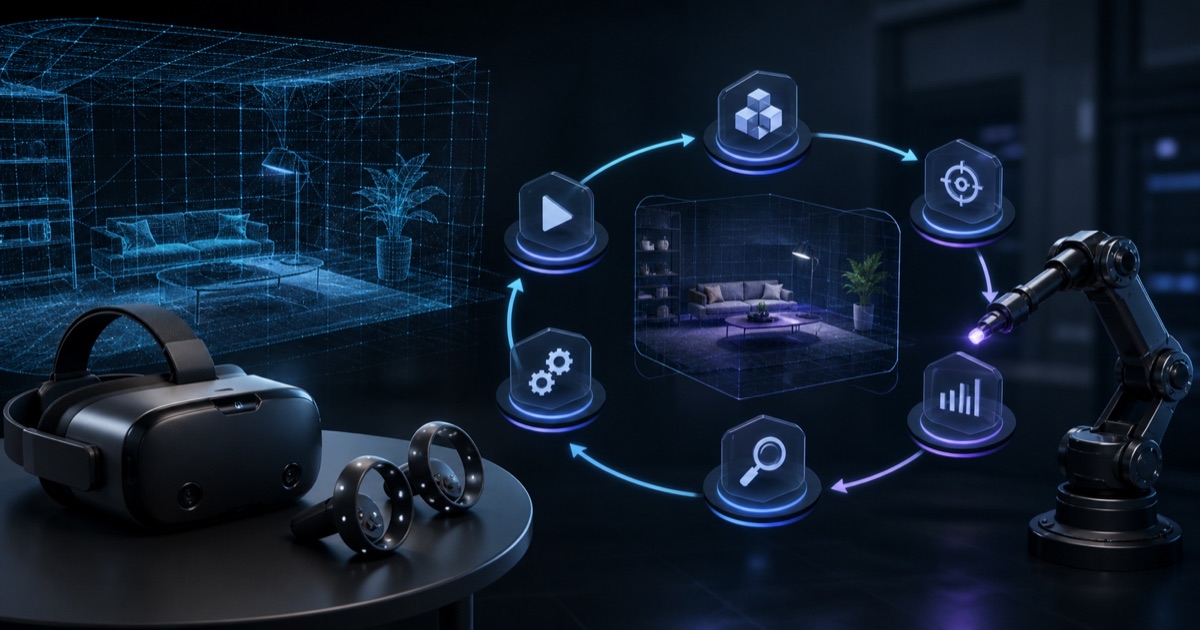
Meta XR Operator closes the loop on automated testing in VR
The experimental component exposes capture, scene and MCP controls for agents to test VR applications. See where it helps and where it still fails.
Read full analysis →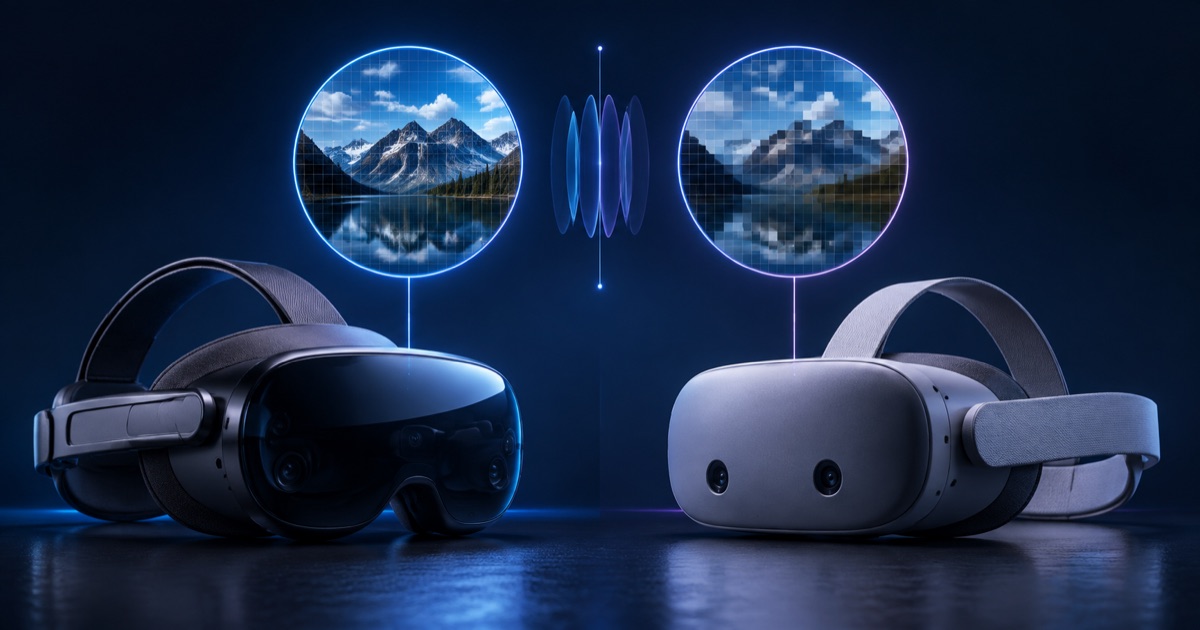
Meta Quest 3 or 3S for companies? Usage-oriented comparison
Quest 3 and 3S share processing and features, but differ in optics and resolution. Here's how to decide for comfort, clarity and total cost.
Read full analysis →
ARCore 1.54 facilitates interoperability between Java and C++ in AR projects
Native Interop allows you to share ARCore objects between Java and C++ layers. Understand the impact on engines, native modules and maintenance.
Read full analysis →
Camera Kit Web 1.20 expands hosting control and acceleration on iOS
Snap has added its own URLs for SDK builds and enabled WebAssembly SIMD in WebKit 26.4+. See implications for WebAR performance and governance.
Read full analysis →
Varjo XR-4 gains electromagnetic tracking for dynamic environments
Polhemus VIPER integration keeps tracking linked to the mobile reference without line of sight. See uses, benefits and risks in XR simulation.
Read full analysis →
Meta tests WebGPU foveation and spatial video in Horizon Browser
Version 150.1 added experimental WebGPU foveation and MV-HEVC playback. Understand the potential impact on browser-based XR experiences.
Read full analysis →AI, VR, AR and XR: analysis of the day
Eight original Nexus readings on official announcements and moves relevant to corporate decisions.

OpenAI introduces safeguards for the Astra era: what changes for enterprises
OpenAI detailed new cybersecurity safeguards on the road to Astra. Understand the impact on governance, access and enterprise adoption of advanced AI.
Read full analysis →
Anthropic Launches Frontier Safeguards for Enterprise AI
Anthropic's Enterprise Frontier Safeguards combine data protection and misuse detection. See how to evaluate this approach in corporate projects.
Read full analysis →
Varjo brings XR-ready systems to secure, isolated environments
Varjo's integrated systems combine headset, workstation and software for air-gapped networks. Understand where this model makes sense in professional VR.
Read full analysis →
visionOS 27 extends foveated streaming for professional immersive experiences
Apple introduced foveated streaming, Spatial Preview, and visionOS 27 advancements. See the impact for 3D viewing and professional VR.
Read full analysis →
XREAL AURA and Android XR: what AR glasses signal for companies
The XREAL AURA will be the brand's first tethered XR glasses with Android XR. See opportunities and limits for assistance, sales and field work.
Read full analysis →
visionOS 27 elevates object tracking for high-precision AR
Apple has expanded the frequency, accuracy, and portability of object tracking between visionOS and iOS. Understand uses in industry, training and measurement.
Read full analysis →
Android XR gains corporate support and reinforces management at scale
The Android XR update added Android Enterprise support and interaction improvements. See what changes for corporate XR deployment.
Read full analysis →
OpenXR evolves from portability to spatial computing platform
Khronos' agenda for OpenXR highlights portability, compliance, and spatial capabilities. See why open standards matter in corporate projects.
Read full analysis →Virtual Reality
Guides to transform presence, practice and simulation into measurable training, sales and experience results.
Virtual Reality for companies: guide to choosing use cases with real impact
A practical guide to understanding where VR creates value, how to choose your first use case, and which experience, hardware, and operational decisions matter.
Read complete guide →
Corporate VR Training: How to Design a Simulation That Actually Teach
How to structure objectives, scenarios, feedback, scoring, repetition and metrics in immersive training, avoiding turning VR into a mere 3D demonstration.
Read complete guide →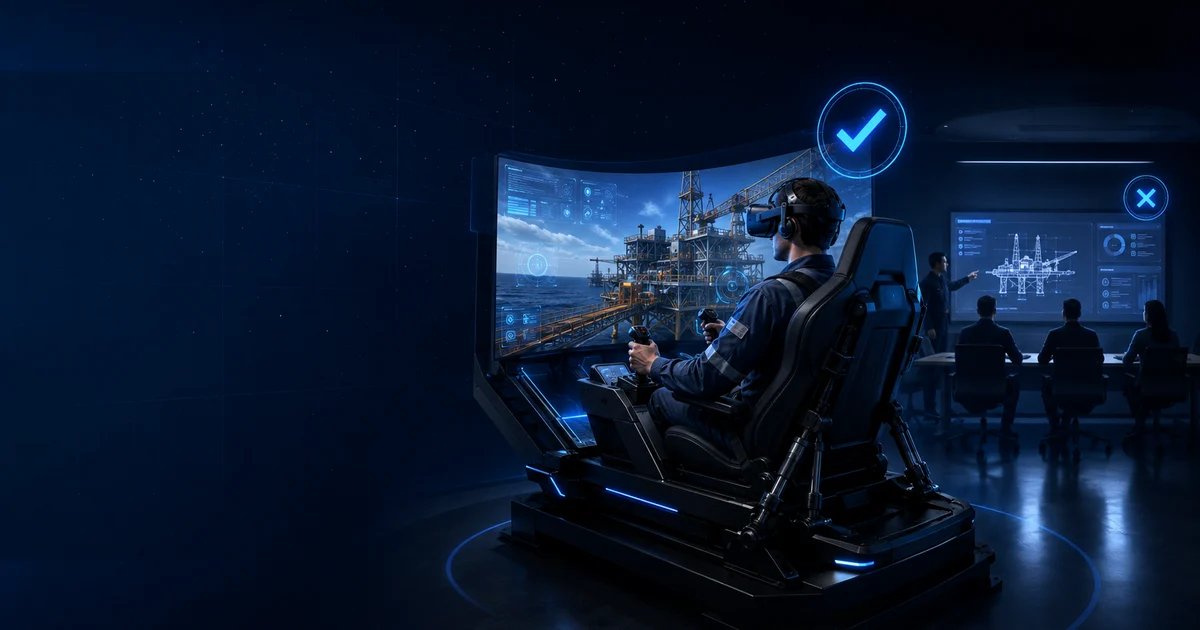
Virtual Reality Simulators: when to use and when to avoid
Understand in which scenarios a VR simulator is more suitable than video, e-learning, physical equipment or in-person training.
Read complete guide →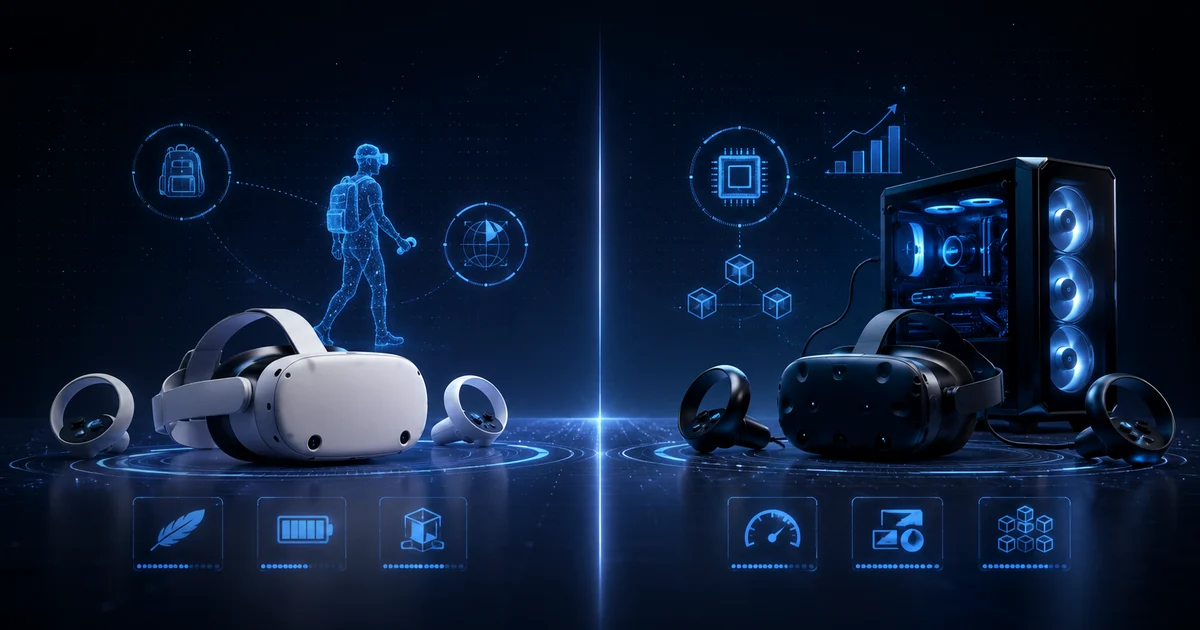
Standalone headset or PC VR? How to choose for a corporate project
Compare mobility, graphical fidelity, maintenance, peripherals, scale, and operation to define the hardware architecture of an immersive project.
Read complete guide →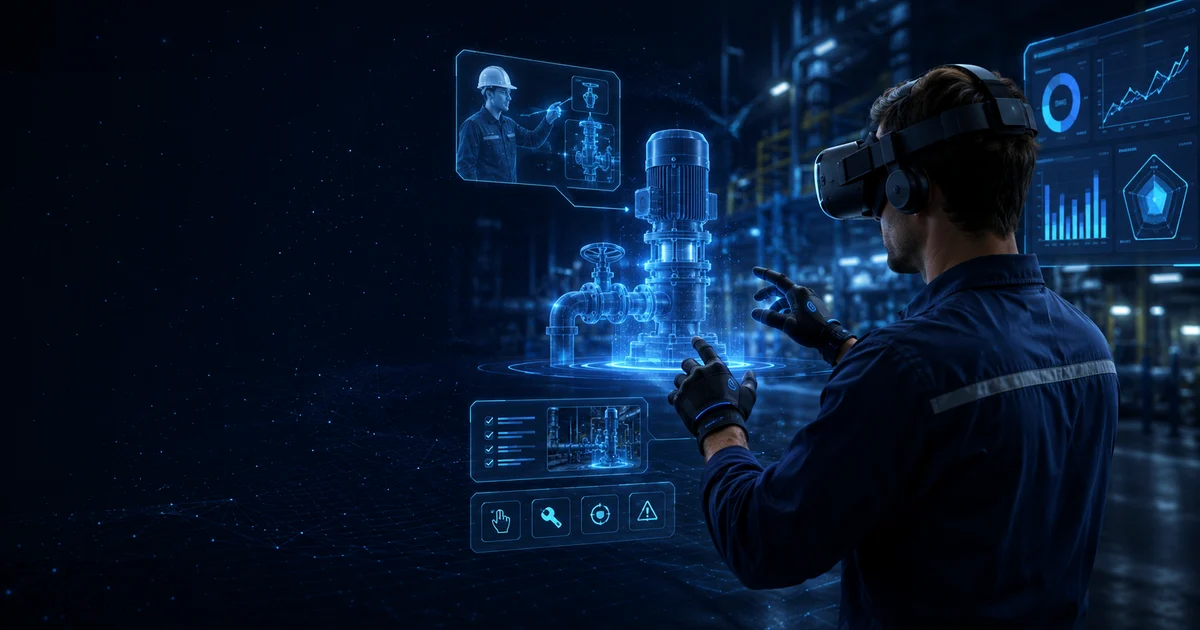
How to measure learning and performance in Virtual Reality training
See what events, errors, times, decisions, and behavior patterns can be instrumented to turn VR training into a measurable system.
Read complete guide →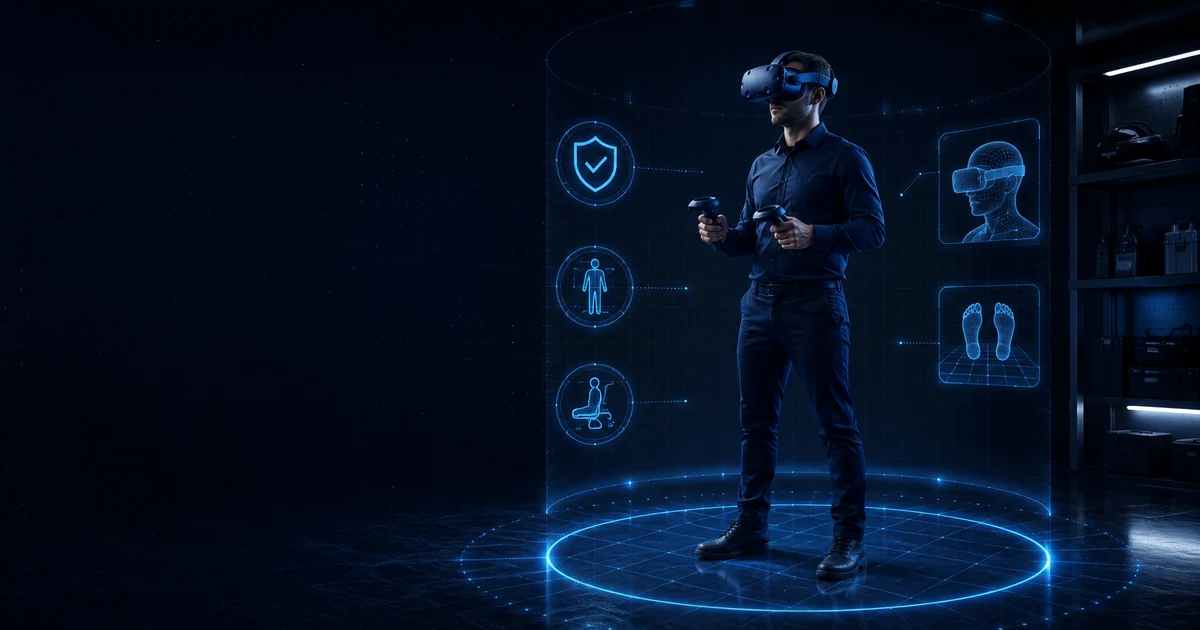
Safety, comfort and ergonomics in Virtual Reality for companies
Best practices for reducing discomfort, operational risk, and fatigue in VR experiences used in training, events, and corporate environments.
Read complete guide →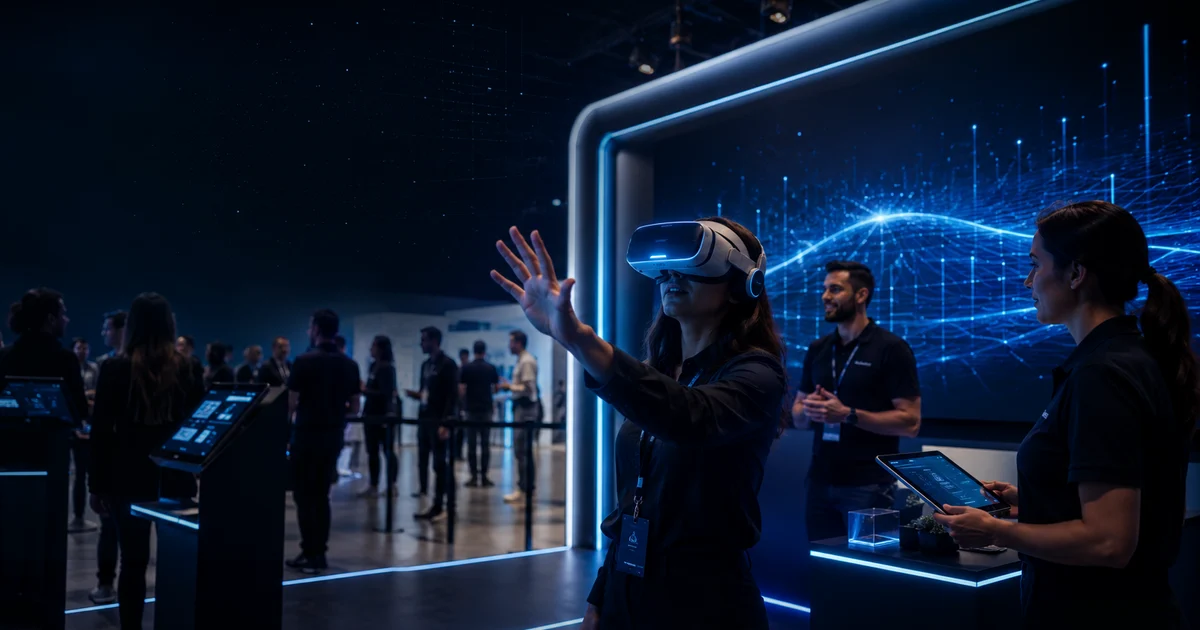
Virtual Reality at events: how to create an activation that generates memories and leads
How to transform VR into an event experience with flow, operations, content, capture and metrics, without creating impossible queues or an isolated demonstration.
Read complete guide →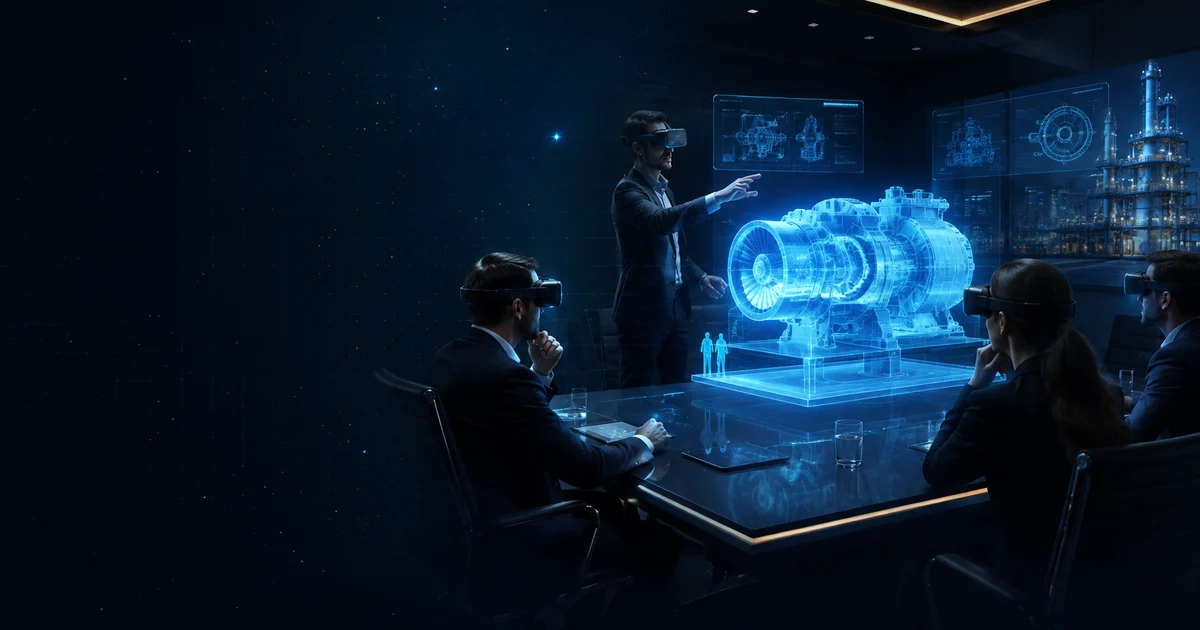
Virtual Reality for B2B sales of complex and large products
How to use VR to present machines, vehicles, plants, environments and solutions that don't fit in a meeting room or booth.
Read complete guide →Augmented Reality
Content to decide where to overlay information on the real world, choose architecture and design a frictionless journey.

Augmented Reality for companies: where it really creates value
Guide to identifying AR use cases in products, operations, sales, training, support, and brand experiences.
Read complete guide →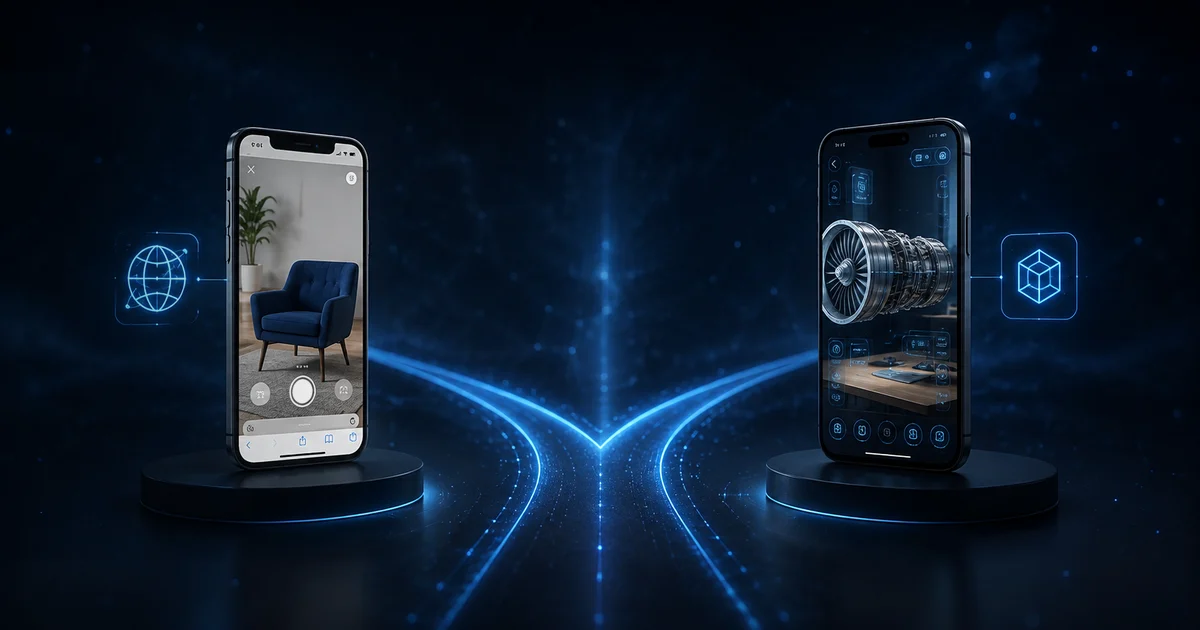
WebAR or app? How to choose Augmented Reality architecture
Compare reach, friction, features, performance, tracking, and maintenance before deciding between in-browser AR and native app.
Read complete guide →
Augmented Reality for industrial maintenance: applications, limits and architecture
How to overlay instructions, components, procedures and data onto the physical asset without compromising security or operational clarity.
Read complete guide →
Augmented Reality for catalogs and products: how to reduce the distance between seeing and imagining
How to allow customers to visualize scale, volume, finish and context of use before purchasing or visiting physically.
Read complete guide →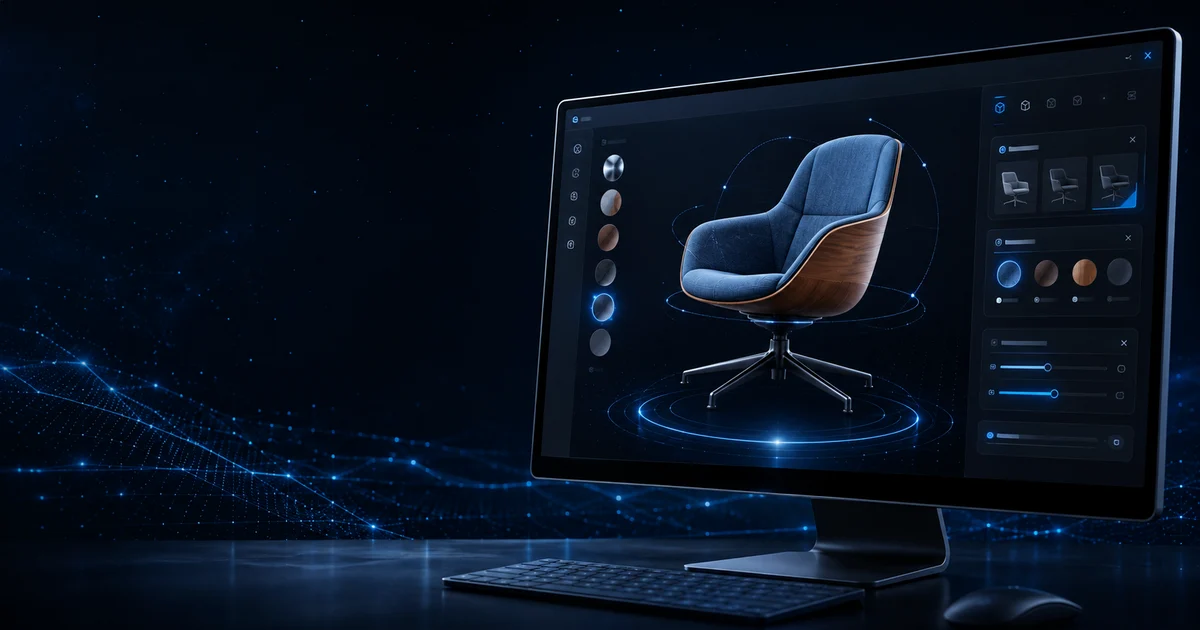
Augmented Reality in retail and POS: experiences that help sell
AR applications for demonstration, education, comparison, launch and activation in store, packaging and media.
Read complete guide →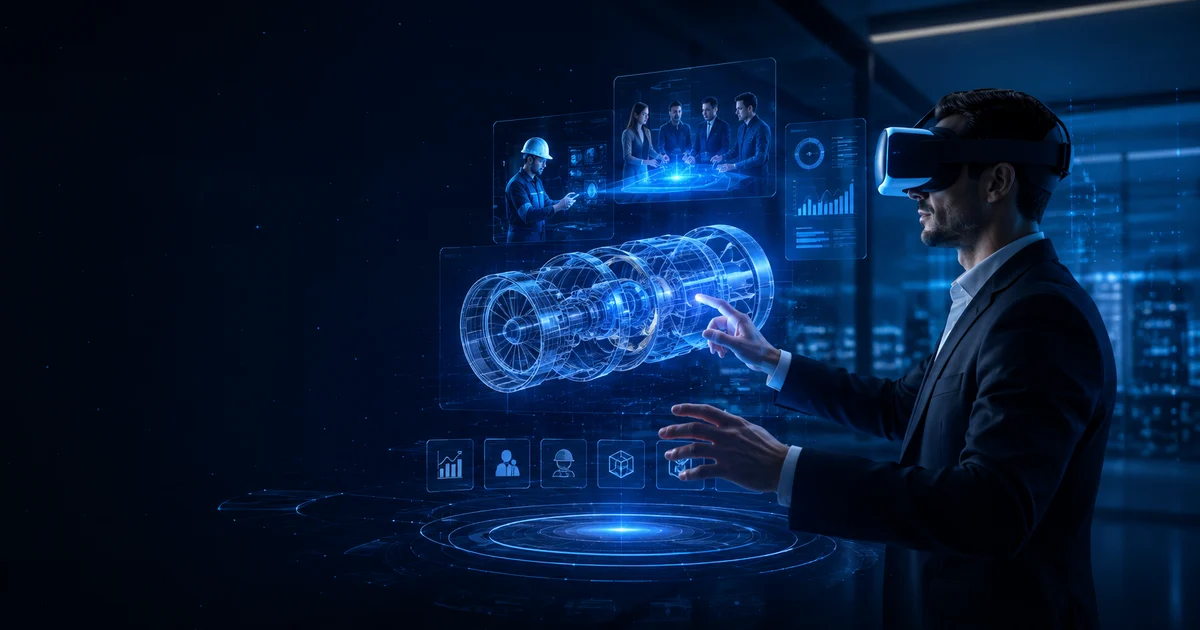
Augmented Reality in training and operational assistance
How to use contextual instructions, overlays, and step-by-step guidance to support tasks and reduce dependency on manuals disconnected from the asset.
Read complete guide →3D & Web
Pipeline, performance and experience for 3D products, configurators, WebGL, glTF/GLB and real-time visualization.

3D Digital Showroom: how to expand catalog without expanding physical space
Understand architecture, content, 3D, interface, update and operation of a digital showroom for retail, dealerships and B2B sales.
Read complete guide →How a 3D web product configurator works
From the high poly model to the final experience: retopology, baking, PBR, glTF/GLB, configuration rules, WebGL, integration and performance.
Read complete guide →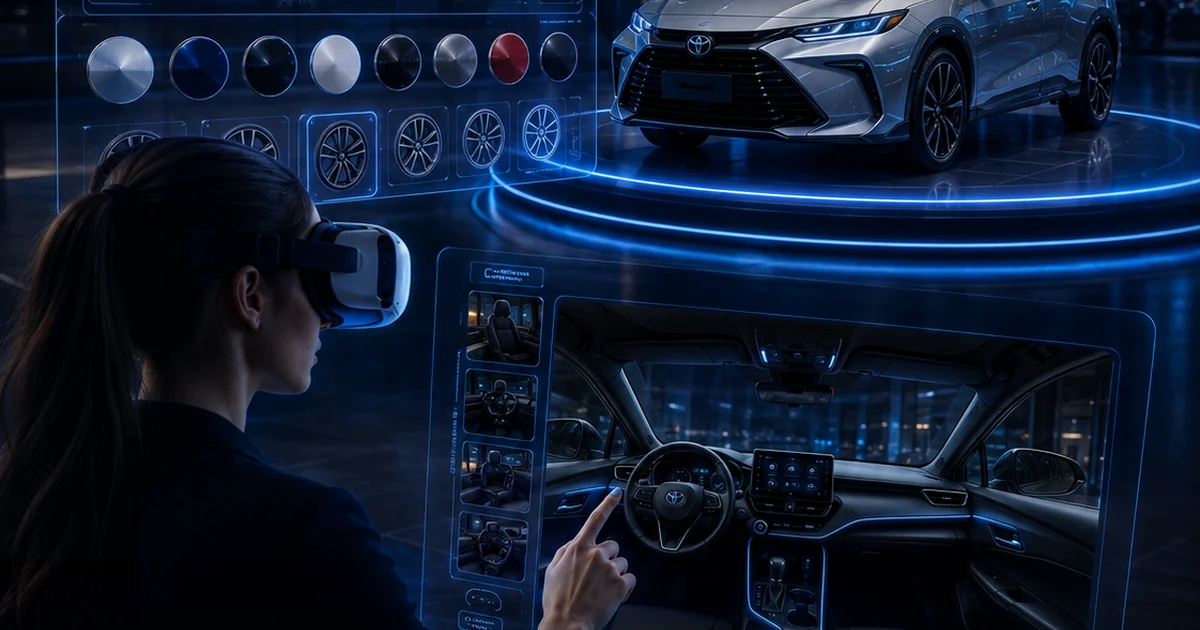
Automotive 3D Configurator: Architecture, Pipeline, and Choice Experience
How to structure colors, wheels, accessories, interiors, versions and business rules in a high-fidelity 3D experience.
Read complete guide →
3D in e-commerce: when interactive visualization helps the purchasing decision
How to evaluate whether 3D rotation, configuration, AR and contextual visualization reduce doubts and increase understanding of the product.
Read complete guide →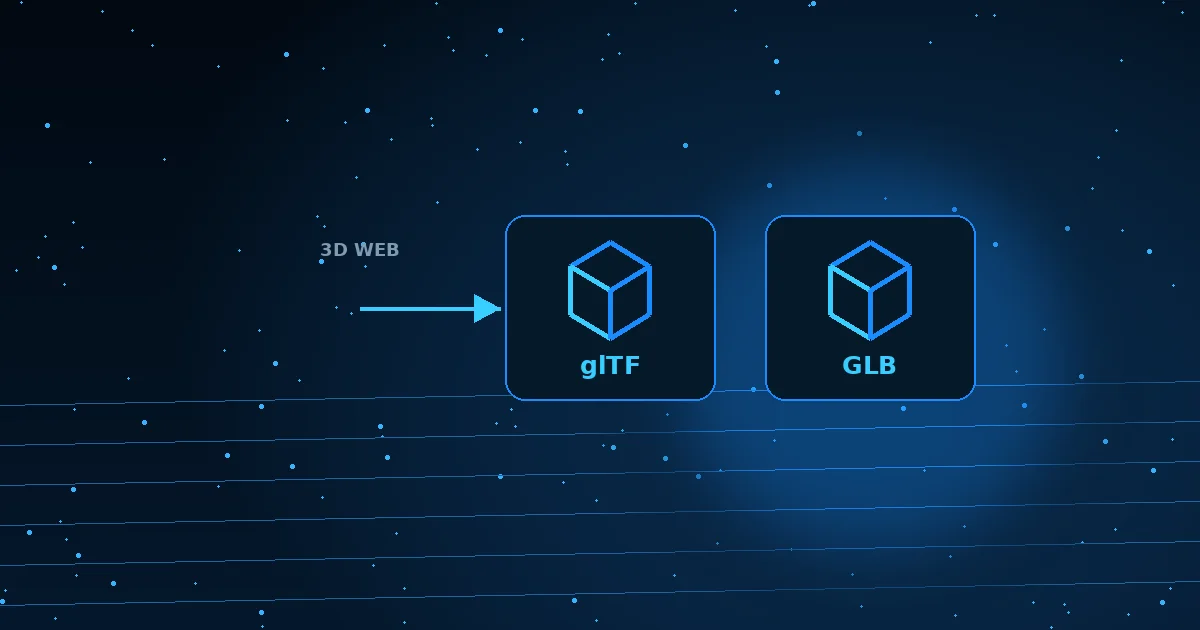
glTF and GLB: Why these formats are central to 3D on the web
Understand structure, materials, textures, compression and distribution flow of 3D assets for browsers, AR and configurators.
Read complete guide →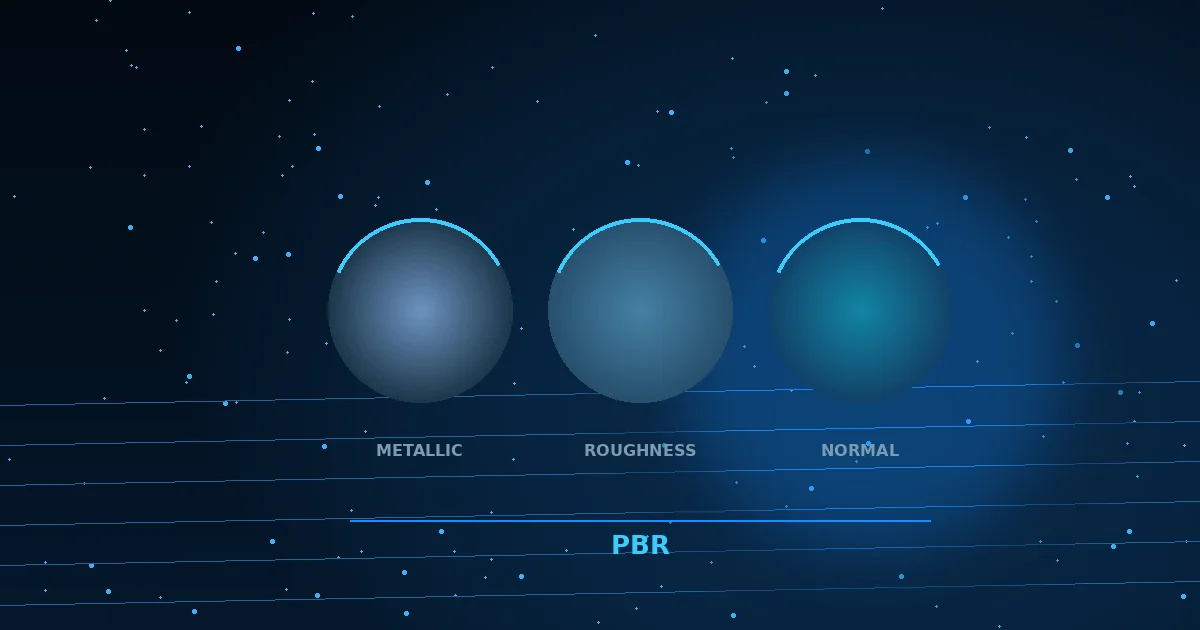
PBR Materials: How to Create Consistent Realism in 3D Products
Understand base color, roughness, metallic, normal, texture scale, lighting and why a good material depends on coherent physical data.
Read complete guide →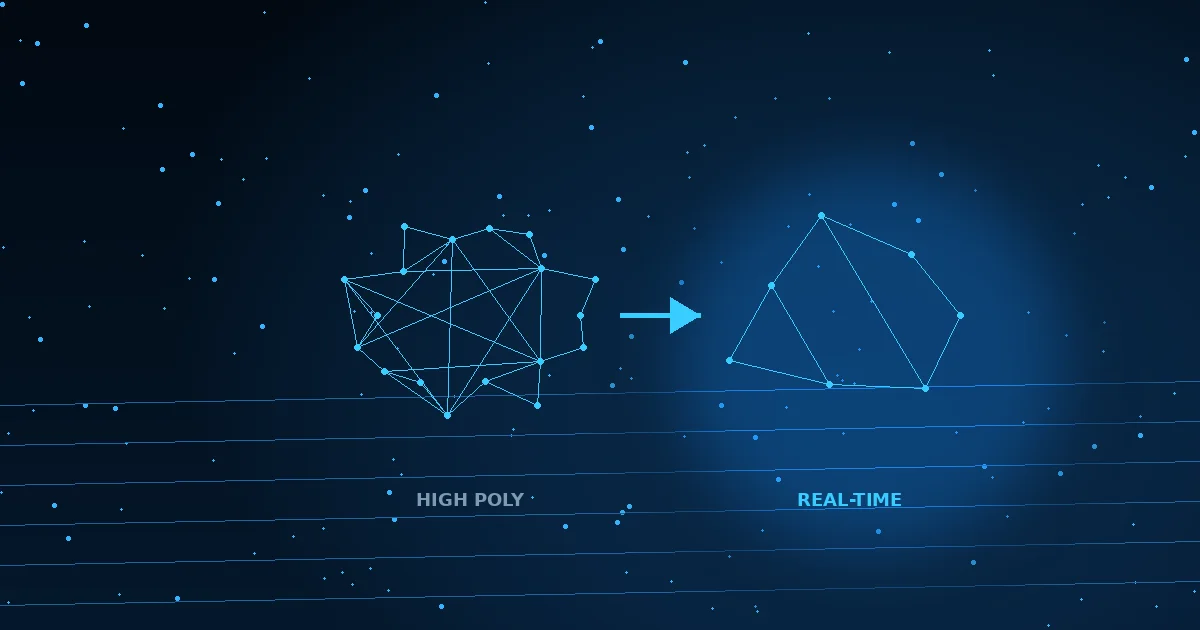
Retopology and baking: why production 3D models don't go straight to the web
How to transform heavy geometry into real-time assets while preserving shape, detail, and visual appearance.
Read complete guide →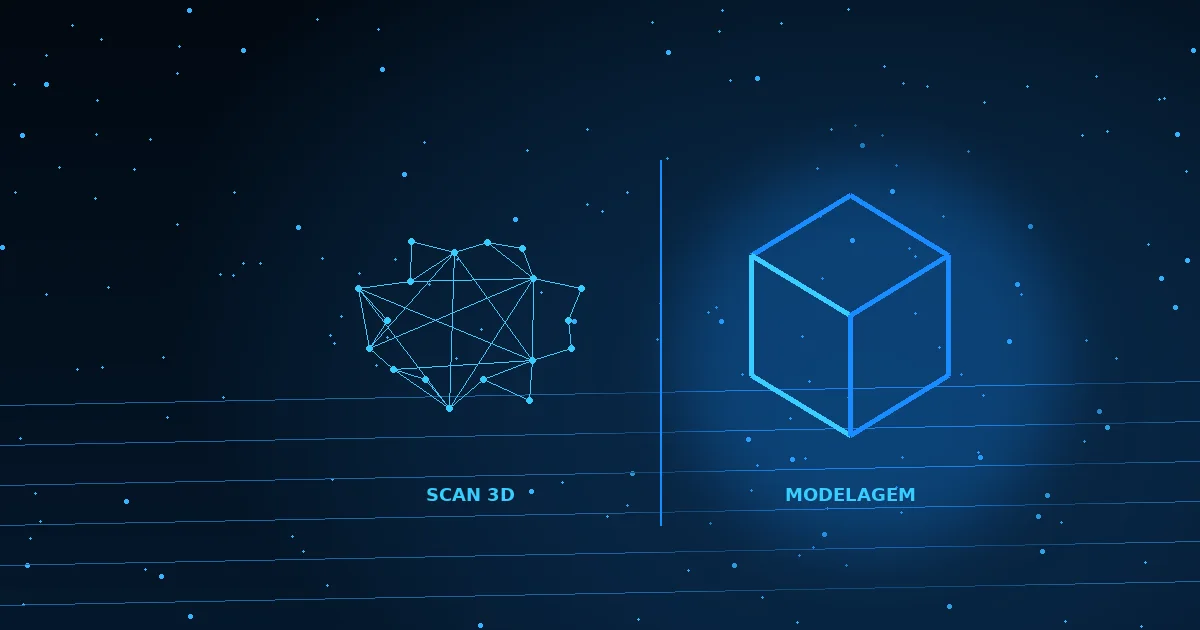
3D scanning or manual modeling? How to choose the scanning method
Compare accuracy, speed, finish, surfaces, reflective parts, hidden geometry and need for reconstruction.
Read complete guide →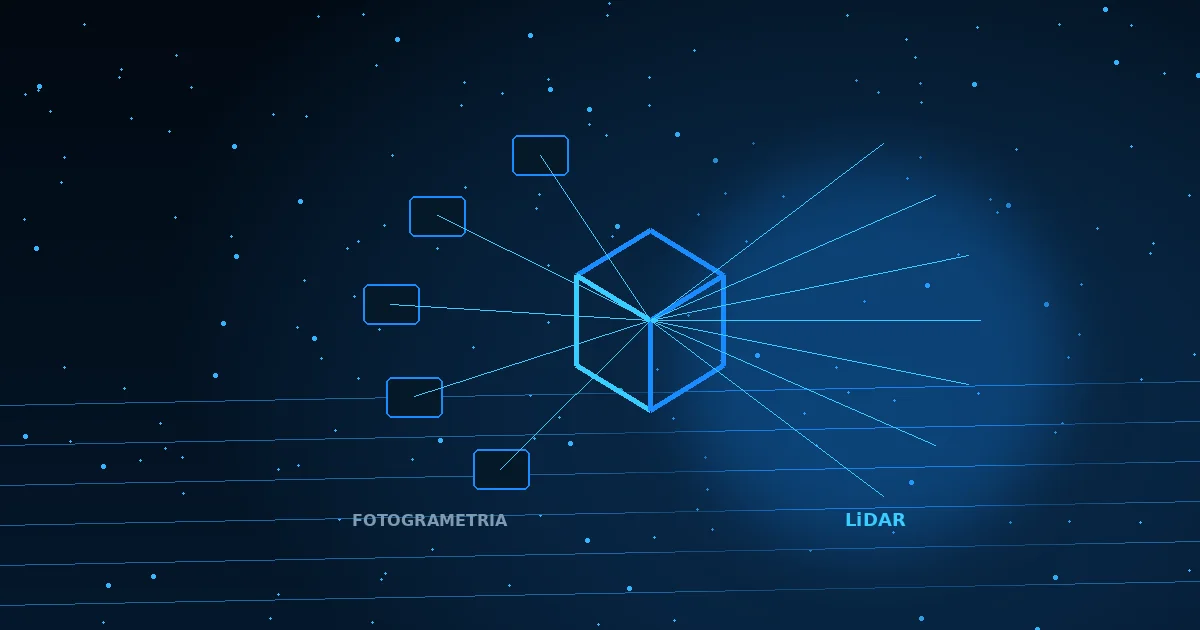
Photogrammetry or LiDAR? Differences for 3D scanning of objects and environments
Understand where each technique stands out and why final quality depends on both the processing pipeline and the sensor.
Read complete guide →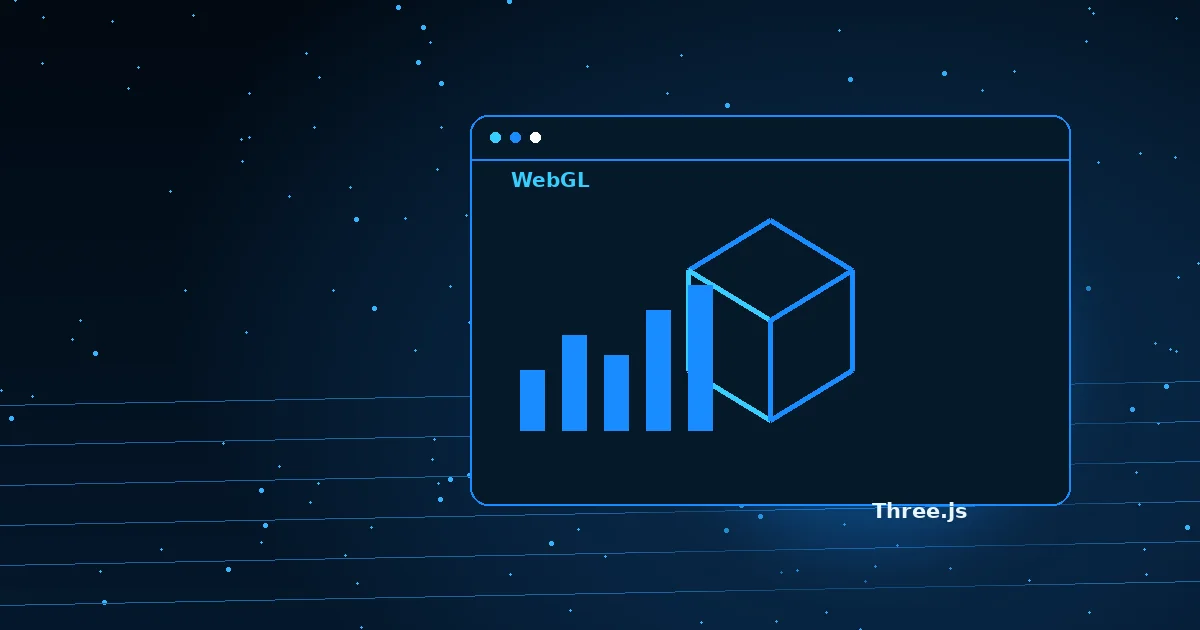
Three.js and WebGL: How to Deliver Fast 3D Experiences in the Browser
How to organize rendering, assets, textures, draw calls, lighting, LOD and progressive loading in 3D web experiences.
Read complete guide →
How to optimize 3D experiences for mobile without destroying visual quality
Geometry, texture, lighting, memory, interaction and loading principles for smartphones and tablets.
Read complete guide →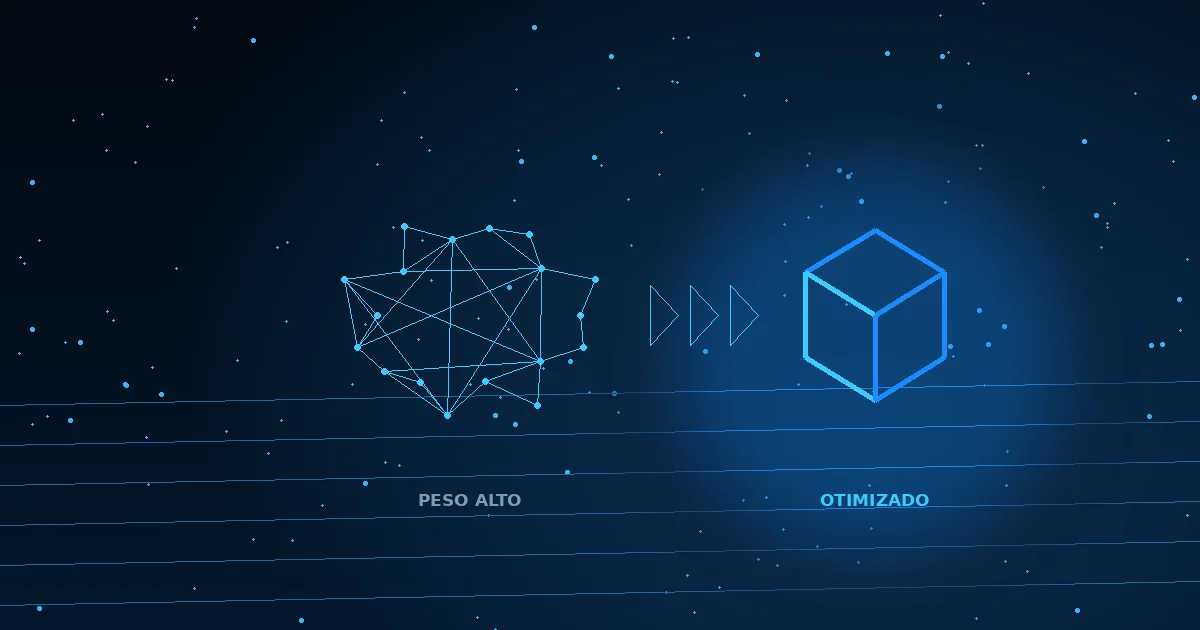
How to reduce the weight of 3D models for web, AR and configurators
A checklist of geometry, textures, compression, materials, hierarchy and invisible content to reduce download and rendering costs.
Read complete guide →Digital Twins
From 3D model to operational layer: data, states, integration and criteria for a useful digital twin.
Digital Twin: what a digital twin is and what it is not
A practical definition to separate 3D model, connected visualization, simulation and Digital Twin with data and operational states.
Read complete guide →
Digital Twin in industry: from 3D model to data layer
How to connect assets, states, systems, sensors and 3D interface to create a useful operational representation.
Read complete guide →
Digital Twin in retail and operations: when is it worth digitizing stores and spaces
Applications for layout, training, maintenance, planning, visual merchandising and remote collaboration.
Read complete guide →Training
How to design simulations, measure learning, and choose when immersive practice outperforms conventional formats.
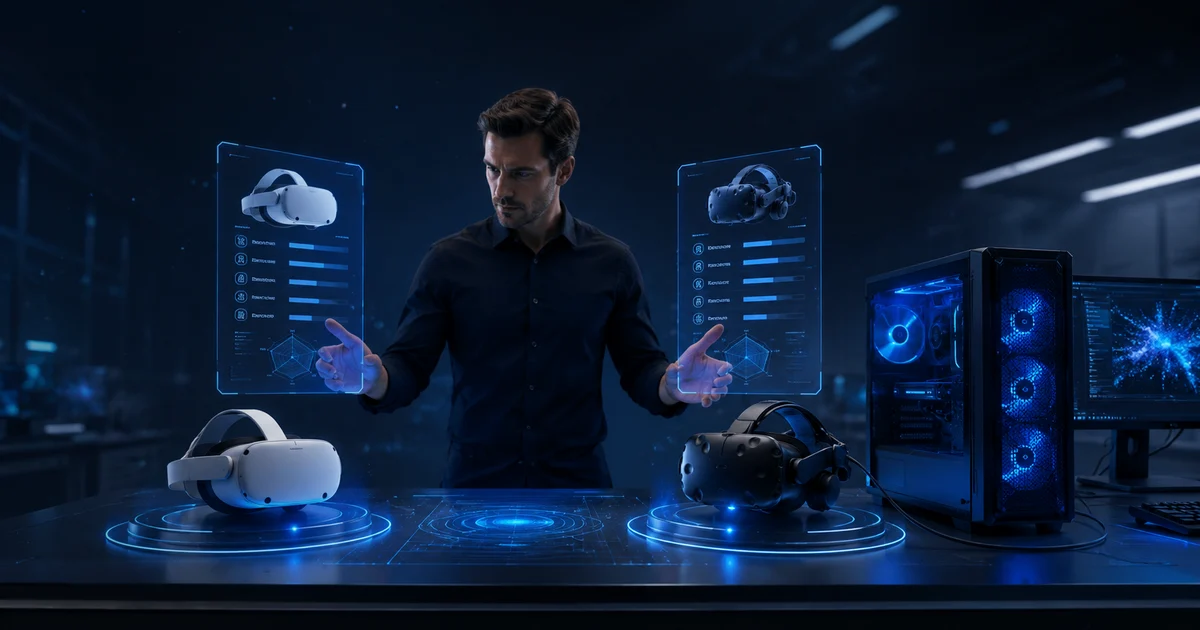
Corporate simulator or e-learning? How to choose the training format
Compare declarative knowledge, practice, spatial context, decision, repetition and operational cost to choose the right format.
Read complete guide →
Immersive security training: how to simulate risk without creating real risk
How to design security scenarios that train recognition, decision and procedure with control and repetition.
Read complete guide →
Simulators for heavy machinery: what needs to be faithful for the training to work
Controls, vision, sequence, physics, environment, feedback and hardware integration in equipment simulators.
Read complete guide →
Immersive onboarding: how to introduce environments, processes and culture before the first day in the field
How to use digital experiences to familiarize employees with real facilities, rules, flows and situations.
Read complete guide →
How to create a VR training scenario: from objective to scoring
Step by step to transform a procedure, risk or skill into a simulation with states, feedback and metrics.
Read complete guide →Artificial intelligence
Architecture, agents, computer vision and governance for business-connected AI products.

Artificial Intelligence in customer service: where agents really improve the experience
How to combine knowledge, context, automation, human handoff and governance for corporate service with AI.
Read complete guide →
Enterprise AI agents: architecture, integrations and governance
What differentiates a chatbot from an agent capable of consulting systems, performing tasks and operating with business rules.
Read complete guide →
Computer Vision in industry: use cases, data and limits
How to evaluate visual inspection, counting, presence, security, traceability and process analysis with computer vision.
Read complete guide →
AI + Augmented Reality: how to create interfaces that understand context
Like computer vision, language and multimodal models can make AR experiences more responsive to the environment and the user.
Read complete guide →
AI + Digital Twin: From operational visualization to recommendation
How AI models can interpret twin data, detect patterns, and support decisions without replacing operational governance.
Read complete guide →
AI Governance in Enterprise Experiences: Data, Permissions, and Oversight
A practical framework for defining sources, access, traceability, human review, and automation limits.
Read complete guide →Industries
Applications by vertical to connect immersive technology to real sales, operation and training journeys.

Immersive technology in the automotive sector: sales, training and 3D visualization
How automakers, dealerships and technical teams can combine 3D, VR, AR, configurators and digital showrooms.
Read complete guide →
Immersive technology in agribusiness: machines, training and technical demonstration
AR, VR and 3D applications for large products, training, fairs, assistance and technical communication.
Read complete guide →
Retail Tech with 3D and Augmented Reality: how to improve discovery and decision
How to combine visualization, configuration, AR, data and interaction to make the purchasing journey more informative.
Read complete guide →
Technology for events and activations: how to transform interaction into brand experience
How to plan VR, AR, interactive tables, sensors and digital experiences taking into account flow, queue, operation and capture.
Read complete guide →
Industry 4.0 with VR, AR and Digital Twin: how technologies complement each other
A map to understand which technology solves training, assistance, visualization, collaboration and connected operation.
Read complete guide →Strategy & ROI
Investment criteria, supplier selection, pilots, metrics and roadmap to transform innovation into a scalable program.
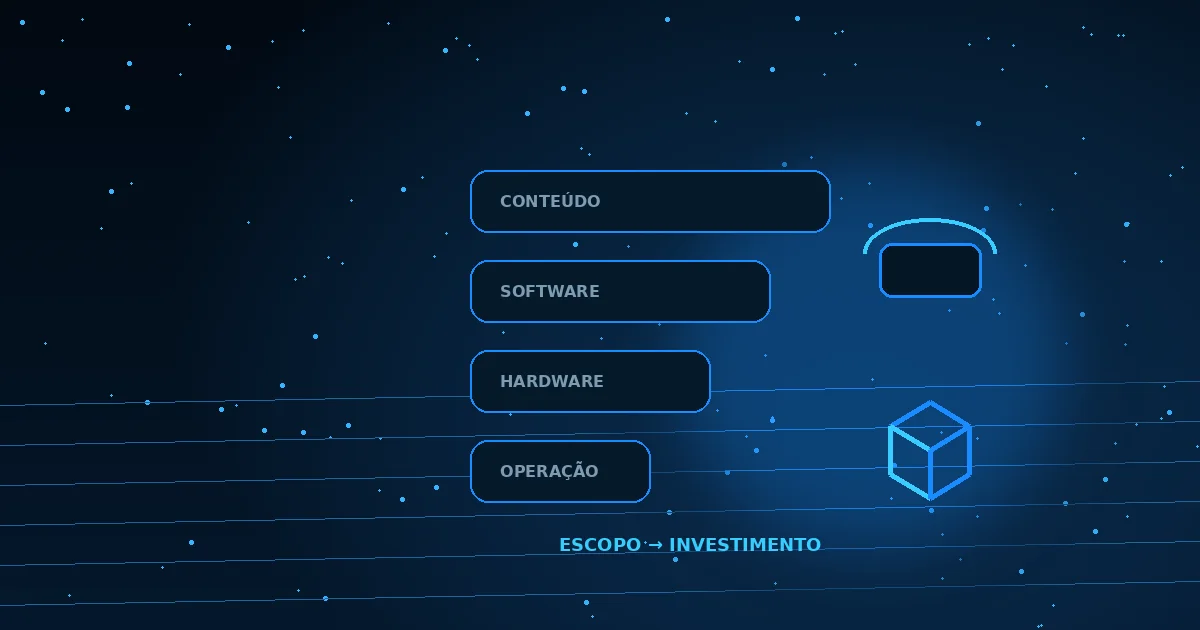
How much does a VR, AR or 3D project cost? What really defines investment
Understand the factors that most alter scope: quantity of content, fidelity, interactions, integrations, hardware, operation and maintenance.
Read complete guide →
How to choose a company to develop VR, AR, 3D and immersive experiences
A technical and operations checklist to compare portfolio, 3D pipeline, software, hardware, support, security and deployment capacity.
Read complete guide →
How to calculate ROI from Virtual Reality, Augmented Reality and 3D experiences
A framework to link technology to time, cost, conversion, learning, error, reach, utilization and reduction of physical assets.
Read complete guide →
Checklist for a corporate VR or AR pilot that can scale
How to define hypothesis, audience, hardware, content, metrics, support and decision criteria in an immersive technology pilot.
Read complete guide →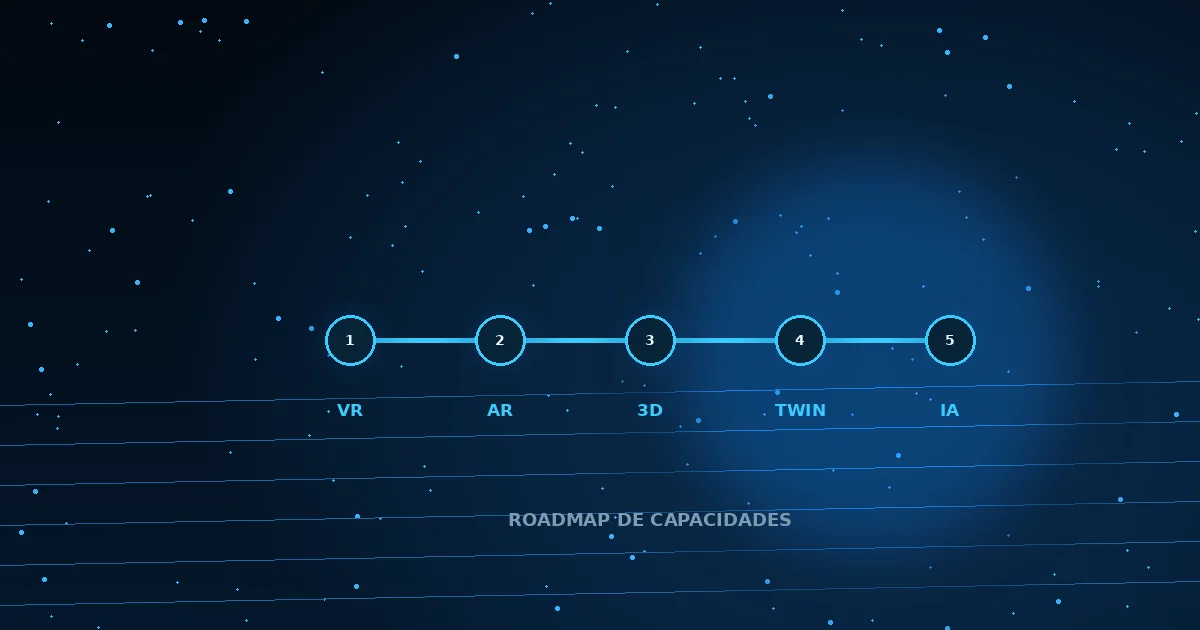
How to put together an immersive technology roadmap for the company
How to move away from siled initiatives and build a VR, AR, 3D, Digital Twin and AI agenda with reusable assets and governance.
Read complete guide →Didn't find the question you need answered?
Talk to Nexus. We can transform your context into a diagnosis, concept, proof of value or technical specification.
Talk to an expert →