Simulators and immersive training for operations, safety and training
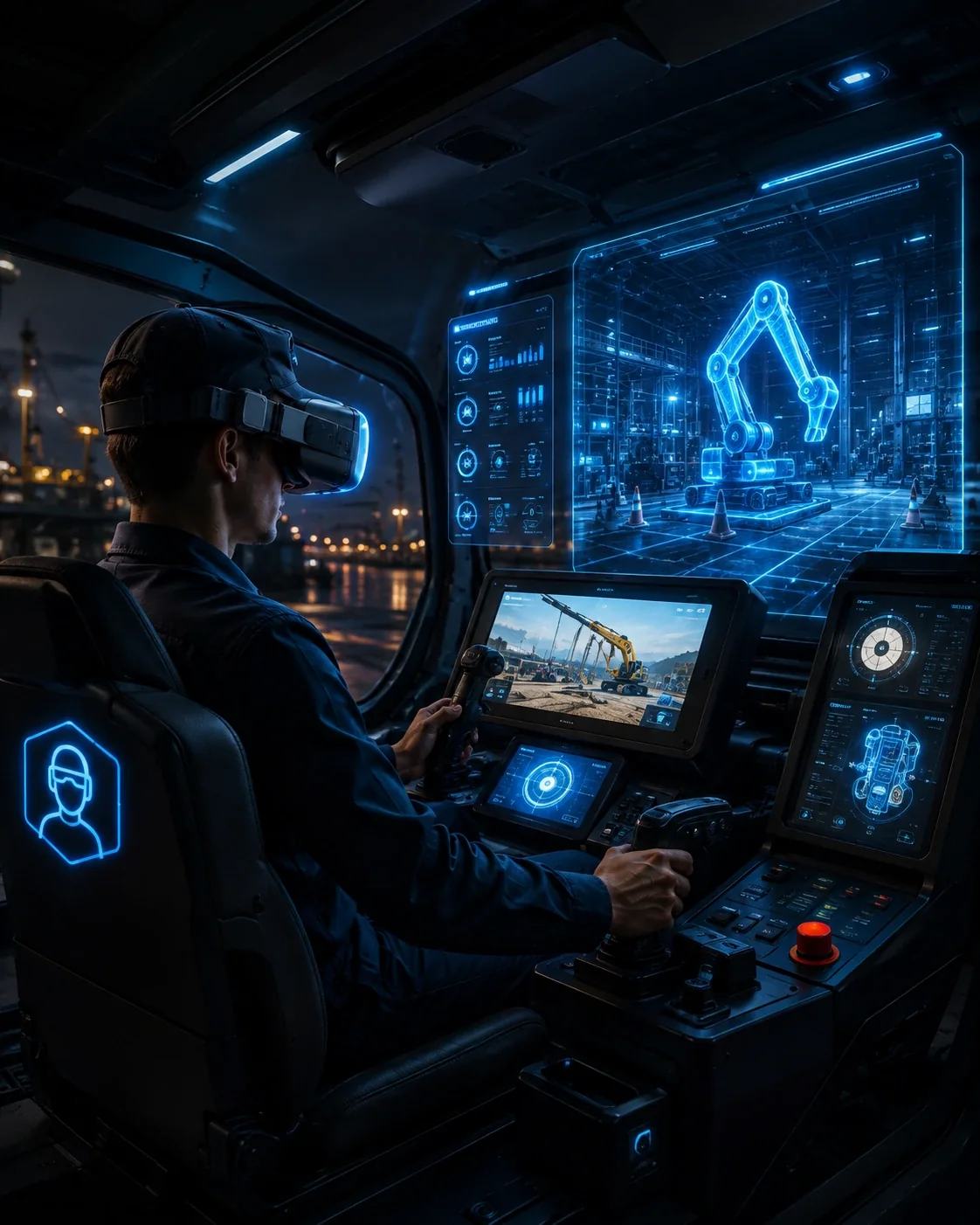
Nexus creates simulators and immersive training to replicate procedures, machines, environments and operational decisions in a controlled digital scenario, allowing practice, repetition and standardization without relying on real equipment at every stage.
What is Simulators and Training and when to use it?
A digital simulator represents the relevant conditions of a task and reacts to the user's actions. The level of fidelity can range from procedural training to simulation with physical controls, sensors and specific dynamics.
In practice: The project begins with the pedagogical objective and the necessary degree of fidelity. Scenarios, rules, scoring, telemetry, peripherals and deployment mode are defined to support the trained competence.
Where this solution generates value
Operating procedures and safety
The simulator reproduces steps and working conditions so that the user practices the correct sequence and recognizes relevant situations before performing the task in the field.
Machines, vehicles and equipment
Controls, interfaces and behaviors can be simulated for operation training, familiarization or decision making, with a level of fidelity defined by the pedagogical objective.
Maintenance and inspection training
Components and inspection points can be presented in a 3D context to train identification, order of execution and criteria provided for in the procedure.
Training distributed teams
The same application can be deployed in different units, reducing content variation and allowing geographically separated teams to receive the same training logic.
Assessment of sequence, timing and decision making
When instrumented, the simulator can record session events to support analysis of execution, response time, and milestone completion.
From challenge to deployment
Discovery
Objective, audience, environment, KPI and technical restrictions.
Experience design
Journey, interaction, content and product architecture.
Development
Software, 3D, integrations, hardware and validation.
Deploy and evolution
Deployment, support, analytics and continuous updating.
Questions about Simulators and Training
Does every simulator need VR?
No. Depending on the case, it can be developed for screen, cabin, mixed reality or combination with physical controls.
Is it possible to use real controls?
Yes. Joysticks, steering wheels, pedals, sensors and specific interfaces can be integrated according to the project.
Can training record performance?
Yes. Timing, sequence, errors, decisions and other events can be instrumented when they are part of the learning objectives.
Does simulation replace practical training?
Usually complements. The best strategy depends on the client's procedure, risk, equipment and certification requirements.
Related content
Do you want to transform this concept into a solution applied to your business?
Talk to our team about goal, environment, content, hardware, integrations and deployment scale.
Talk to an expert →