
The W3C module allows you to compose an interactive 2D web interface on top of WebXR. See benefits, input conflicts and pattern maturity.
Direct answer
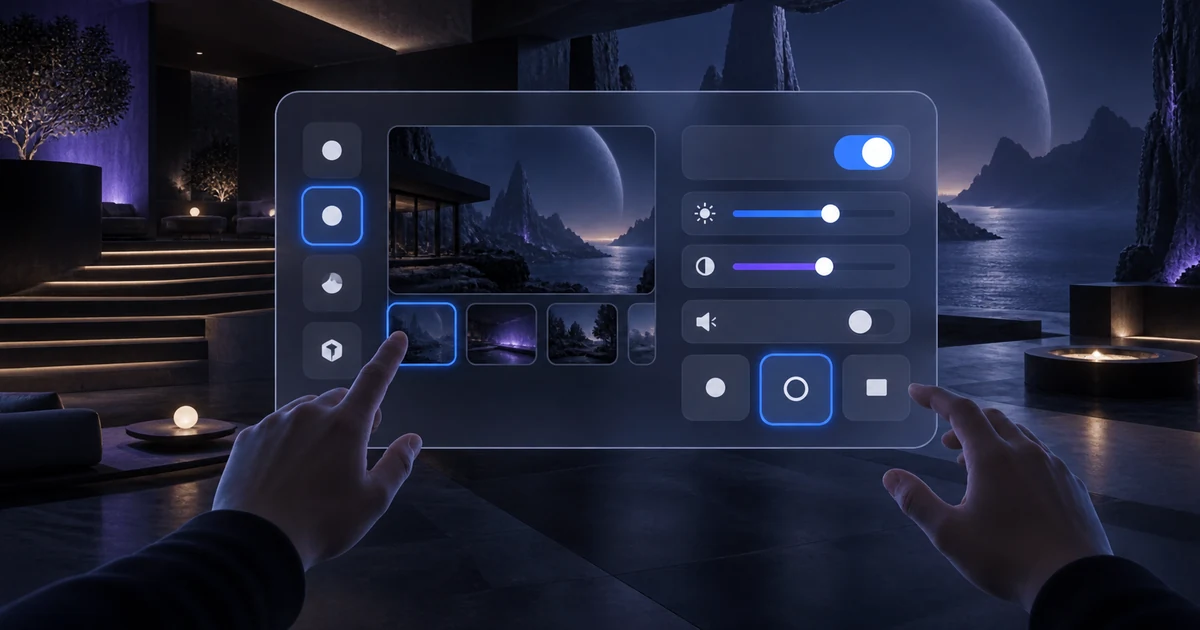
The WebXR DOM Overlays Module defines how a DOM element can appear as a transparent, interactive rectangle during an immersive session. The interface can continue to use HTML, CSS, pointer events, and web accessibility features, while a specific event separates UI actions from XR world interactions. As the API remains in Working Draft, support, overlay type and fallback need to be detected.
HTML reduces interface rework
Forms, buttons, text and states can take advantage of consolidated web practices. This accelerates enterprise tools where the 2D UI is as important as the 3D scene.
Overlay is above the scene
The browser renders the element as the top, transparent layer. This priority improves readability, but can block vision or interaction if it takes up too much area.
Input needs clear boundary
The beforexrselect event helps prevent a panel click from also activating a 3D object. Test pointer, touch, control, hand, keyboard and assistive technologies.
Fallback is a requirement
Devices can offer screen overlay, floating, head-worn, or none. The experiment must keep essential functions outside of the experimental feature.
Nexus Reading
DOM overlay connects web maturity to XR presence. The best use is functional: clear, accessible, lightweight controls without covering up the context that makes the spatial experience valuable.
FAQ
Is it possible to use normal CSS?
Yes, within the overlay element, respecting the behavior defined by the browser.
Can the panel be behind a 3D object?
The standard composes it as superior content; it must not be occluded by the XR scene.
Is the API stable?
No. It is Working Draft and requires support detection and fallback.
Essential guides to delve deeper into the decision
This editorial analysis was produced by Nexus from the official sources below, consulted on September 14, 2026. The text is original and interprets practical implications for companies.
- W3C — WebXR DOM Overlays Module: module state, API, composition, events and limitations.
- W3C — WebXR Device API: normative basis of WebXR sessions and input sources.
Date reported by main source: Working Draft of September 24, 2024; analysis published on September 14, 2026.