
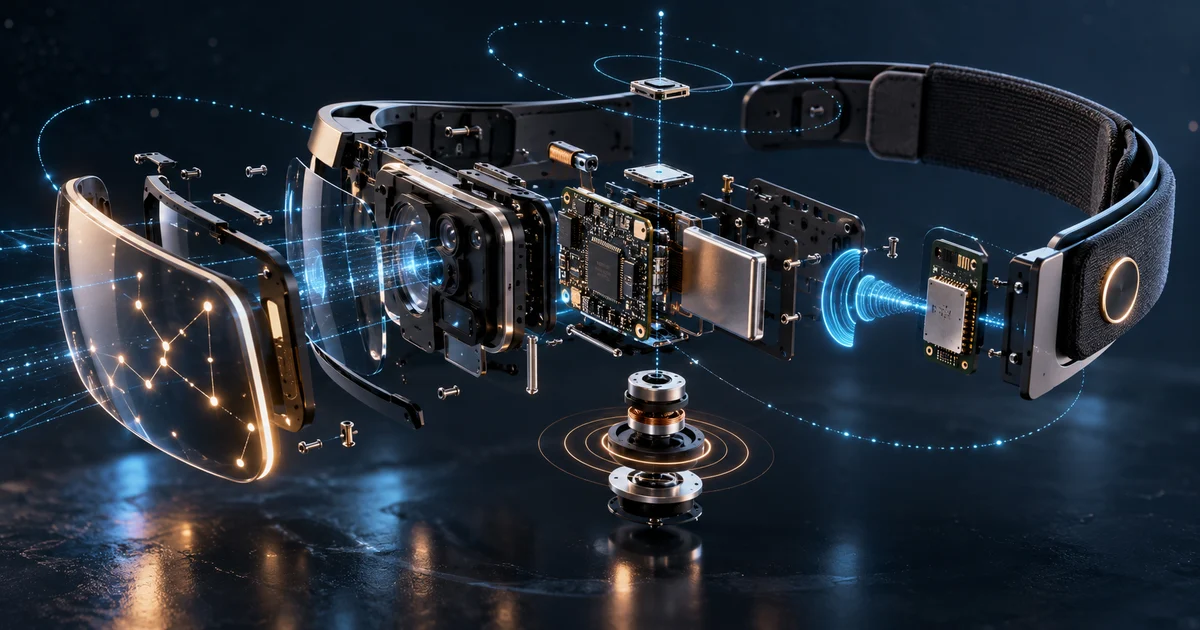
LEDs, IMU, Bluetooth, buttons and haptics can transform physical tools into tracked inputs. Understand design, validation, and ergonomics requirements.
Direct answer
visionOS 27 expands Spatial Accessories for third parties to create hardware tracked by Apple Vision Pro. Apple describes an architecture with a constellation of LEDs, IMU and Bluetooth, as well as inputs such as buttons and haptic outputs. The device needs an annotated USDZ model, reference file and validation. The path is relevant to simulators, tools, and automotive design, but requires hardware engineering, safety, ergonomics, and lifecycle support.
Tracked hardware brings hand and object closer
Steering wheels, tools and physical controls can align sensation, pose and digital content in high perceptual precision tasks.
LEDs and IMU fulfill complementary roles
Vision provides spatial reference and the inertial sensor helps maintain low latency and continuity during movement and temporary occlusion.
Ergonomics should guide the circuit
Footprint cannot block LEDs; battery, weight, range of controls and haptics need to be evaluated with users.
Reference file becomes product asset
Version USDZ, sensor positions, firmware and bundle to preserve hardware and application compatibility.
Nexus Reading
Start with a plug-and-play accessory to validate the task before investing in your own electronics and industrialization.
FAQ
What components are needed?
Apple cites a constellation of LEDs, IMU and Bluetooth; buttons, touchpad and haptics are optional depending on the case.
What is the advantage over visual object tracking?
Accessories can provide higher frequency, low latency, continuity under occlusion, and physical inputs.
Do I need to manufacture my own hardware?
Not to begin with. Apple introduces plug-and-play options for prototyping before a custom design.
Essential guides to delve deeper into the decision
This editorial analysis was produced by Nexus from the official sources below, consulted on October 15, 2026. The text is original and interprets practical implications for companies.
- Apple Developer — Explore enhancements to visionOS object tracking: requirements, validation and official APIs for spatial accessories.
- Apple Developer — Working with generic spatial accessories: official discovery and tracking documentation.
Date reported by main source: WWDC 2026; analysis published on October 15, 2026.