

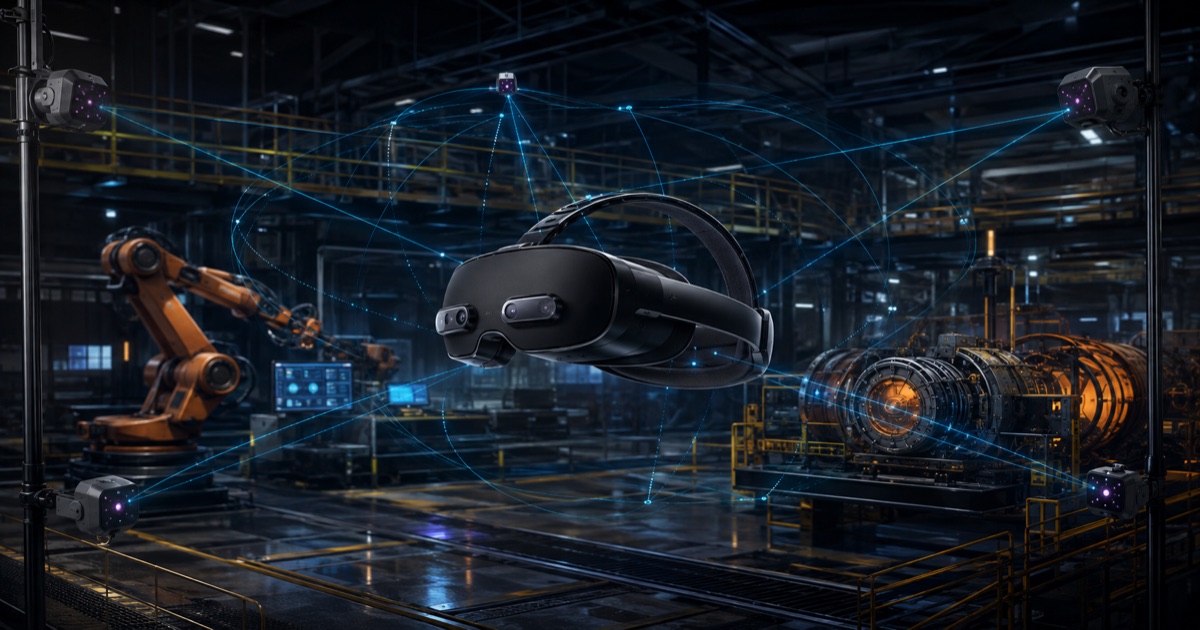
Polhemus VIPER integration keeps tracking linked to the mobile reference without line of sight. See uses, benefits and risks in XR simulation.
Direct answer
The VIPER kit for XR-4 uses a sensor in the headset and a magnetic field source in the same moving frame. Thus, tracking can remain linked to the cockpit or platform even when lighting and scenery change, without requiring optical line of sight.
What was integrated
The Polhemus VIPER now has an integration kit for the Varjo XR-4 series. The package includes specific sensor assembly, plugin for Varjo Base and configuration guide. The system measures position and orientation of the sensor within a magnetic field generated by a light source.
Why Mobile Environments Defy Tracking
Inside-out tracking works well when cameras see stable, bright landmarks. On a motion platform, the cockpit and the person move together; Optical systems may have difficulty separating cabin and head movement. The electromagnetic source follows the same reference frame and maintains the local relationship.
Practical benefits and limits
Electromagnetic tracking requires no line of sight and allows 360-degree head movement. Varjo reports that a source and sensor deliver position and orientation without calibration. Still, metals, electronics, tracking volume and positioning need to be evaluated in the real environment.
Where it makes sense
Flight simulation, moving vehicles, medical training, and seated or short-range stations are candidates. Value appears when loss of tracking harms fidelity, comfort, or learning transfer. The evaluation must measure drift, latency, recovery and behavior across the entire platform range.
Nexus Reading
The integration shows that professional XR depends on synchronizing the virtual world to the correct frame of reference. There is no single ideal tracking technology for every scenario. The architecture must choose sensors based on the physics of the environment and the consequence of an error, not just for installation convenience.
FAQ
Does the system need to see the sensor?
No. Electromagnetic tracking does not rely on optical line of sight.
Does it replace inside-out in all cases?
No. It is especially useful when the environment or platform moves and visual references are no longer stable.
Does the kit work with any headset?
The news deals with the specific kit for the Varjo XR-4 series.
Essential guides to delve deeper into the decision
This editorial analysis was produced by Nexus from the official sources below, consulted on September 5, 2026. The text is original and interprets practical implications for companies.
- Varjo — Polhemus VIPER now supports XR-4: functioning, benefits, use cases and integration requirements.
- Polhemus — VIPER tracking system: official manufacturer reference for the electromagnetic system.
Date reported by the main source: August 18, 2026.