
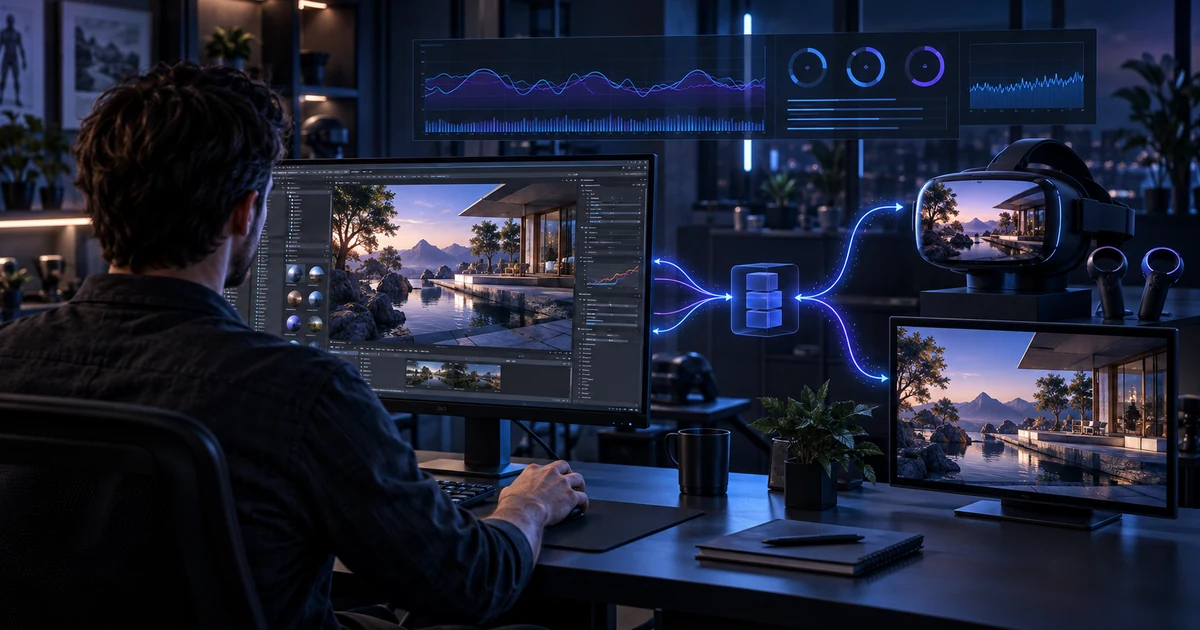
Meta supports Unity 6.3 or higher with OpenXR and enhances automated design and performance analysis. Understand the architectural decision.
Direct answer
Meta reported on June 10, 2026 that it is aligning with Unity on a recommended path for Quest development based on Unity OpenXR, with support starting in Unity 6.3. The direction reduces configuration variations and brings portability and platform tools closer, but does not make features, performance or behavior identical across all headsets. Enterprise projects still need to fix versions, test extensions, and maintain an array of devices.
Standard reduces incompatible choices
A recommended base mitigates brittle plugin and version combinations. This makes it easier to reproduce builds across vendors, teams, and maintenance cycles.
OpenXR does not delete platform extensions
Features such as passthrough, hands, composition or performance may depend on specific extensions. The design must separate portable core from conditional integrations.
Automatic tool does not replace frame budget
Design analysis and traces speed up diagnosis, but comfort depends on measurement on the device, in the most intense scenes and during prolonged sessions.
Versions need to be treated as a product
Fix editor, SDK, plugins, firmware and build configuration. Updates come in through a controlled window, with functional and performance regression before production.
Nexus Reading
The recommended route is a good foundation to reduce maintenance cost. The mature decision combines OpenXR, proprietary abstractions, and an explicit policy for features unique to each headset.
FAQ
Does OpenXR guarantee that the same build runs on every headset?
No. It standardizes important interfaces, but extensions, stores, hardware, and requirements remain different.
Is it mandatory to migrate immediately?
Not without evaluation. Existing projects should compare risk, support, and benefit before changing a stable foundation.
What to validate first?
Input, rendering, frame time, permissions, passthrough, audio, suspend and resume on target devices.
Essential guides to delve deeper into the decision
This editorial analysis was produced by Nexus from the official sources below, consulted on September 15, 2026. The text is original and interprets practical implications for companies.
- Meta Horizon OS Developers — Accelerating Your Unity VR Workflow: Unity OpenXR path, versions, agentive tools and optimization for Quest.
- Meta Horizon OS Developers — Unity Project Setup Tool: Official configuration checks, compatibility, and recommendations for the Unity project.
Date reported by the main source: June 10, 2026.