Google discloses watermark scale for image, video, audio and text. See what it proves, what it doesn't prove and how to combine provenance.
Direct answer
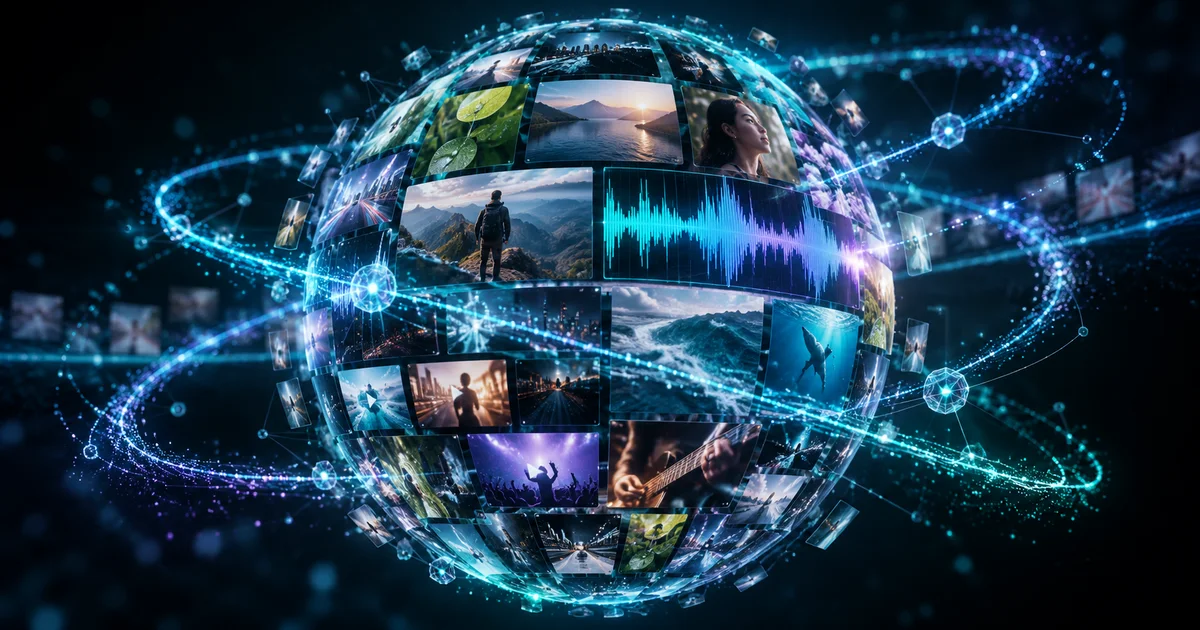
Google reported on October 15, 2026 that SynthID had already tagged more than 180 billion images and videos and the equivalent of 240,000 years of audio. The technology inserts imperceptible signals at the time of generation and offers verification on Google products and the SynthID Detector. The signal helps indicate compliant origin, but is not a substitute for content credentials, chain of custody record, human review, or context analysis.
Brand is born together with content
Inserting the signal during generation avoids relying on a removable visual tag. Robustness still varies by modality and transformation applied afterwards.
Detection answers a limited question
A positive result may indicate compatibility with the watermark, not who posted it, why the content was created, or whether the claim is true.
Scale Enables Relevant Interoperability
The more tools that incorporate marking and verification, the greater the operational value. Standards, documentation, and detector access remain necessary to avoid closed ecosystems.
Provenance requires complementary layers
Signed credentials, metadata, original storage, edit history, and approval policies help explain authorship and responsibility.
Nexus Reading
Companies must register tool, model, operator, purpose, revision and final version. Watermark is a technical signal within broader governance, not an automatic seal of trust.
FAQ
Does SynthID visibly change the media?
Google describes branding as invisible and designed to preserve perceived quality.
Does it identify any AI-generated content?
No. Verification depends on the presence of a compatible tag applied by participating tools.
Does a positive result prove that the content is false?
No. Provenance and veracity are different issues; context and evidence remain necessary.
Essential guides to delve deeper into the decision
This editorial analysis was produced by Nexus from the official sources below, consulted on October 18, 2026. The text is original and interprets practical implications for companies.
- Google DeepMind — SynthID named to TIME’s Best Inventions of 2026 list: disclosed scale, supported media, and verification surfaces.
- Google DeepMind — SynthID: official operation, modalities, detector and limitations of the technology.
Date reported by the main source: October 15, 2026.