
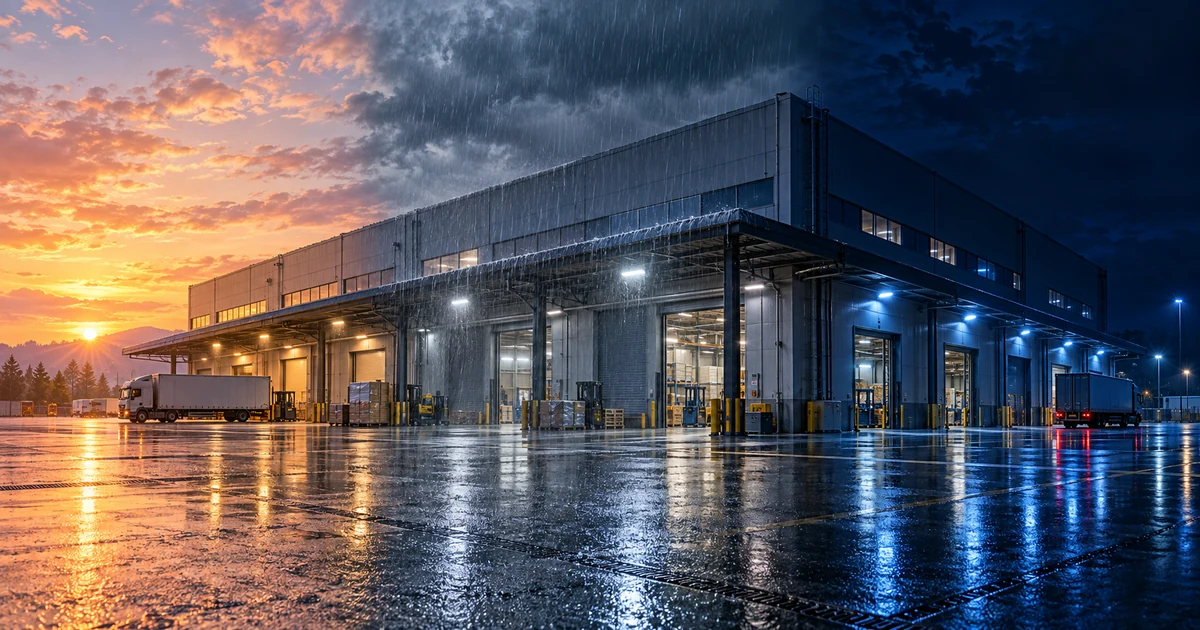
Beta transfers mesh-calculated lighting to the splat without re-capturing. Understand gains, limits and application in real-to-sim.
Direct answer
Niantic Spatial announced on September 18, 2026 a collaborative beta of Gaussian Splat Relighting for select partners. The flow uses the aligned mesh of a reconstruction to simulate sky, sun, shadows, and occlusion and transfers the result to Gaussian appearance coefficients, preserving geometry, navigation, and semantic labels. Thus, a capture can generate variations in time, humidity, rain or wet ground. It's an offline process, not a self-service API, and the quality directly depends on the source fabric.
Lighting is no longer tied to capture
The splat maintains visual richness while the mesh provides geometry to recalculate shadows, atmosphere, and surface response.
Geometry remains comparable
Variants preserve collision, navigation, and semantics, helping to measure the effect of appearance without changing the underlying scenario.
Poor mesh produces visible artifact
Glass, interiors, flat walls, and hard corners are less tolerant of error. Niantic recommends additional validation in these cases.
Visual variation does not cover all physics
Volumetric fog, animated rain, friction and sensor behavior may require their own layers in addition to relighting.
Nexus Reading
Define conditions that affect the task, generate controlled variants and compare the policy between them; only move forward when simulated failures are compared with real-world measurements.
FAQ
Is the resource available as an API?
No. Niantic describes it as a collaborative beta for select partners, not a self-service API.
What stays the same across variants?
Geometry, collision and navigation meshes and semantic labels; appearance coefficients are recalculated.
What conditions were demonstrated?
Time of day, atmosphere, humidity, rain, wet ground and reflections, with results varying by scene.
Essential guides to delve deeper into the decision
This editorial analysis was produced by Nexus from the official sources below, consulted on October 1, 2026. The text is original and interprets practical implications for companies.
- Niantic Spatial — Gaussian Splat Relighting: beta, pipeline, variants, applications, limitations and partner design model.
- Niantic Spatial — Introducing the Places Library: integration of splat, mesh and simulation in the real-to-sim-to-real flow.
Date reported by the main source: September 18, 2026.