
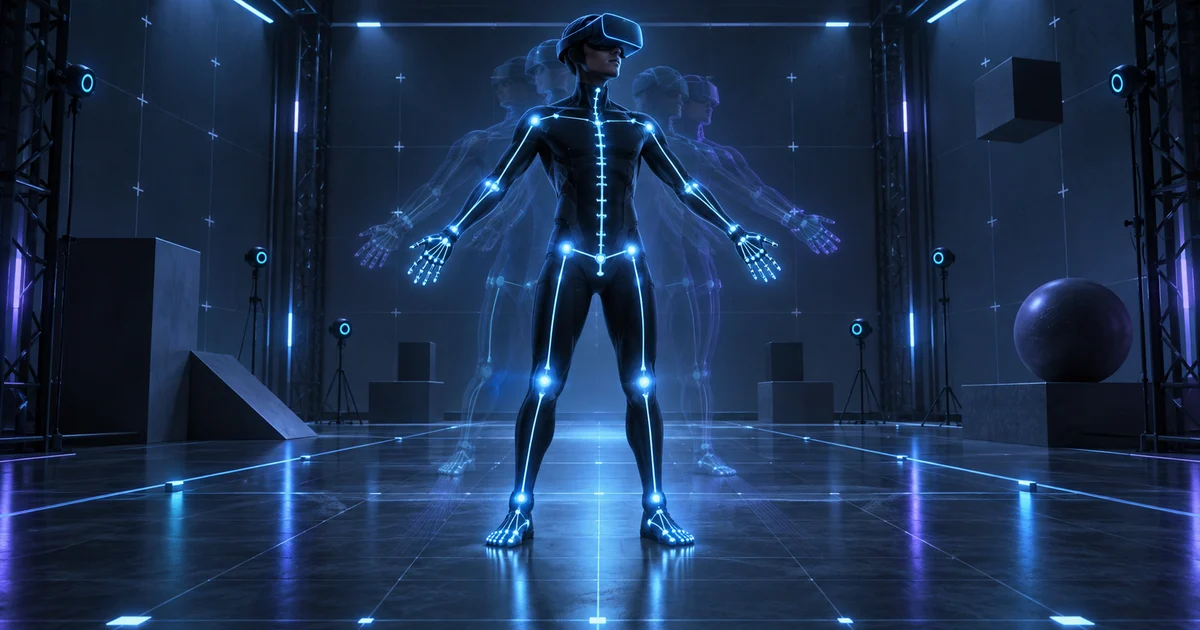
The simulator reproduces body movement to validate avatars and interaction logic. See synthetic test range, configuration, and limits.
Direct answer
The Meta XR Simulator can reproduce body tracking data for VR applications to validate avatars, retargeting, and motion reactions without relying on a person wearing the headset each cycle. The official documentation shows integration with the Meta Movement package and example scenes in Unity. Synthetic testing accelerates development, but does not prove real-body accuracy, physical diversity, occlusion, comfort, or sensor behavior on the device.
Simulation makes the bug repeatable
A known body sequence helps reproduce clipping, delay, and retargeting failures without relying on new human performance.
Avatar needs to respect tracking trust
Missing or transient data should lead to blending and fallback, not sudden jumps. The test needs to include loss and recovery.
Synthetic movement covers logic, not ergonomics
Spaciousness, fatigue, accessibility and a sense of presence only appear with real people and different body types.
Package versions are part of the scenario
SDK, Meta Movement, Unity, and simulator profile must be registered with the test for playback to remain comparable.
Nexus Reading
Simulated body tracking is the fast QA layer. Corporate acceptance then requires headset validation, representative users, and visual stability metrics.
FAQ
Do I need a headset for this test?
Not for simulator playback, although final acceptance still depends on actual hardware.
Does the feature only work in Unity?
Meta informs that the function operates with engines, but the guide presented details the Unity flow.
Does the test prove body tracking accuracy?
No. It validates software behavior with simulated data, not sensor quality across all people.
Essential guides to delve deeper into the decision
This editorial analysis was produced by Nexus from the official sources below, consulted on September 21, 2026. The text is original and interprets practical implications for companies.
- Meta — Enable and test body tracking using Meta XR Simulator: prerequisites, Movement package, test scene and body reproduction.
- Meta — Meta XR Simulator interaction: input sources and tracking controls for body and face in the simulator.
Date reported by main source: documentation updated on April 2 and September 3, 2026.