
Stable version unifies camera, audio and motion on iOS and Android. See opportunities, regional limits and privacy requirements.
Direct answer
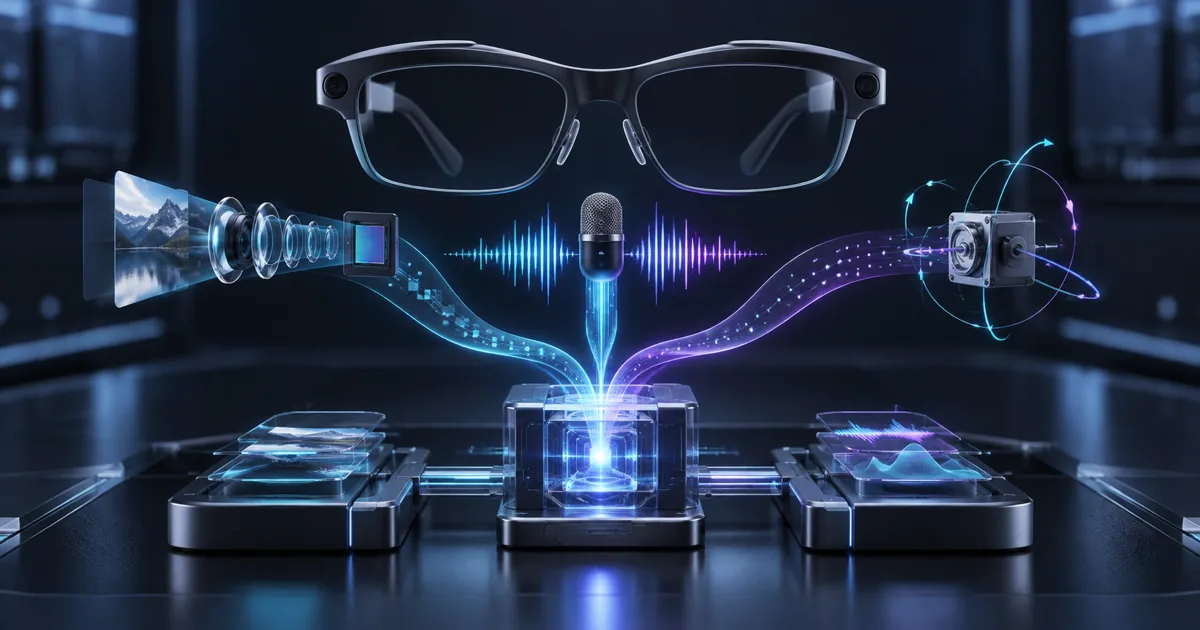
Meta announced on September 24, 2026 the Wearables Device Access Toolkit 1.0, with distribution scheduled from September 30. The kit offers authorized access to camera, voice, microphone, audio and motion signals on iOS and Android, with integration for glasses with or without display and a Mock Device Kit for testing. Availability, capabilities, and publishing vary by country and device. Enterprise applications need to request only the necessary sensors, explain data usage and retention, and maintain a fallback when a resource is unavailable.
One integration serves different formats
Sharing a base between glasses with and without a display reduces duplication, but the experience must adapt output, feedback and controls to the present capacity.
Sensors make privacy part of the product
Camera and microphone capture people and environments. Consent, recording indication, minimization and retention need to be defined before the pilot.
Mock accelerates early development
Simulating states helps you build flows without continually relying on hardware, but it doesn't reproduce acoustics, motion, drums, and social context.
Availability must be detected at runtime
Country, model, account and version may change capabilities. The application needs to degrade clearly without promising a missing function.
Nexus Reading
Start with a short, high-value task, map each sensor to expected benefit, and validate privacy, latency, battery, and acceptance in the real environment.
FAQ
Is Toolkit 1.0 now available to everyone?
No. Meta announced distribution starting September 30th, subject to region, device and eligibility.
Does it work on iOS and Android?
Yes, according to the official announcement, with integration aimed at different glasses formats.
Does the Mock Device Kit replace hardware?
No. It helps with construction and automation, but acceptance requires physical and contextual testing.
Essential guides to delve deeper into the decision
This editorial analysis was produced by Nexus from the official sources below, consulted on September 27, 2026. The text is original and interprets practical implications for companies.
- Meta for Developers — AI glasses developer recap: Launch of the toolkit, resources, schedule and tools for AI glasses.
- Meta — Wearables FAQ: devices, regions, development, publishing, permissions and limitations.
Date reported by main source: announced on September 24, 2026; distribution scheduled from September 30th.