
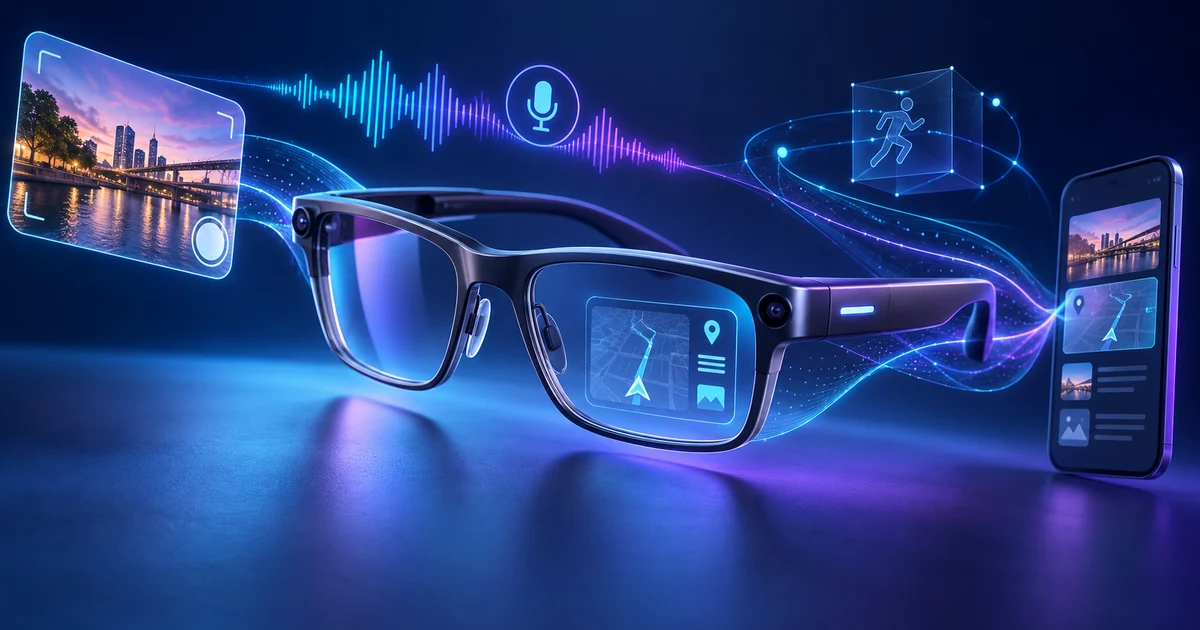
SDK connects mobile apps to camera, voice, movement and glasses display. See architecture, consent, and limits for enterprise use.
Direct answer
Meta announced on September 24, 2026, version 1.0 of the Wearables Device Access Toolkit, with rollout starting on September 30. The kit extends iOS and Android apps for glasses with camera, voice, audio, motion, display and gestures, maintaining logic and backend in the mobile app. The integration covers models with and without a screen. For businesses, the value is in hands-free flows; the risk is in capturing real context. Consent, data minimization, recording indicators, and phone fallback need to be part of the product.
Mobile app remains the core
Keeping logic and backend on the phone reduces a total rewrite, but requires managing connection, state, and permissions between two devices.
Hands-free changes the task design
Short commands, sound confirmation and glanceable information work better than playing dense screens in front of your eyes.
Visual context is sensitive data
Camera and movement can reveal people, documents and locations. Collect only what you need and make capture and transmission understandable.
Failure, need to return to the phone
Battery, connectivity, noise or lack of display cannot interrupt a critical task; the mobile app must offer secure continuity.
Nexus Reading
Choose a flow where busy hands are the real problem, prototype with users, and measure time, error, comfort, and understanding consent.
FAQ
Does the toolkit work with glasses without a display?
Meta states that an integration covers glasses with and without a screen, using the available capabilities.
Is it necessary to abandon the mobile app?
No. The proposal is to extend the existing app and keep the logic and backend in it.
What signals are available?
The documentation mentions camera, voice and audio, movement, display and forms of input and gesture.
Essential guides to delve deeper into the decision
This editorial analysis was produced by Nexus from the official sources below, consulted on October 2, 2026. The text is original and interprets practical implications for companies.
- Meta — Build for AI glasses: version 1.0, rollout, capabilities and development paths.
- Meta — Device Access Toolkit: Official camera, motion, voice, display and gesture capabilities.
Date reported by main source: September 24, 2026; rollout started on September 30, 2026.