
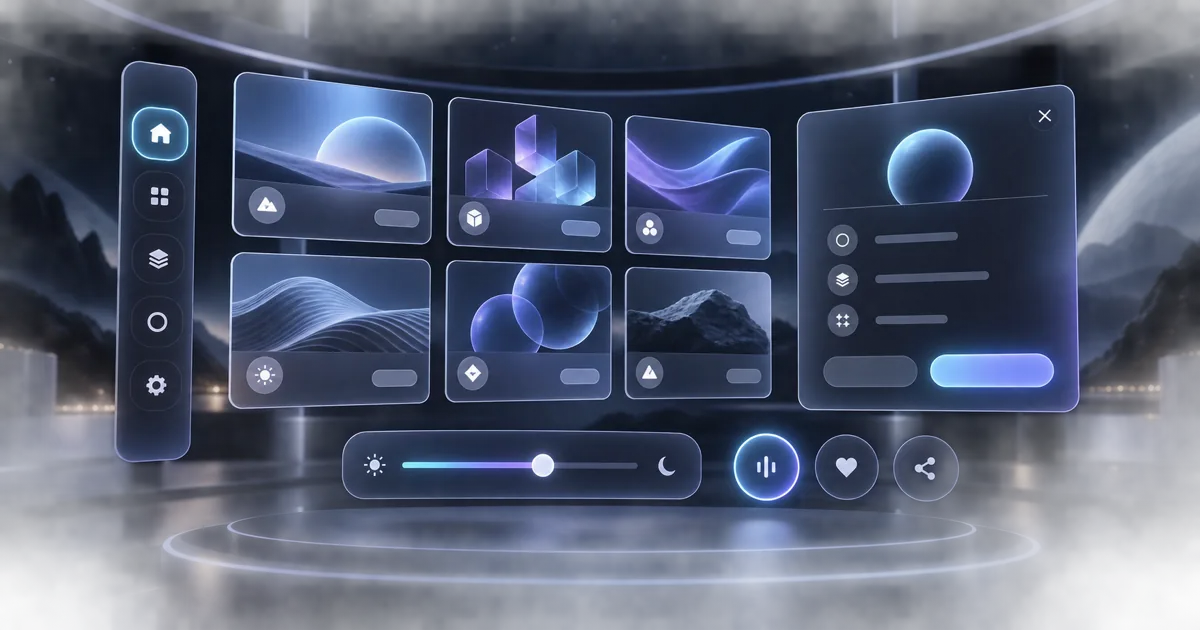
SDK 1.0.0 brings buttons, cards, dialogs, and navigation to Compose. Understand where consistency helps and where testing remains mandatory.
Direct answer
On September 24, 2026, Meta released version 1.0.0 of the VR UI Set SDK for Compose. The package offers components such as buttons, cards, controls, dialogs, menus, fields, navigation, sliders and tooltips, with light and dark themes, semantic roles and minimal interaction targets. The library reduces implementation variations in Android apps for VR, but does not in itself guarantee readability, range, contrast, or understandability in real context. Design and accessibility must be tested in the target space and device.
Consistency reduces relearning
Common button, dialog, and navigation patterns help users recognize action, state, and hierarchy across screens.
Semantics improves the accessibility foundation
Correct roles support assistive technologies and testing, but labels, focus order, and feedback are still implementation dependent.
Minimum target is a starting point
Dimension in dp does not capture distance, shake, hand accuracy, or field of view. The perceived size needs to be validated in use.
Theme does not resolve contrast alone
Virtual lighting, transparency and variable background alter the reading. Normal, focus, selection, error, and disabled states require verification.
Nexus Reading
Adopt tokens and components as a system, document exceptions, and test complete tasks with different profiles. Library accelerates quality when it is accompanied by governance.
FAQ
What components are available?
The version lists buttons, cards, controls, dialogs, menus, inputs, navigation, sliders, tooltips and other elements.
Does the SDK guarantee accessibility?
No. It provides fundamentals, but content, contrast, focus, feedback, and user testing are still necessary.
Is it a library for Unity?
The aforementioned package is aimed at Android interfaces with Jetpack Compose in the Meta VR ecosystem.
Essential guides to delve deeper into the decision
This editorial analysis was produced by Nexus from the official sources below, consulted on September 27, 2026. The text is original and interprets practical implications for companies.
- Meta — VR UI Set SDK for Compose 1.0.0: release, components, themes and package requirements.
- Meta — VR UI Set Compose API reference: Official reference of components, themes, and properties for version 1.0.0.
Date reported by the main source: September 24, 2026.