
The new format prioritizes gauze and hands, but maintains optional compatibility with controls. See impacts on design, accessibility and testing.
Direct answer
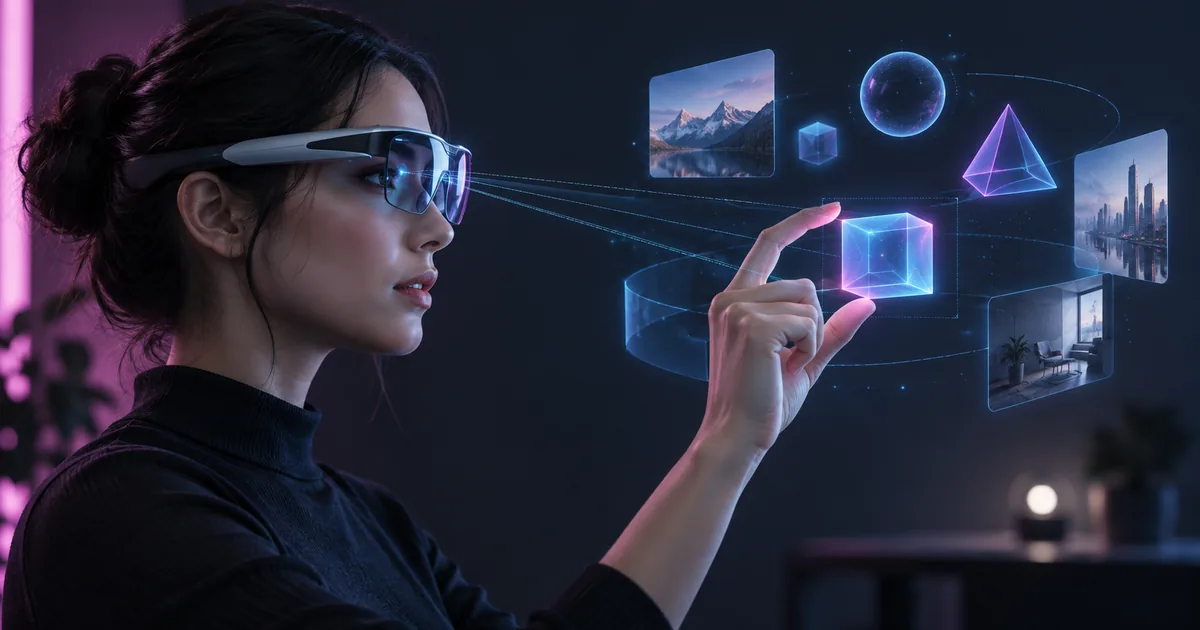
Meta presented Meta VR Glasses as a lightweight device connected to a computing module, with integrated eye tracking and primary interaction by gaze and pinch gesture. Existing Quest apps can share system and SDKs, but need to adapt selection, target size, feedback, and input flow. The company informs that controls remain optional. For enterprise products, migration requires testing with different users, posture, fatigue, accuracy and alternative interaction routes.
Looking points; tweezers confirm
Separating targeting and selection reduces effort, but requires clear feedback on which element is active before confirmation.
Interface needs to tolerate imprecision
Small, overlapping, or edge targets increase errors. Size, spacing, dwell and cancellation must be validated on the device.
Technical compatibility does not guarantee usability
An APK can install and still depend on controls that the user does not have. In-store discovery and actual inbound support are different checks.
Accessibility requires equivalent paths
Tremor, limited mobility, vision and posture affect gauze and forceps. Voice, control, adjustments and extended time may be necessary alternatives.
Nexus Reading
Don't treat the new entry as simple click replacement. Redesign critical tasks, test time and error by user profile, and maintain fallback compatible with the operational context.
FAQ
Do Quest apps work automatically?
They can share systems and SDKs, but architecture, targeting and entry model need to be verified.
Do the glasses accept controllers?
Meta reports support for optional controls, although gaze and hands are the default.
Is it possible to test before hardware?
Meta recommends using simulators and Quest 3 or 3S, but final acceptance must occur on the target device.
Essential guides to delve deeper into the decision
This editorial analysis was produced by Nexus from the official sources below, consulted on September 26, 2026. The text is original and interprets practical implications for companies.
- Meta — Get started with Meta VR Glasses: format, gauze, tweezers, development paths, simulation and publication.
- Meta — App compatibility for Meta VR Glasses: ARM64 architecture, device targeting, compatibility and input testing.
Date reported by main source: documentation updated between September 18 and 24, 2026.