
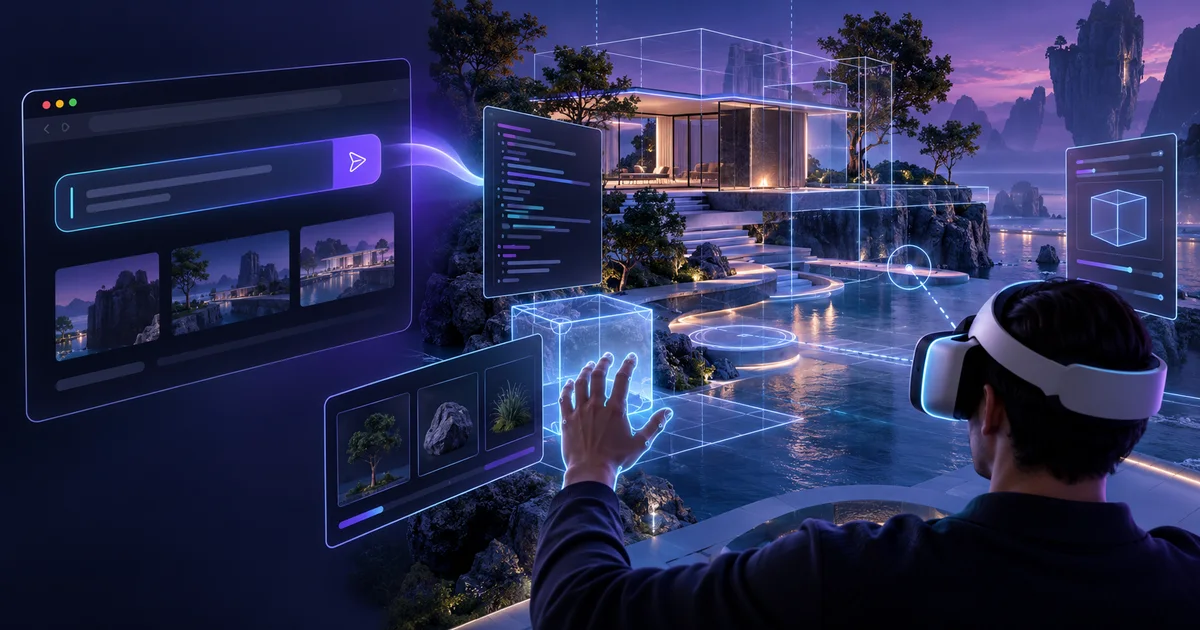
The Meta IWSDK template for v0 generates a WebXR scene, publishes via URL, and allows testing on Quest. See where it accelerates the pilot and where it still requires engineering.
Direct answer
On October 8, 2026, Meta introduced an Immersive Web SDK template for Vercel v0. The tool generates TypeScript code with Three.js and Vite from natural language, includes the WebXR framework and Meta VR Glasses input model, and allows you to publish an HTTPS URL to open in Quest. Flow reduces time to first prototype, but is no substitute for architecture, security, accessibility, optimization, on-device testing, and validation of business intent.
The initial gain is in the time until you experience
A team can turn a hypothesis into a navigable scene before putting together a full engine design. This favors alignment, concept testing and continuity decisions.
Generated code needs to be understood
The template produces editable code, not a finished product. Review dependencies, states, permissions, errors, accessibility, and off-path behavior.
Emulator and headset fulfill different roles
The emulator speeds up input and field of view iteration. Comfort, tracking, performance, thermal and legibility can only be approved on the real device.
URL reduces distribution friction
Sharing the same address with staff and users simplifies testing. Authentication, sensitive content, caching, availability and telemetry remain necessary.
Nexus Reading
Use generative AI to shorten discovery, with a clear gate between demo and pilot: technical review, success criteria, and representative testing.
FAQ
Is it necessary to install an engine?
The flow described uses TypeScript, Three.js, Vite and WebXR in the browser, without requiring a game engine to get started.
Does it work without a headset?
The IWSDK Emulator allows you to iterate on Mac or PC; final validation must still occur on a compatible headset.
What is the best first case?
A small prototype with a central interaction, limited content and a defined business metric.
Essential guides to delve deeper into the decision
This editorial analysis was produced by Nexus from the official sources below, consulted on October 8, 2026. The text is original and interprets practical implications for companies.
- Meta Horizon OS Developers — Build for Meta VR with v0 by Vercel: official announcement, stack, publishing flow and input support.
- Meta — Immersive Web SDK: Official SDK documentation for WebXR experiences.
Date reported by the main source: October 8, 2026.