
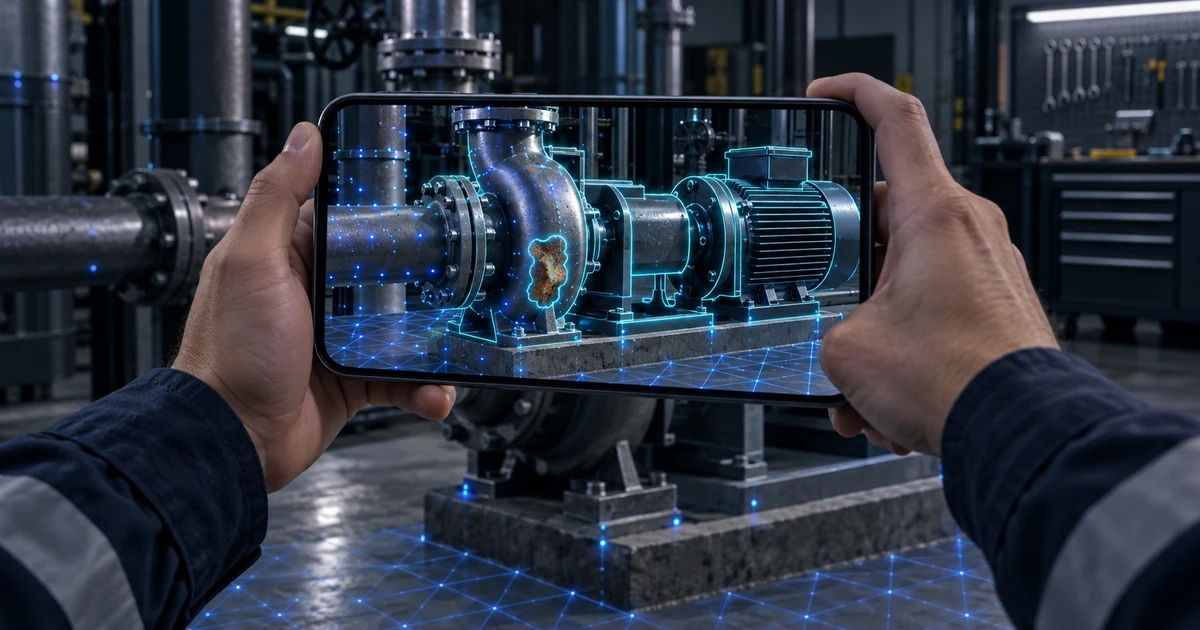
The feature shares the camera between ARCore and Camera2 to process frames during the session. See surfaces, compatibility and depth limit.
Direct answer
ARCore's Shared Camera allows an Android application to share camera control between the AR tracking and Camera2 APIs. This way, the team can read images or add surfaces for computer vision while ARCore maintains tracking. Integration requires callbacks and coordinated surfaces, per-device validation, and attention to an important limitation: in shared camera mode, ARCore does not use the depth sensor even when it exists.
One camera stream serves two systems
ARCore preserves pose and spatial understanding while the application receives frames for classification, inspection, or specialized reading. This avoids competing for hardware in separate sessions.
Surfaces need to form a valid contract
Surfaces created by ARCore and the application must be included correctly in the session. Supported resolution and quantity vary between cameras and devices.
Depth is an explicit tradeoff
Tracking continues, but ARCore does not use the depth sensor in this mode. Cases dependent on occlusion or measurement require another design or fallback.
Parallel processing cannot block the frame
Computer vision must operate with queuing, controlled discard and latency limits. Accumulating images increases memory and makes the result out of phase with the pose.
Nexus Reading
Shared Camera is useful when value depends on combining spatial context and proprietary visual analysis. The pilot must measure accuracy, latency, heat, and actual coverage of the Android fleet.
FAQ
Does ARCore continue tracking with Shared Camera?
Yes, tracking can continue normally while the application accesses the camera via Camera2.
Is the depth sensor still available for ARCore?
No. The documentation states that ARCore does not use the depth sensor in shared camera mode.
Does it work the same on all Android?
No. Combinations of surfaces, resolutions, and features must be checked on target devices.
Essential guides to delve deeper into the decision
This editorial analysis was produced by Nexus from the official sources below, consulted on September 18, 2026. The text is original and interprets practical implications for companies.
- Google ARCore — SharedCamera: class contract, callbacks, surfaces, Camera2 constraints and impact on the depth sensor.
- Google ARCore — Use the device camera to capture reality: Official view on settings, metadata, buffering, and camera access sharing.
Date reported by main source: official documentation consulted on September 18, 2026; technical analysis.