
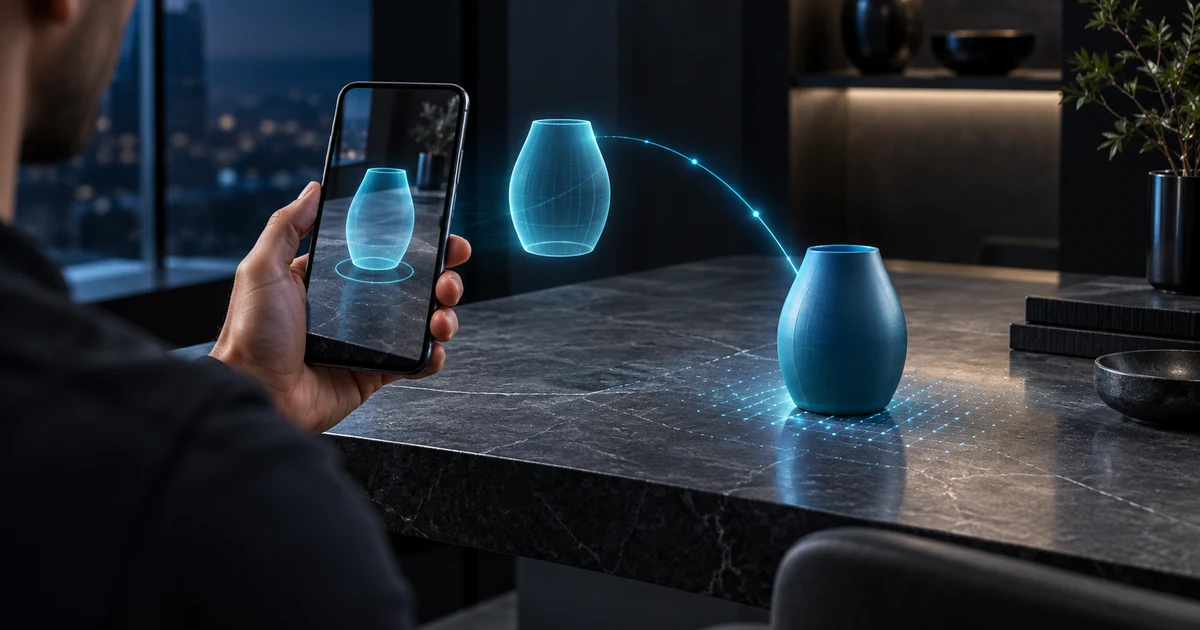
Objects appear before full plane detection and refine their pose live. See UX, scale, transition, and technical limits.
Direct answer
ARCore Instant Placement allows you to place a virtual object before full tracking and plane detection ends. The experience begins with an approximate pose and distance; As ARCore understands the environment, the pose is refined. This reduces the initial wait, but may cause an apparent change in scale or position. The design needs to communicate the interim state and smooth the transition so that speed doesn't feel jittery.
First response arrives before the map
The user taps and receives immediate feedback, without waiting for the application to find a plan. This speed improves demonstrations and short journeys.
The initial pose is a hypothesis
Distance and bearing start approximate. The system needs to visually distinguish the provisional state so as not to promise accuracy that does not yet exist.
Refinement can alter perceived scale
When depth is corrected, an object may appear to grow, shrink, or slide. Animation, shadowing, and confirmation help make the change understandable.
Accuracy cases require confirmation
Measurement, assembly and security should not automatically accept the first pose. Wait for complete tracking, request adjustment and validate case tolerances.
Nexus Reading
Instant Placement should reduce friction without hiding uncertainty. The central indicator is the time until an accepted placement, accompanied by repositioning and errors after refinement.
FAQ
Is the object already born in the exact position?
No. It starts with rough posing and is refined as the environment is understood.
Why does the object change size?
Distance correction changes the apparent scale during the transition to full tracking.
Is it for technical measurements?
Not without additional confirmation. Precision cases must expect adequate tracking and validating tolerances.
Essential guides to delve deeper into the decision
This editorial analysis was produced by Nexus from the official sources below, consulted on September 17, 2026. The text is original and interprets practical implications for companies.
- Google ARCore — Instant Placement: concept, supported platforms, approximate pose, refinement and visual implications.
- Google ARCore — Instant Placement developer guide: technical flow to enable, perform hit tests and monitor changes in the tracking method.
Date reported by main source: official documentation consulted on September 17, 2026; technical analysis.