
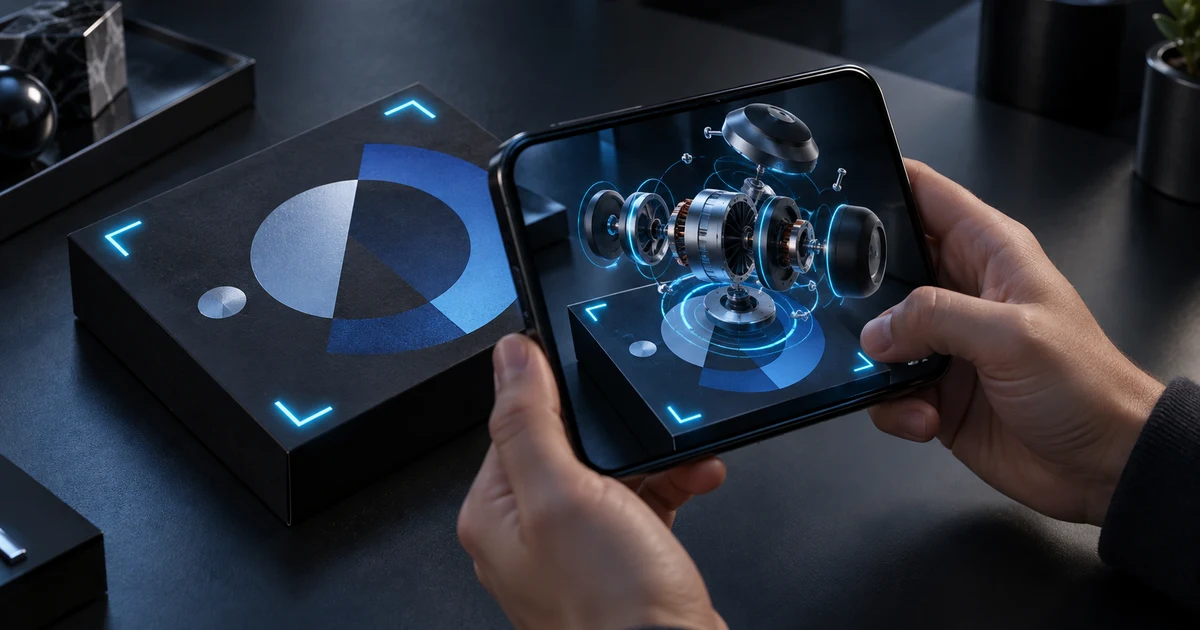
ARCore detects and tracks 2D images on the device, with banks of up to a thousand references. See quality, scale and performance criteria.
Direct answer
ARCore Augmented Images detects flat images such as packaging, posters and pages and returns position, orientation and size to anchor digital content. Each bank accepts up to a thousand references, with simultaneous tracking of up to 20 unique images, according to official documentation. Detection occurs on the device and does not require internet, but depends on an image rich in features, good visibility and occupancy of at least 25% of the frame in the first recognition.
The visual reference becomes an entry point
A package or sign already present in the environment can open instruction, demonstration, or commercial content without additional marker, as long as the artwork has traceable characteristics.
Quantity in the bank does not guarantee quality
Up to a thousand entries are possible, but repetitive images, simple logos, and heavy compression reduce recognition. The arcoreimg tool recommends a minimum score of 75.
Physical size speeds up the first pose
Reporting the known width avoids part of the estimation and improves detection time. Without it, the user may need to move the camera until the pose becomes more accurate.
Tracking state guides the interface
Early recognition does not mean ready pose. The application must expect full tracking, communicate approach and deal with temporary vision loss.
Nexus Reading
Augmented Images works best when the visual asset is stable and part of the journey. The pilot must measure recognition time, success rate, distance and conversion after activation.
FAQ
How many images can ARCore track?
The documentation reports up to 20 simultaneous unique images and up to a thousand references per active bank.
Do you need internet to recognize the image?
No. Detection and tracking are performed on the device.
Are QR codes good references?
Generally not for this feature, because patterns and line art have few unique characteristics; QR must use its own reader when this is the purpose.
Essential guides to delve deeper into the decision
This editorial analysis was produced by Nexus from the official sources below, consulted on September 18, 2026. The text is original and interprets practical implications for companies.
- Google ARCore — Augmented Images: capacity, requirements, tracking, bank limits, and image selection practices.
- Google ARCore NDK — ArAugmentedImageDatabase: bank contract, runtime creation, physical size, serialization and quality error codes.
Date reported by main source: official documentation consulted on September 18, 2026; technical analysis.