An experience designed from context
An augmented reality application for Fibria that connects a physical part to digital content, overlaying animations and information on the camera view.
Printed material serves as a starting point for an additional layer of communication. When recognized by the device, it stops being a static piece and starts revealing visual content related to Fibria.
The starting point of the project was to expand a physical Fibria part with a digital layer that appears when the material is framed by the camera. This definition guides the reading of the case because it makes it clear that the application of augmented reality based on visual recognition was not treated as a disconnected technological demonstration. The format is linked to the content, the environment and the way the person encounters the experience.
The journey was built for the person who holds the device, points to the marker and begins to observe digital content anchored on the image of the real world. This position of the public changes the way of communicating: the visitor does not just receive a description of the project, but follows a visual sequence in which scale, framing, rhythm and identity help to make the subject understandable.
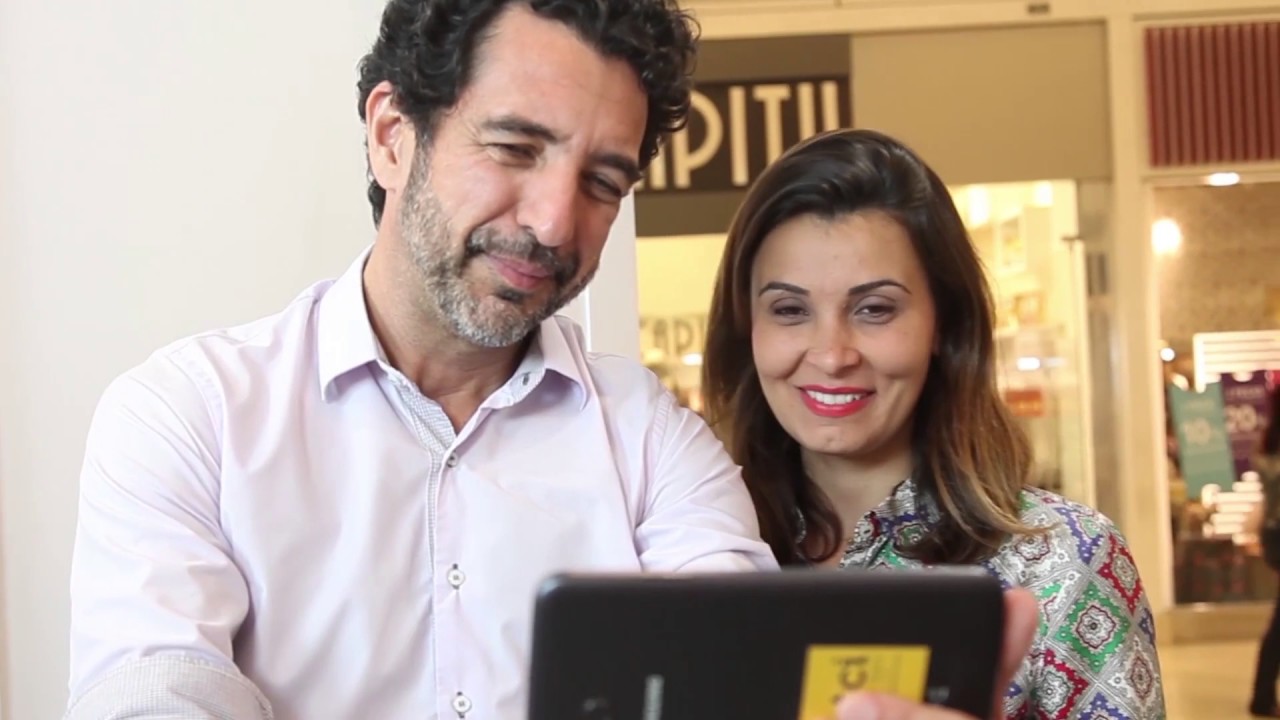
In the official video, the experience is presented by what actually happens in front of the public. The camera records the application, the environment and participation, allowing us to observe how the proposal goes from concept to usable delivery. This materiality is central to understanding Nexus’ work in this case.
Challenge and opportunity
Immersive projects need to resolve two questions at the same time: what should be communicated and how the audience will perceive this message. In this case, the opportunity was to expand a physical Fibria piece with a digital layer that appears when the material is framed by the camera. The technology needed to serve this purpose without creating a barrier between content and participant.
The language challenge was to convert the theme into an experience with a recognizable beginning, clear development and coherent ending. The video demonstrates the framing of the material, recognition through application and the input of animations and three-dimensional elements aligned to the physical part. The observed sequence shows a concern with continuity: each moment prepares the next and keeps the participant within the proposed universe.
There was also an issue of attention. In conventional content, the framing decides in advance where everyone will look. In an application of augmented reality based on visual recognition, attention needs to be driven by internal elements of the experience itself. Visual hierarchy, position of objects, movement, light, sound and interface response start to organize reading.
Moving the device changes the point of view without breaking the link between marker and content. Discovery happens by approaching, framing and visually exploring the enlarged object. This design reduces the distance between message and action. The participant understands the project while experiencing it, because the way of interacting is part of the explanation and not a command added later.
The opportunity, therefore, was not in reproducing a traditional presentation within a new device. It was about using the specific properties of the format to offer context, presence and a more direct relationship with the content. The video allows us to recognize this change in perspective by showing the experience from the point of view of those who participate.
The solution and experience demonstrated
The video demonstrates the framing of the marker by the camera and the input of the augmented content over the real image. The user moves the device to observe the digital composition anchored to the physical part.
The video demonstrates the framing of the material, recognition through application and the input of animations and three-dimensional elements aligned to the physical part.
The composition respects the area of the printed material and uses the recognized surface as a basis for organizing animations and digital information. This choice gives unity to the route and prevents the environment, content and brand from seeming like independent layers. Everything that appears in the experience participates in the same visual narrative.
Moving the device changes the point of view without breaking the link between marker and content. Discovery happens by approaching, framing and visually exploring the enlarged object. The design of the interaction is relevant because it defines the role of the audience. Instead of remaining a distant spectator, the participant observes, orients himself, chooses a point of view or produces a response that alters the continuity of the experience.
The record also highlights the difference between watching the project video and experiencing it directly. The recording only frames a part of the application; the participant, in turn, perceives scale, proximity and spatial continuity. The case was built for this main experiment, while the video serves as official documentation of its execution.
The solution remains readable because each element has a function. The scenario contextualizes, the visual identity connects the content to the customer, the interface guides and the technology supports the expected behavior. This distribution of responsibilities avoids excess information and preserves the focus of the journey.
Within this set, augmented reality applications based on visual recognition function as a means of communication and not as the main subject. The project draws attention for the resulting experience: a narrative in which presence, action and content happen in the same space and at the same moment.
What was delivered
Application of augmented reality, visual recognition, 3D content and animations integrated into communication material.
The project brings together image recognition, 3D content, animation, camera interface and integration between the communication piece and the application.
Delivery needs to be understood as a complete system. Content, visual assets, application behavior and display depend on each other. What appears in the video is the result of this integration, and not the sum of independent pieces presented side by side.
Augmented reality on physical material does not appear as an isolated resource. In the Augmented Reality case, this element participates in the construction of the experience alongside content, environment and visual identity. Its function can be understood from what the video shows: creating a direct relationship between the participant and the material presented, keeping the technology subordinate to the reading of the project.
The presence of image recognition by the camera reinforces the coherence between the chosen format and what needed to be communicated. Instead of adding a technical layer just for visual effect, the project uses this resource to support the demonstrated sequence, organize attention and make the content recognizable within an augmented reality application based on visual recognition.
Another documented component is digital content anchored to the marker. It completes the delivery by connecting the behavior of the application to the way the audience experiences it. In the official record, this integration helps explain why scenery, visual response and operation need to work as parts of the same system.
Content preparation also involves decisions about scale, readability, and pacing. Information that works on a small screen needs to be reviewed when it moves into an environment, a physical object or an immersive field of view. The case demonstrates this care by keeping the elements recognizable during the experience.
The experience depends on a clear relationship between physical part, reading distance and tracking stability, elements visible in the official demonstration. Operation is part of delivery because it defines the transition between expectation and actual use. Entry, guidance, execution and exit need to form a continuous flow so that the experience preserves your proposal in front of the public.
The delivered set establishes a clear correspondence between objective and resource. Nothing in the registration requires the visitor to previously understand the technology used. The application communicates how it works through experience itself and allows content and action to advance together.
Visible technologies and design decisions
The documented technical base brings together augmented reality, marker tracking, three-dimensional content and in-camera rendering. These resources are perceived by the public through their effects: the environment responds, the content remains aligned, the image maintains continuity and the interaction produces understandable feedback.
Core technology needs to operate in dialogue with visual direction. The composition respects the area of the printed material and uses the recognized surface as a basis for organizing animations and digital information. When this relationship is well resolved, the person does not need to separate content from system; she perceives a coherent experience, with consistent visual and behavioral rules.
Another important aspect is the relationship between digital scale and human perception. Objects, texts and movements must remain clear in the field of vision and in the time available for observation. The video shows composition choices that preserve this reading throughout the sequence presented.
The experience’s response also needs to happen at the expected time. Moving the device changes the point of view without breaking the link between marker and content. Discovery happens by approaching, framing and visually exploring the enlarged object. This connection between gesture, guidance and feedback is what transforms technology into language: the participant understands that their presence has a role within the journey.
The project brings together image recognition, 3D content, animation, camera interface and integration between the communication piece and the application. Each of these fronts requires compatibility with the others. A visual asset needs to respect the execution environment; the interface needs to consider distance and device; the narrative needs to fit into the operational flow in which the project will be presented.
The choice of augmented reality application based on visual recognition is consistent with the type of content recorded because it allows combining demonstration, identity and experience in the same layer. The medium offers specific resources to direct attention and present relationships that would be more difficult to perceive in a static piece.
The robustness of the project appears precisely in this integration. The video doesn't just show a final screen: it shows a working solution, inserted in its context and ready to receive the public. This shift from digital creation to applied experience is an essential part of Nexus delivery.
How the journey organizes attention, content and brand
The opening of the experience quickly establishes where the participant is and what visual language to follow. This first contact is decisive in reducing hesitation and allowing the public to move forward without relying on a long explanation outside the application.
Afterwards, the content gains depth by approximation. The video demonstrates the framing of the material, recognition through application and the input of animations and three-dimensional elements aligned to the physical part. Progression doesn't just depend on new texts: it uses changing framing, presence of objects, transitions, and system response to build understanding.
Customer identity acts as structure, not decoration. The composition respects the area of the printed material and uses the recognized surface as a basis for organizing animations and digital information. This ongoing presence helps tie the experience back to the brand without interrupting the journey with messages that are disconnected from what the participant is doing.
Rhythm is also part of the design. An applied experience needs to offer sufficient time to observe, react and understand, but must maintain continuity. The record shows an objective sequence, capable of sustaining interest without abandoning the clarity of the proposal.
The experience depends on a clear relationship between physical part, reading distance and tracking stability, elements visible in the official demonstration. This organization brings creation and execution closer together. The content was designed to work within the conditions in which it appears in the video, considering the participant's arrival, the use of the technological resource and the understanding of what happens throughout the activity.
The resulting experience presents a direct relationship between form and purpose. What the public sees, what they do and what they receive in response converge on the same theme, giving the project its own, recognizable identity.
Documented result and legacy
The video documents an application in which the printed material stops being just a support and starts to function as a gateway to a digital presentation linked to Fibria.
The visible result is a complete working experience. Registration allows you to monitor the solution applied, recognize the resources used and observe how the public comes into contact with the project. It is this documented execution that supports the reading of the case.
The legacy of the work is also in the way the content was translated into an augmented reality application based on visual recognition. The delivery demonstrates an approach where technology, narrative and operations are defined together, preserving the customer's identity and understanding of the experience.
By remaining available on the official Nexus Realidade Virtual channel, the video serves as a public reference for the solution achieved. It allows you to revisit format choices, visual composition, and experience behavior without separating the result from its presentation context.
This case is part of the Nexus portfolio because it records a specific delivery, linked to an identified client and presented through official material. The narrative on this page builds on this record to explain the project in depth, keeping the focus on what can be observed and documented.
Video “FIBRIA REALIDADE AUMENTADA”, published by the Nexus Realidade Virtual channel on YouTube.